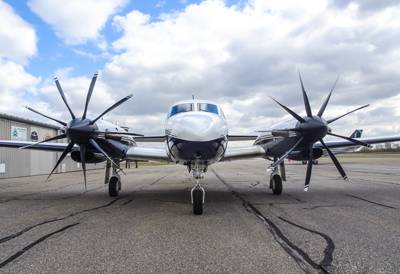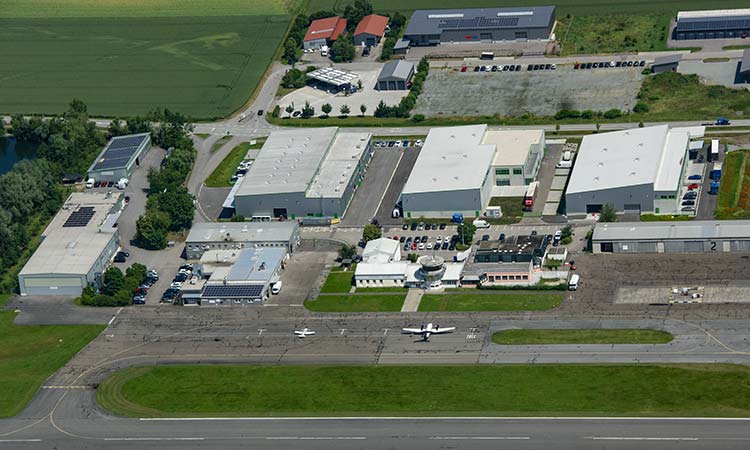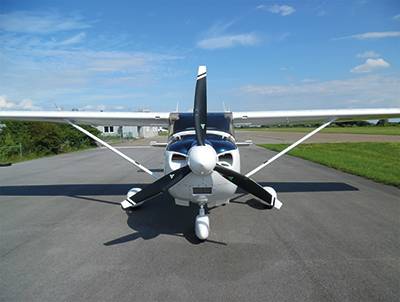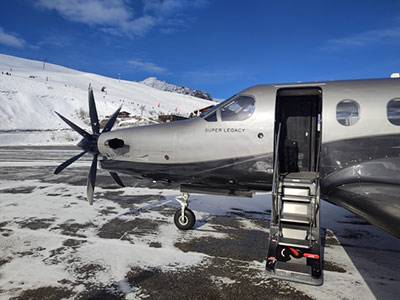
PC12 with 7 bladed Propeller
130+ PC12 flying the 7 bladed Propeller, wow
---
Hi Martin,
130+ PC12 flying the 7 bladed Propeller, wow
You and your team did an amazing Job
I flew a couple of those converted MT47 on all the different PC12 type, they are all amazing!
I love the braking effect when throttle is on idle, especially flying the NGX where there is no possibility of using the ground idle anymore to create that air brake during steep descent
All the best
---
Hi Martin,
130+ PC12 flying the 7 bladed Propeller, wow
You and your team did an amazing Job
I flew a couple of those converted MT47 on all the different PC12 type, they are all amazing!
I love the braking effect when throttle is on idle, especially flying the NGX where there is no possibility of using the ground idle anymore to create that air brake during steep descent
All the best
David DI BLASI
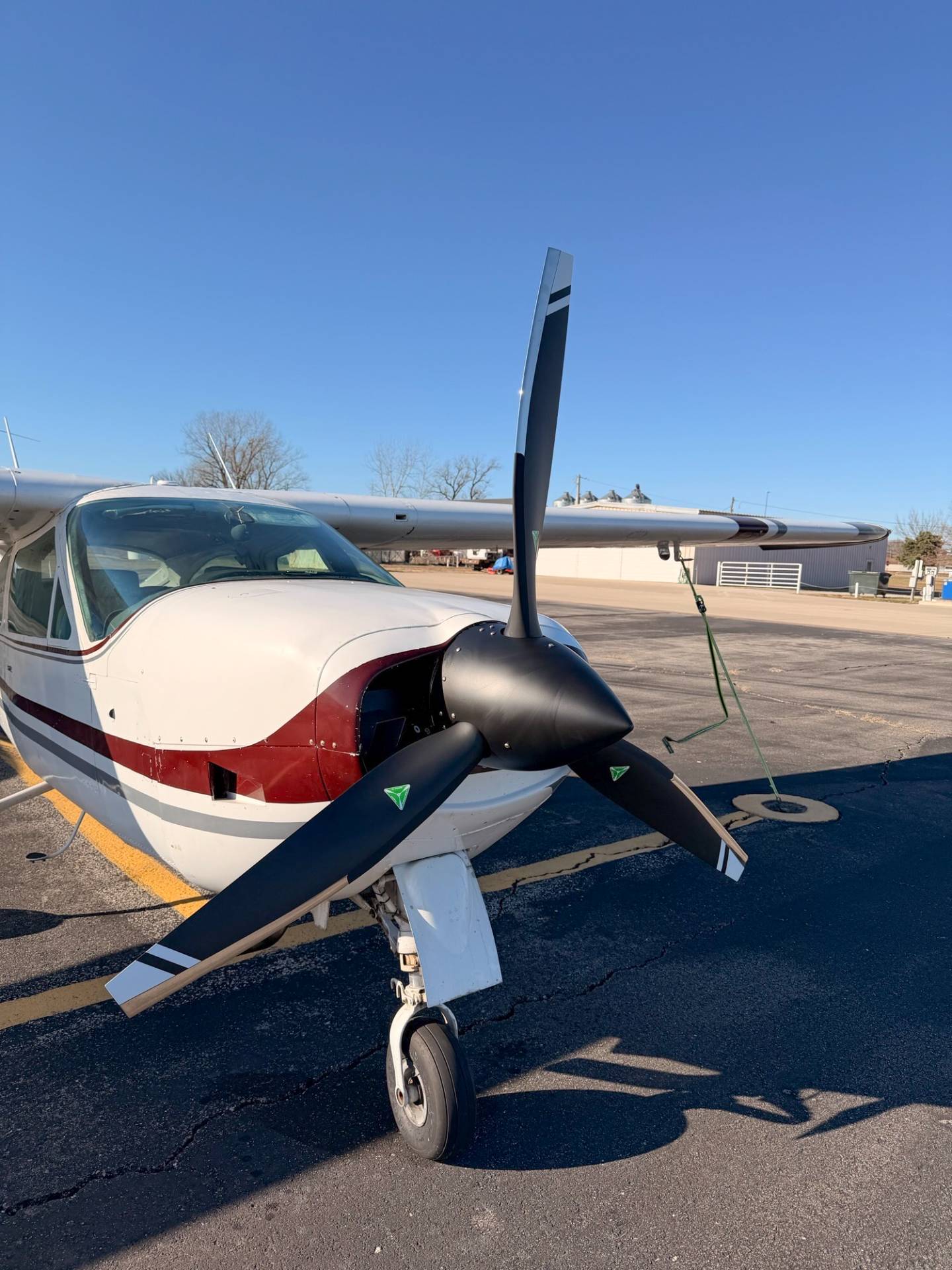
1971 Cessna Cardinal with 3-blade MT-Propeller
The added performance is AMAZING!!
---
Wanted to reach out and thank your entire team for working with me on the new 3 blade MT propeller for my 1971 Cessna Cardinal.
The installation went flawless, the look is fantastic and the added performance is AMAZING!!
Have a wonderful Christmas Holiday Season and thanks again for all the help and support!!!
See you hopefully at next years Oshkosh!!!
Michael Kolman
---
Wanted to reach out and thank your entire team for working with me on the new 3 blade MT propeller for my 1971 Cessna Cardinal.
The installation went flawless, the look is fantastic and the added performance is AMAZING!!
Have a wonderful Christmas Holiday Season and thanks again for all the help and support!!!
See you hopefully at next years Oshkosh!!!
Michael Kolman
Michael Kolman
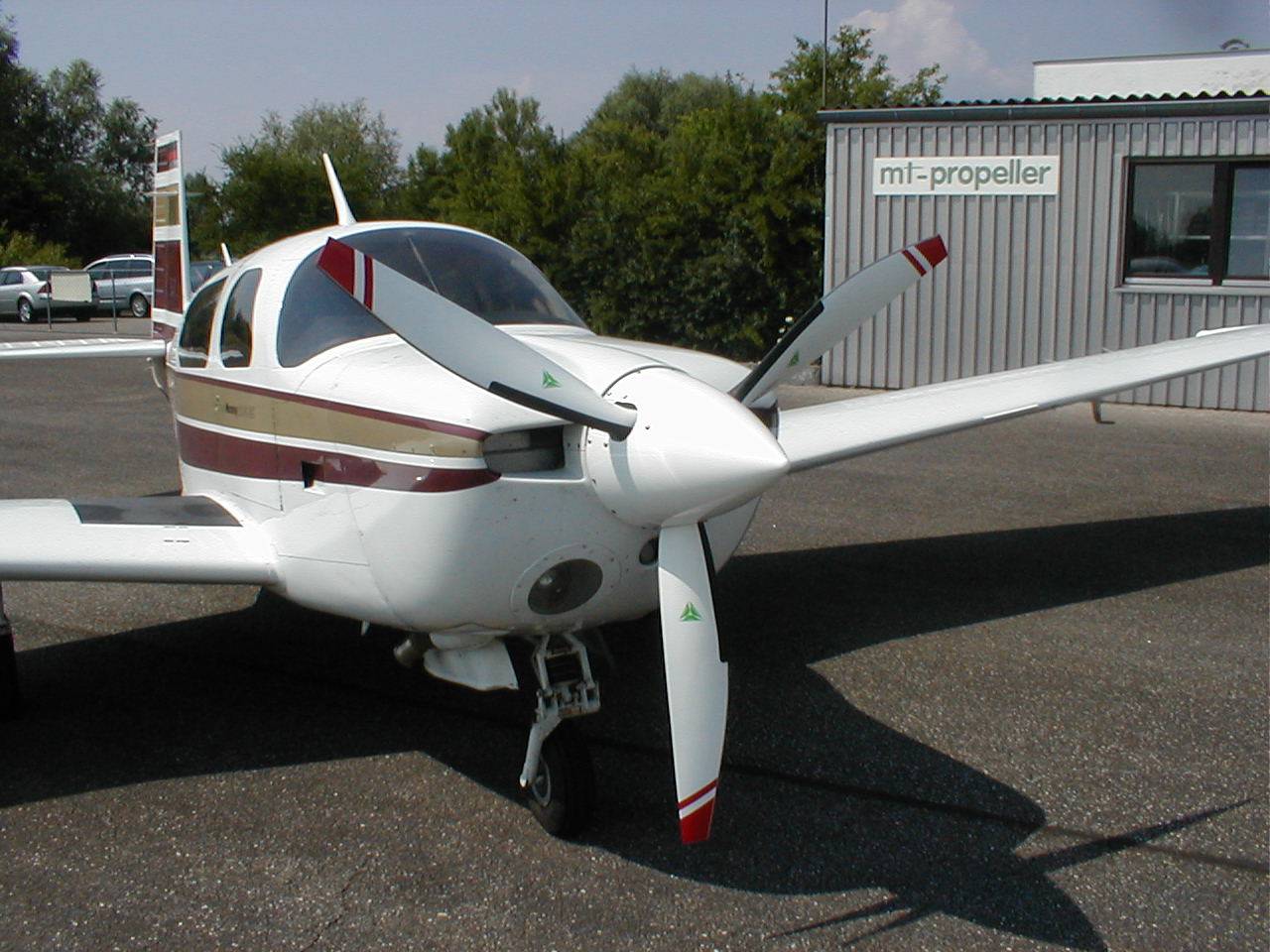
Mooney with 3-blade MTV-9
Our MT on the Mooney is performing beyond all expectations
-----
Dear Martin,
I hope you’re well, and happy 2026!
Just a short note.
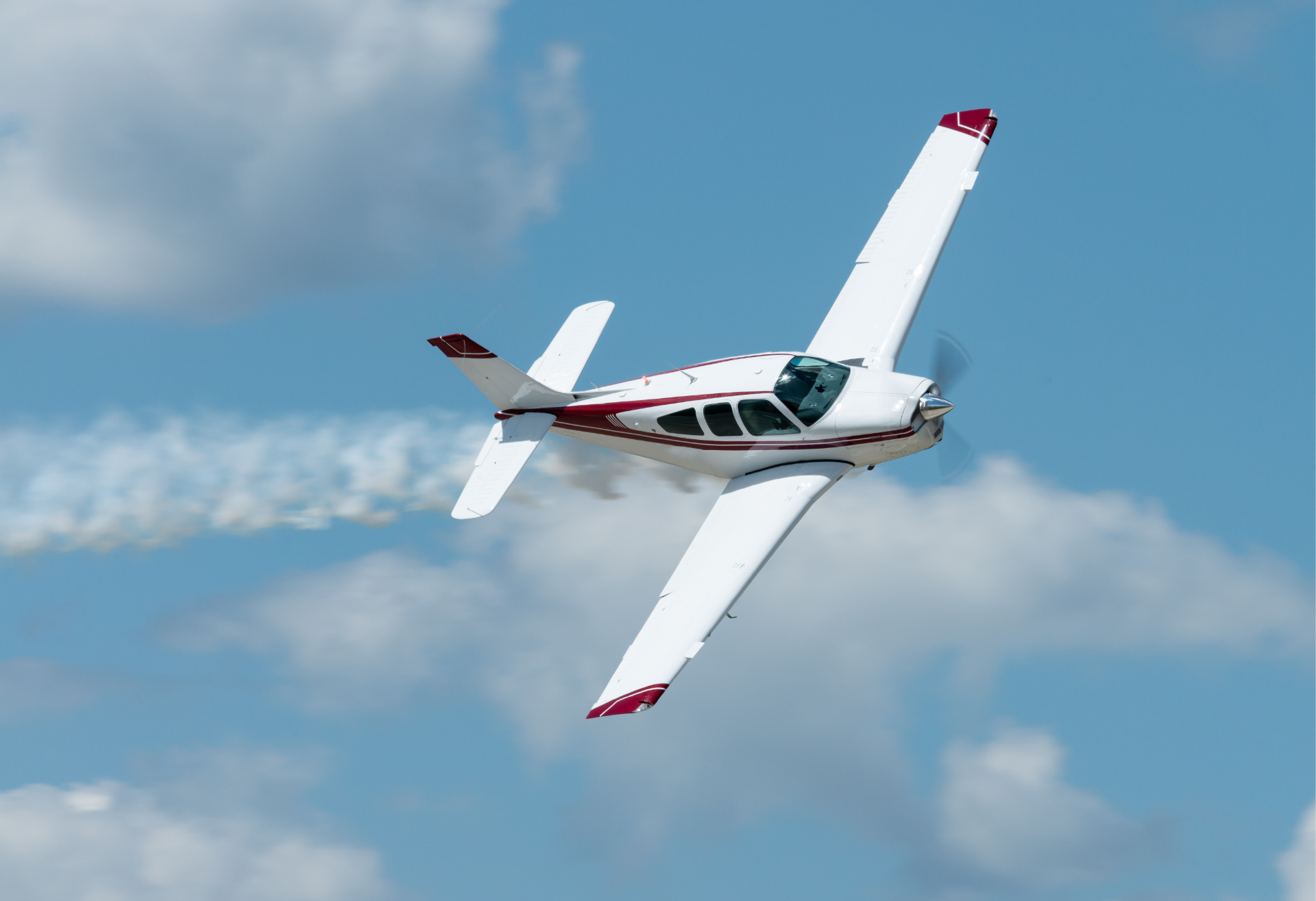
On the prop front, our MT on the Mooney is performing beyond all expectations now that we have almost 200 hours on it. We are regularly seeing 160 KTAS and the climb performance up to FL130 has been nothing short of amazing.
We are showing no signs of any erosion or indeed much at all. It still looks like new.
Kind regards
-----
Dear Martin,
I hope you’re well, and happy 2026!
Just a short note.
On the prop front, our MT on the Mooney is performing beyond all expectations now that we have almost 200 hours on it. We are regularly seeing 160 KTAS and the climb performance up to FL130 has been nothing short of amazing.
We are showing no signs of any erosion or indeed much at all. It still looks like new.
Kind regards
Steve F.

Cessna Caravan with 5-blade MTV-27
5-blade MT propeller, a much more powerful and quieter combination than the factory setup
----
Dear MT-propeller team,
During the winter, we had the opportunity to do a formation flight with our Cessna Caravan and another plane to capture some incredible images! It was just before our aircraft was ferried for its winter maintenance, a perfect moment to immortalize it at its best. We would like to share some of these images with you today.
As you may know, at the end of 2020, Paraclub Namur acquired this C208, which had already seen a lot of action. Since then, the plane has been gradually modernized, culminating in the winter of 2022-2023, when we undertook to upgrade the aircraft with a Blackhawk turbine and a 5-blade MT propeller, a much more powerful and quieter combination than the factory setup.
This plane is our "baby," and we hope the photos attached to this message convey the enthusiasm and pride we feel for this aircraft!
The engine and propeller combination changed the way we operate and we thought you would be happy to hear about it. If you have any questions or would like to see our plane or our operations up close, please do not hesitate to contact us. It is always a pleasure to welcome you to our club.
Best regards, or "blue skies" as we say!
----
Dear MT-propeller team,
During the winter, we had the opportunity to do a formation flight with our Cessna Caravan and another plane to capture some incredible images! It was just before our aircraft was ferried for its winter maintenance, a perfect moment to immortalize it at its best. We would like to share some of these images with you today.
As you may know, at the end of 2020, Paraclub Namur acquired this C208, which had already seen a lot of action. Since then, the plane has been gradually modernized, culminating in the winter of 2022-2023, when we undertook to upgrade the aircraft with a Blackhawk turbine and a 5-blade MT propeller, a much more powerful and quieter combination than the factory setup.
This plane is our "baby," and we hope the photos attached to this message convey the enthusiasm and pride we feel for this aircraft!
The engine and propeller combination changed the way we operate and we thought you would be happy to hear about it. If you have any questions or would like to see our plane or our operations up close, please do not hesitate to contact us. It is always a pleasure to welcome you to our club.
Best regards, or "blue skies" as we say!
Joey
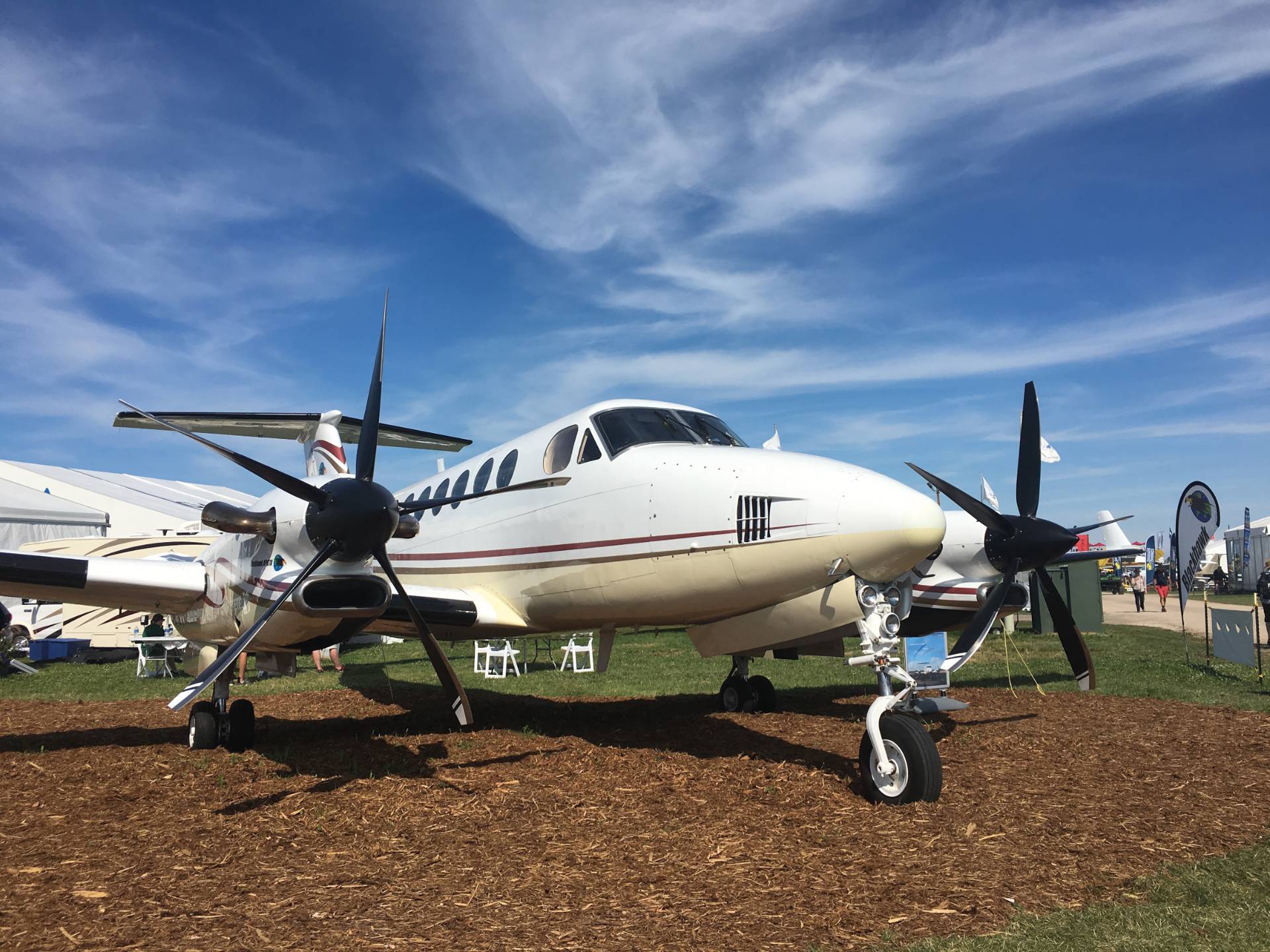
Beech King Air 200 and 300 5-blade MTV-27
With the MT Props, we never once had to change a blade at prop overhaul
-----
... I was the Director of Maintenance for Meta Special Aerospace (formerly Commuter Air Technology, now Metrea) from 2010 through 2022. During my tenure, my fleet of Intelligence, Surveillance, and Reconnaissance (ISR) aircraft amassed 133,000+ aircraft flight hours. We transitioned the fleet to MT propellers beginning sometime around 2014 and logged 180,000 propeller flight hours operating in harsh environments and out of airfields that left a bit to be desired all throughout North Africa, Afghanistan, The Philippines, and the United States. The fleet consisted of King Air B200's and B300's and our monthly utilization per aircraft overseas regularly exceeded 225 hours per month.
Initially, I was an opponent of moving away from our Hartzell 4-bladed aluminum propellers and installing these natural composite 5-bladed MT Props. I did not believe that they had the durability necessary... boy, I was wrong.
* With the old aluminum propellers, I could count on having to replace all four blades at every-other propeller overhaul. The blades would simply be worn from constant blending to remove FOD damage.
With the MT Props, we never once had to change a blade at prop overhaul. The MT props are smaller in diameter than the aluminum propellers, which means that they are further from the ground during ground operations, which means that they pick up exponentially less FOD during high power and prop reverse.
This is not to say that FOD blowing around is completely eliminated, but what FOD did strike the blades simply bounced off of the blades the majority of the time. On the few occasions that we would sustain damage, it was normally in the form of a shallow dent that is easily repaired per the maintenance manual with a two-part epoxy.
* Another advantage to less FOD being blown upward by the props is that we dramatically reduced the number of first stage compressor replacements of the engines at overhaul.
* The MT Props, having the reduced diameter but the same RPM, are much quieter due to the propeller tip speeds being much lower. I am sure that I do not have to tell you about all of the advantages that can bring.
* Inspection times were reduced due to these MT Props not needing blending or regular servicing with grease.
* The prop de-ice issues of failed wiring and/or de-ice boots remains about the same compared to an aluminum prop.
* Later in the program, I helped to develop an STC for the King Air B300 that eliminated the goofy Ground Fine system with all of it's rigging issues, solenoids, and switches. This is because the MT Props (unlike the aluminum props) have no low-RPM limitations. This STC is still available and simply eliminates many of the unnecessary parts.
* You mentioned blade trailing edge erosion and delamination; I never experienced either. I heard rumors about that, but my understanding is that was a minor issue on earlier MT Props that were installed on piston engine aircraft. The only issue that we ever had with the composite blades themselves was a short serial number range of props that were delivered new and the paint did not stick well on the blades. This caused no operational issues... it just looked ugly. We worked with MT Propeller and they rectified the issue on future propellers.
* It wasn't all rainbows and unicorns; The biggest issue that we had was that the MT Props started to sling grease from the blade roots starting just before mid-life (around 2,250 hours). We worked with MT and found that this was a result of the blade root o-ring wearing over time. To alleviate this, I instituted an internal "Propeller mid-life inspection/sealing" recommendation. We would just choose a convenient maintenance event near the mid-life mof the prop and remove the blades, clean everything, install new grease, install new o-rings, reinstall the blades, and perform a dynamic balance. The MT Prop design allows this to be accomplished on-wing and normally takes an experienced technician about a day per prop to accomplish. That's it. That was the biggest "problem".
* I did have to change a few blades on-wing over these 180,000+ propeller hours:
* Once from a runaway toolbox that hit a stationary propeller.
* Once from a fuel truck that struck a stationary propeller.
* Once when we shredded a NLG tire during takeoff and the majority of that tire went through the left prop. One blade separated near the root and another blade was cracked at about mid span. The resulting imbalance caused the engine to vibrate violently enough that the rear AGB case on that PT6 struck a part of the engine truss and had a hole worn through it. The nice thing is that the engine repair station found nothing wrong inside of the power section resulting from the impact to the blades. The other three blades and the hub from that propeller were returned to service after the unscheduled overhaul.
* Once a prop de-ice relay stuck in the on position, resulting in all of the de-ice boots overheating. We removed the blades and sent them in to MT thinking that they would all be scrapped due to heat damage. Instead, MT inspected the blades thoroughly and they were returned to service.
I have the highest regard for the MT Propellers due to their reduction in maintenance and operational costs, the reduction in aircraft downtime, and their overall durability. MT Prop has a wide network of service providers and customer support. I highly recommend that all operators consider these props for their operations. ...
-----
... I was the Director of Maintenance for Meta Special Aerospace (formerly Commuter Air Technology, now Metrea) from 2010 through 2022. During my tenure, my fleet of Intelligence, Surveillance, and Reconnaissance (ISR) aircraft amassed 133,000+ aircraft flight hours. We transitioned the fleet to MT propellers beginning sometime around 2014 and logged 180,000 propeller flight hours operating in harsh environments and out of airfields that left a bit to be desired all throughout North Africa, Afghanistan, The Philippines, and the United States. The fleet consisted of King Air B200's and B300's and our monthly utilization per aircraft overseas regularly exceeded 225 hours per month.
Initially, I was an opponent of moving away from our Hartzell 4-bladed aluminum propellers and installing these natural composite 5-bladed MT Props. I did not believe that they had the durability necessary... boy, I was wrong.
* With the old aluminum propellers, I could count on having to replace all four blades at every-other propeller overhaul. The blades would simply be worn from constant blending to remove FOD damage.
With the MT Props, we never once had to change a blade at prop overhaul. The MT props are smaller in diameter than the aluminum propellers, which means that they are further from the ground during ground operations, which means that they pick up exponentially less FOD during high power and prop reverse.
This is not to say that FOD blowing around is completely eliminated, but what FOD did strike the blades simply bounced off of the blades the majority of the time. On the few occasions that we would sustain damage, it was normally in the form of a shallow dent that is easily repaired per the maintenance manual with a two-part epoxy.
* Another advantage to less FOD being blown upward by the props is that we dramatically reduced the number of first stage compressor replacements of the engines at overhaul.
* The MT Props, having the reduced diameter but the same RPM, are much quieter due to the propeller tip speeds being much lower. I am sure that I do not have to tell you about all of the advantages that can bring.
* Inspection times were reduced due to these MT Props not needing blending or regular servicing with grease.
* The prop de-ice issues of failed wiring and/or de-ice boots remains about the same compared to an aluminum prop.
* Later in the program, I helped to develop an STC for the King Air B300 that eliminated the goofy Ground Fine system with all of it's rigging issues, solenoids, and switches. This is because the MT Props (unlike the aluminum props) have no low-RPM limitations. This STC is still available and simply eliminates many of the unnecessary parts.
* You mentioned blade trailing edge erosion and delamination; I never experienced either. I heard rumors about that, but my understanding is that was a minor issue on earlier MT Props that were installed on piston engine aircraft. The only issue that we ever had with the composite blades themselves was a short serial number range of props that were delivered new and the paint did not stick well on the blades. This caused no operational issues... it just looked ugly. We worked with MT Propeller and they rectified the issue on future propellers.
* It wasn't all rainbows and unicorns; The biggest issue that we had was that the MT Props started to sling grease from the blade roots starting just before mid-life (around 2,250 hours). We worked with MT and found that this was a result of the blade root o-ring wearing over time. To alleviate this, I instituted an internal "Propeller mid-life inspection/sealing" recommendation. We would just choose a convenient maintenance event near the mid-life mof the prop and remove the blades, clean everything, install new grease, install new o-rings, reinstall the blades, and perform a dynamic balance. The MT Prop design allows this to be accomplished on-wing and normally takes an experienced technician about a day per prop to accomplish. That's it. That was the biggest "problem".
* I did have to change a few blades on-wing over these 180,000+ propeller hours:
* Once from a runaway toolbox that hit a stationary propeller.
* Once from a fuel truck that struck a stationary propeller.
* Once when we shredded a NLG tire during takeoff and the majority of that tire went through the left prop. One blade separated near the root and another blade was cracked at about mid span. The resulting imbalance caused the engine to vibrate violently enough that the rear AGB case on that PT6 struck a part of the engine truss and had a hole worn through it. The nice thing is that the engine repair station found nothing wrong inside of the power section resulting from the impact to the blades. The other three blades and the hub from that propeller were returned to service after the unscheduled overhaul.
* Once a prop de-ice relay stuck in the on position, resulting in all of the de-ice boots overheating. We removed the blades and sent them in to MT thinking that they would all be scrapped due to heat damage. Instead, MT inspected the blades thoroughly and they were returned to service.
I have the highest regard for the MT Propellers due to their reduction in maintenance and operational costs, the reduction in aircraft downtime, and their overall durability. MT Prop has a wide network of service providers and customer support. I highly recommend that all operators consider these props for their operations. ...
Nic Hawker
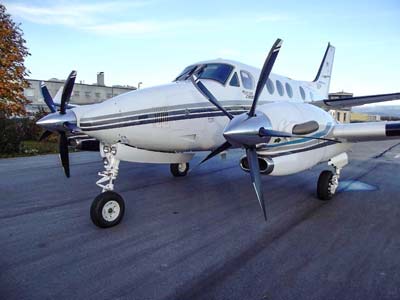
Beech King Air 5-blade MTV-27
Very happy with them, our goal was to significantly reduce cabin noise
---
Gday Chip, Very happy with them, our goal was to significantly reduce cabin noise and change the flight experience in a TurboProp, I’ve had people on the ramp notice how quiet they are and in the cabin I could literally fly the plane with the old handset and cockpit speakers without a headset.
I now have to close the Cockpit partition if the passengers want to have a quiet conversation because I can hear everything they’re saying from the cockpit and vice versa if they don’t want to hear cockpit chatter.
I also fly a King Air 350 that has the 4 bladed factory Hartzel Metal props, after going from our 90 into the 350 I actually find the 350 a little obnoxious for noise now, never thought I’d say that.
I have also noticed I’m less fatigued with the Whisper Props and I’d put these on any King Air I fly.
Regards,
---
Gday Chip, Very happy with them, our goal was to significantly reduce cabin noise and change the flight experience in a TurboProp, I’ve had people on the ramp notice how quiet they are and in the cabin I could literally fly the plane with the old handset and cockpit speakers without a headset.
I now have to close the Cockpit partition if the passengers want to have a quiet conversation because I can hear everything they’re saying from the cockpit and vice versa if they don’t want to hear cockpit chatter.
I also fly a King Air 350 that has the 4 bladed factory Hartzel Metal props, after going from our 90 into the 350 I actually find the 350 a little obnoxious for noise now, never thought I’d say that.
I have also noticed I’m less fatigued with the Whisper Props and I’d put these on any King Air I fly.
Regards,
Darrel W.
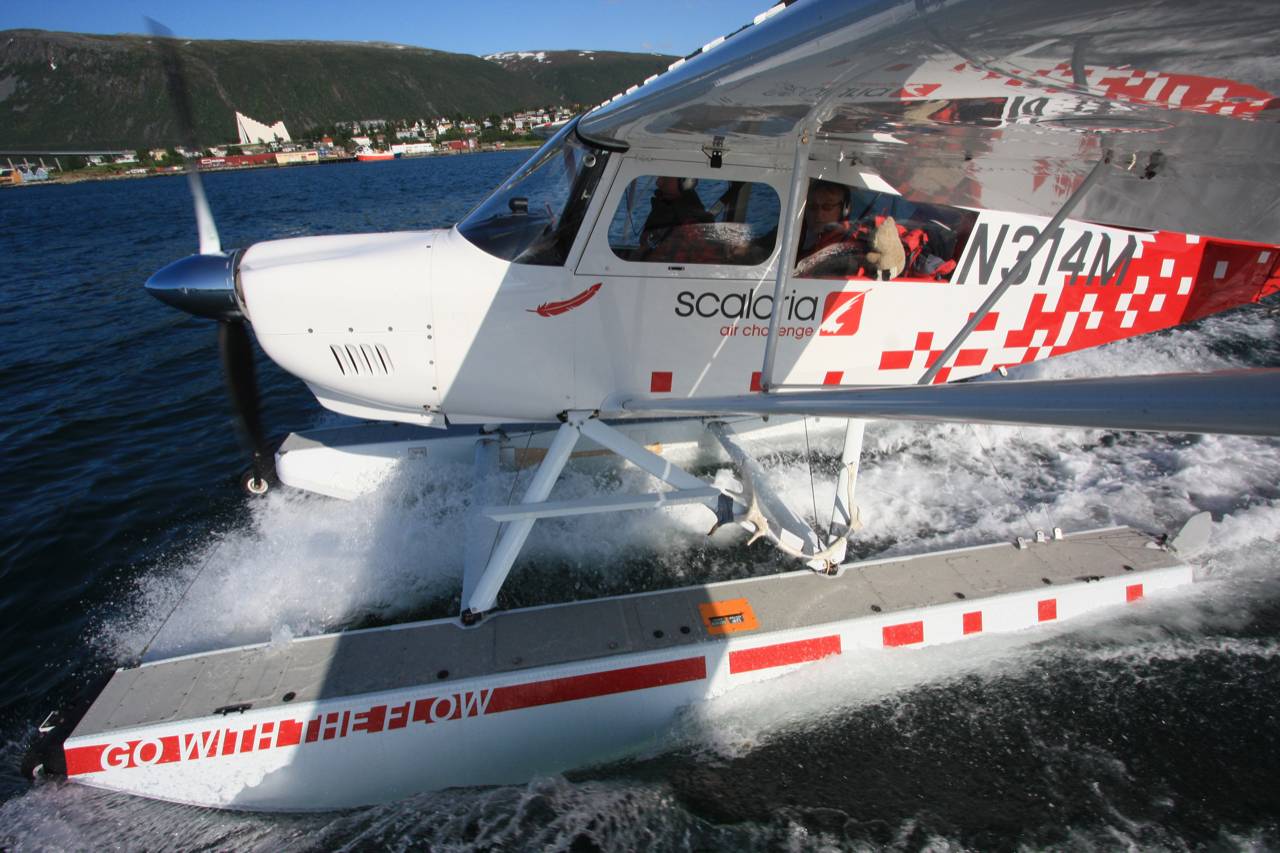
American Champion with MT-Propeller
After years of experience with MT Propellers I am nothing but full of praise.
-----
After years of experience with MT Propellers I am nothing but full of praise.
I have been operating them all over the world - in all sorts of climate.
In harsh arctic, as well as in desert or tropical environment.
Needless to say, that many runways were either unpaved or non existent.
Performance and reliability has always been outstanding.
The after-sales service and support was excellent.
If light maintenance was due, all that was needed is studying the service book and than do it yourself.
If remote support was needed from far away places like the jungles of Borneo, a ring via SAT Phone brought me in contact with the service engineer - problem solved.
Many thanks to the entire MT team Your props pulled me places ….
-----
After years of experience with MT Propellers I am nothing but full of praise.
I have been operating them all over the world - in all sorts of climate.
In harsh arctic, as well as in desert or tropical environment.
Needless to say, that many runways were either unpaved or non existent.
Performance and reliability has always been outstanding.
The after-sales service and support was excellent.
If light maintenance was due, all that was needed is studying the service book and than do it yourself.
If remote support was needed from far away places like the jungles of Borneo, a ring via SAT Phone brought me in contact with the service engineer - problem solved.
Many thanks to the entire MT team Your props pulled me places ….
Stefan Mommertz
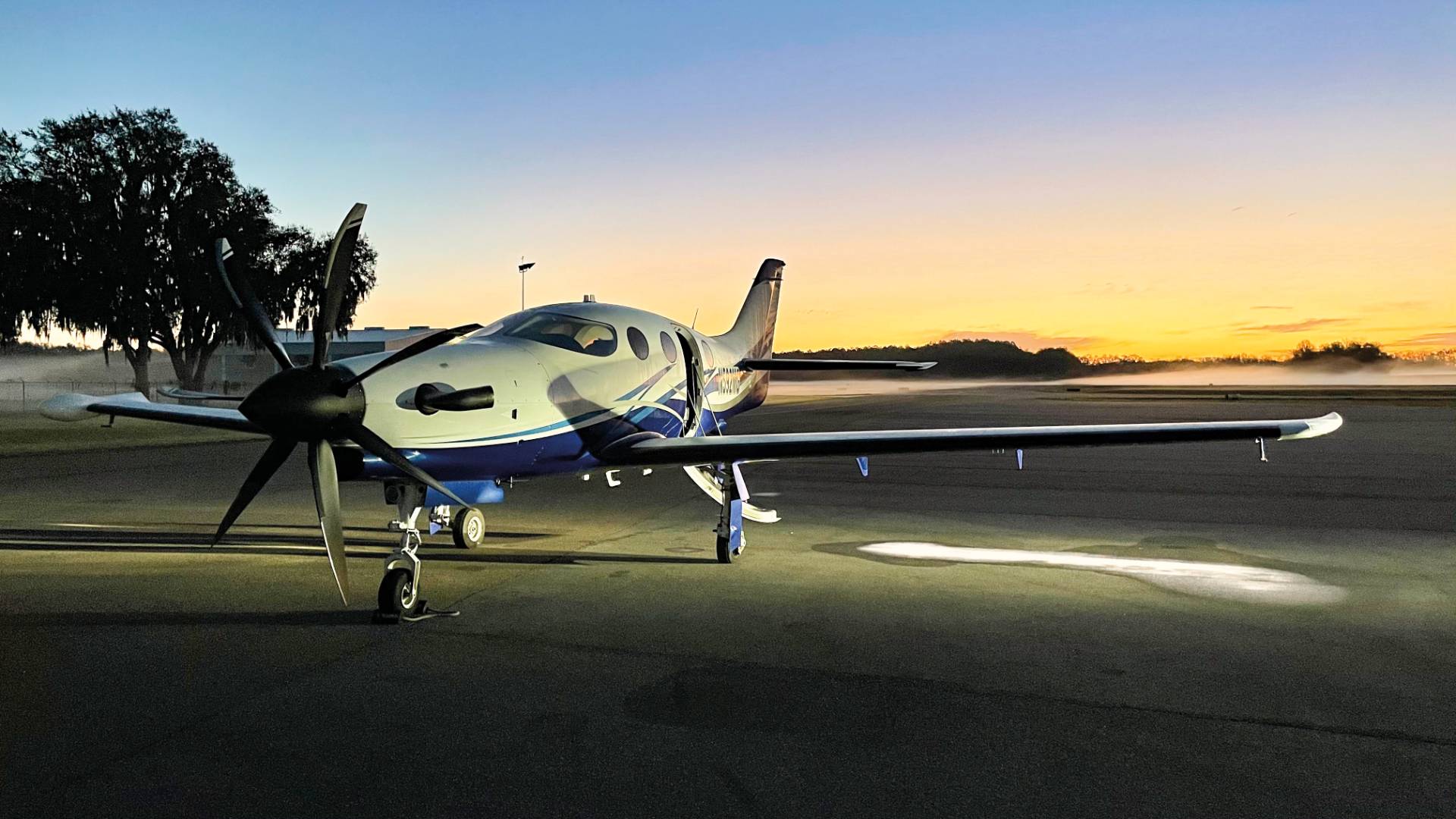
Epic with 7-blade MT-Propeller
What a transformation!
----
Martin,
What a transformation!
The noise level reduction inside the plane is dramatic and outside it sounds more like a jet than a turboprop.
Major increase in climb rate, still need to do some more testing at typical loads but we hit FL 280 in 13 min yesterday with full fuel and 6 full size men.
We are loving the propeller thanks a bunch for all your help.
Very happy.
Thanks!
----
Martin,
What a transformation!
The noise level reduction inside the plane is dramatic and outside it sounds more like a jet than a turboprop.
Major increase in climb rate, still need to do some more testing at typical loads but we hit FL 280 in 13 min yesterday with full fuel and 6 full size men.
We are loving the propeller thanks a bunch for all your help.
Very happy.
Thanks!
Jim H.
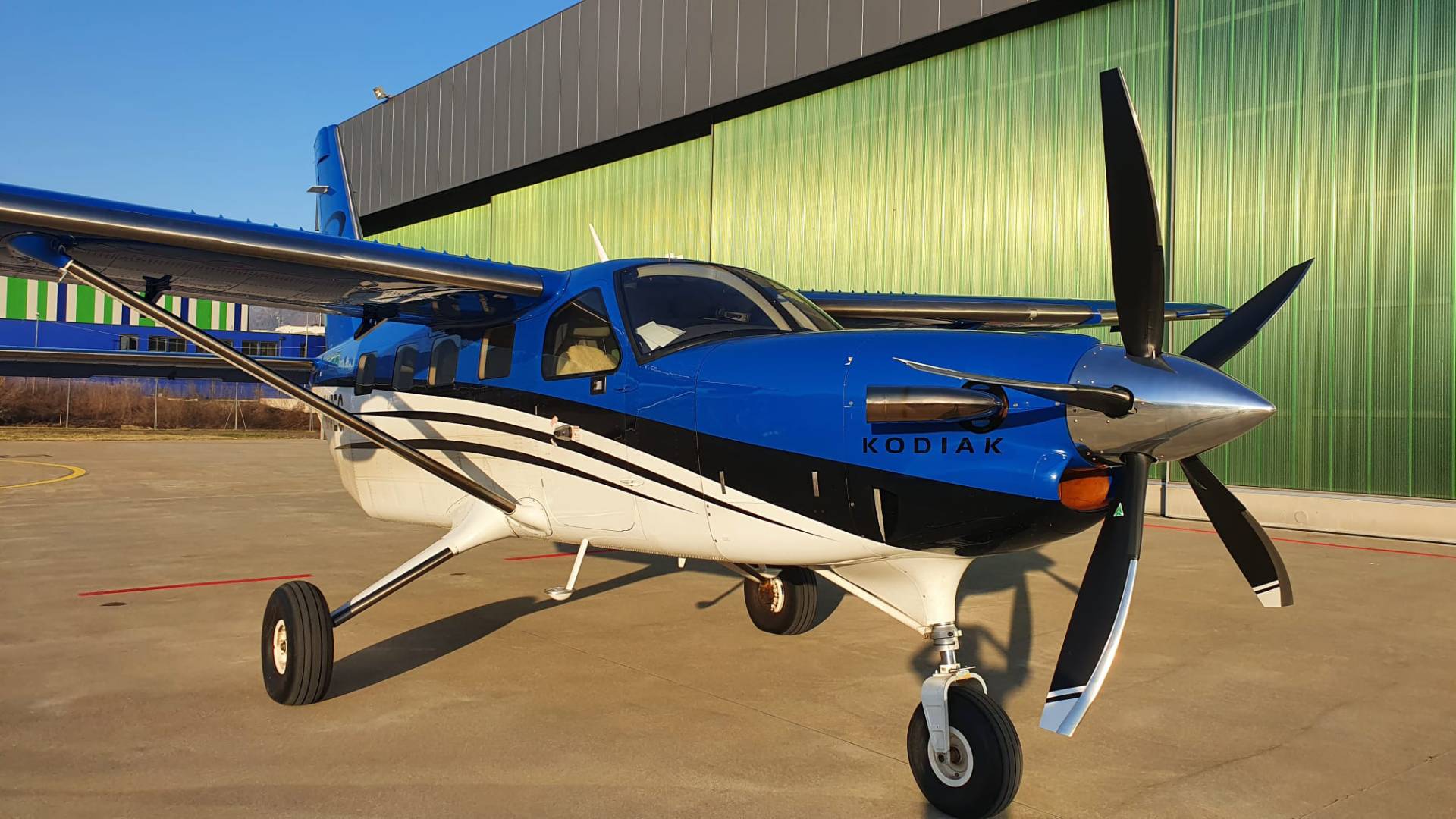
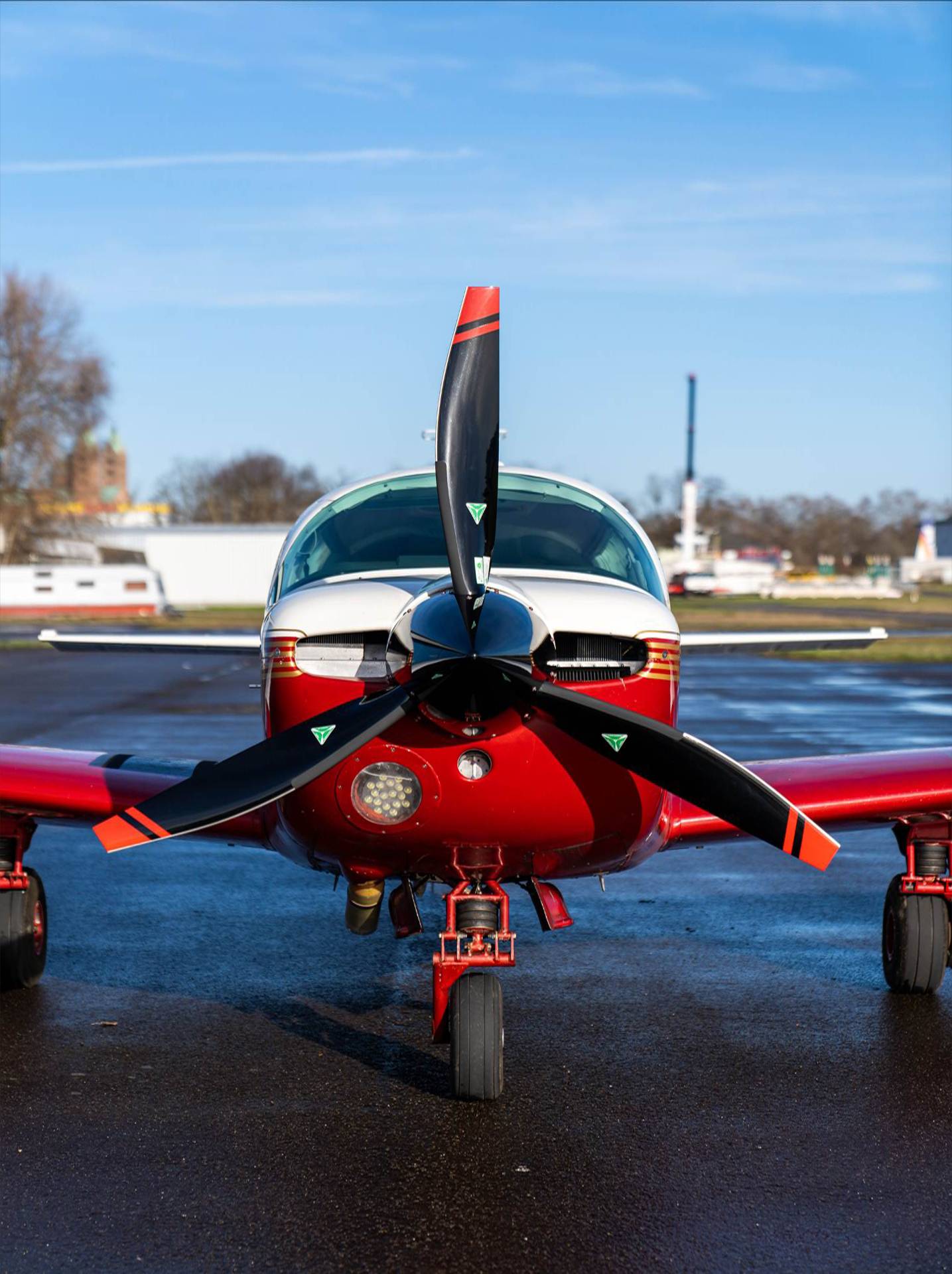
Mooney with 3-blade MTV-12
...wieder einmal von Ihrem Produkt begeistert!
----
Hallo Herr Albrecht,
Nach ca. 25h mit dem neuen MTV-12-B möchte ich Ihnen heute ein Feedback geben.
1. der Propeller verändert die Charakteristik der Mooney nachhaltig: vorbei ist die Zeit, in der der IO360 schüttelt und vibriert wie ein alter Ochsenkarren!
2. im Reiseflug bei 75%Leistung hat sich ein Powersetting von 2200RPM/26“MP bestens bewährt, mit Long Range-Powersetting: "2000RPM/18-20“MP“ sensationell geringem FF
3. Vibrationen sind zu 95% verschwunden.
4. Lärm in der Kabine: bei 2200RPM hat sich der Lärmpegel um ca. 2,8-3dB reduziert (mich stören nun die Windgeräusche der defekten Türdichtung)
5. Leistungssteigerung: ca. 50m kürzere Startstrecke, +150-200ft bessere climb-rate, exakt gleiche Reisegeschwindigkeit von 160kts bei 75% Power(ca. 6-8.000ftMSL je nach Temp).
6. Verhalten in der Platzrunde/Landung: das unangenehme „schütteln“ bei Drehzahlen unter 2400 und unter 18“MP sind komplett eliminiert.
7. Anlassen und Abstellen des Motors: schnelles, seidenweiches Anlassen, kein schütteln beim Abstellen.
Wie schon meine Erfahrungen bei der Aerostar und TBM mit Ihren Propellern, bin ich wieder einmal von Ihrem Produkt begeistert!
Danke.
Safety is no accident!
----
Hallo Herr Albrecht,
Nach ca. 25h mit dem neuen MTV-12-B möchte ich Ihnen heute ein Feedback geben.
1. der Propeller verändert die Charakteristik der Mooney nachhaltig: vorbei ist die Zeit, in der der IO360 schüttelt und vibriert wie ein alter Ochsenkarren!
2. im Reiseflug bei 75%Leistung hat sich ein Powersetting von 2200RPM/26“MP bestens bewährt, mit Long Range-Powersetting: "2000RPM/18-20“MP“ sensationell geringem FF
3. Vibrationen sind zu 95% verschwunden.
4. Lärm in der Kabine: bei 2200RPM hat sich der Lärmpegel um ca. 2,8-3dB reduziert (mich stören nun die Windgeräusche der defekten Türdichtung)
5. Leistungssteigerung: ca. 50m kürzere Startstrecke, +150-200ft bessere climb-rate, exakt gleiche Reisegeschwindigkeit von 160kts bei 75% Power(ca. 6-8.000ftMSL je nach Temp).
6. Verhalten in der Platzrunde/Landung: das unangenehme „schütteln“ bei Drehzahlen unter 2400 und unter 18“MP sind komplett eliminiert.
7. Anlassen und Abstellen des Motors: schnelles, seidenweiches Anlassen, kein schütteln beim Abstellen.
Wie schon meine Erfahrungen bei der Aerostar und TBM mit Ihren Propellern, bin ich wieder einmal von Ihrem Produkt begeistert!
Danke.
Safety is no accident!
Walter Adam
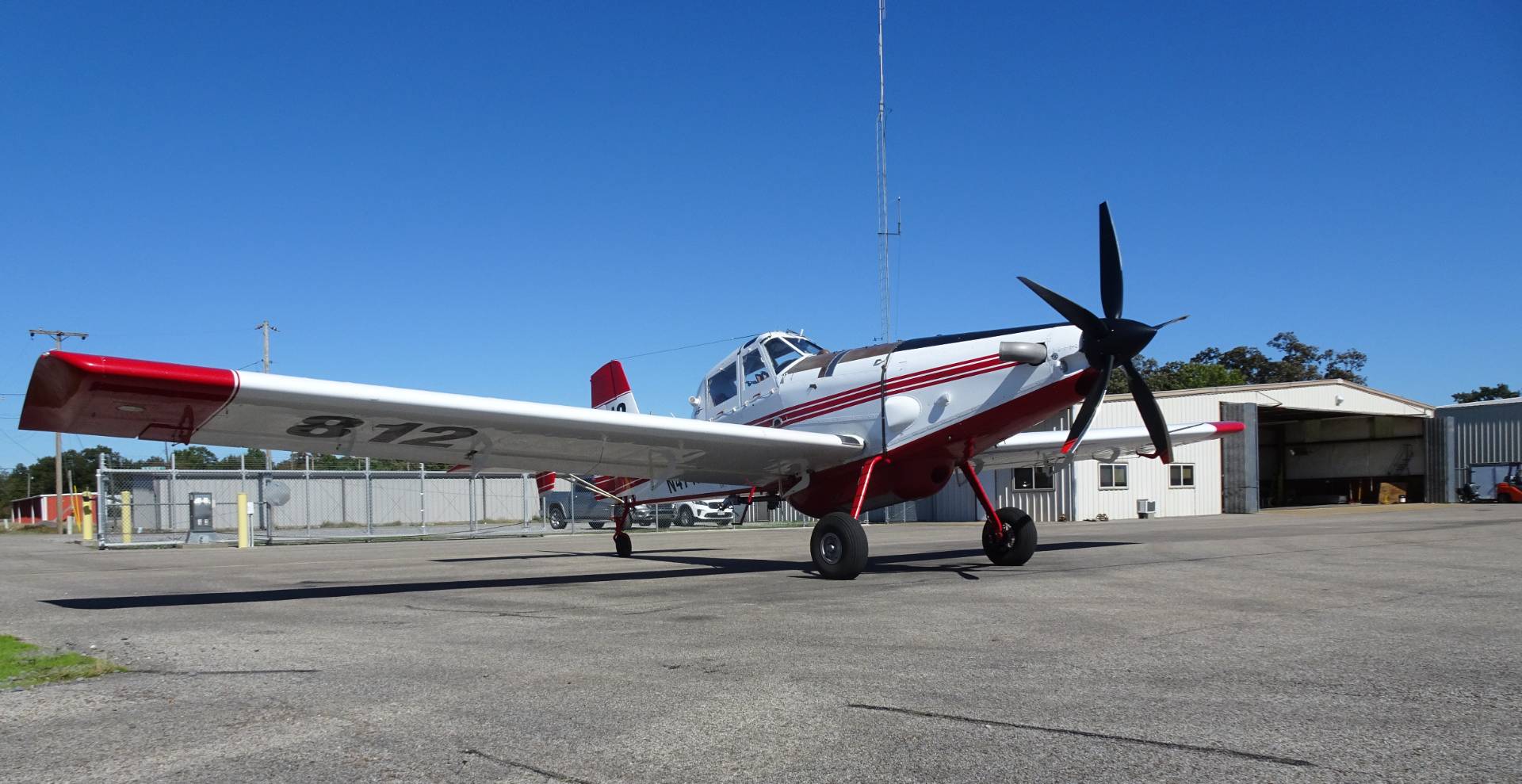
Airtractor with 5-blade MTV-27
It consistently out climbs the Hartzell.
----
We have it working fires in Utah.
Its installed on our heaviest aircraft (Two Seat) and is working along side one of our Lightest. It consistently out climbs the Hartzell.
The fuel burn seem to be better at the same speeds.
We will keep notes and give you a report at the end of the Season...
Thanks
----
We have it working fires in Utah.
Its installed on our heaviest aircraft (Two Seat) and is working along side one of our Lightest. It consistently out climbs the Hartzell.
The fuel burn seem to be better at the same speeds.
We will keep notes and give you a report at the end of the Season...
Thanks
Darrin Henry
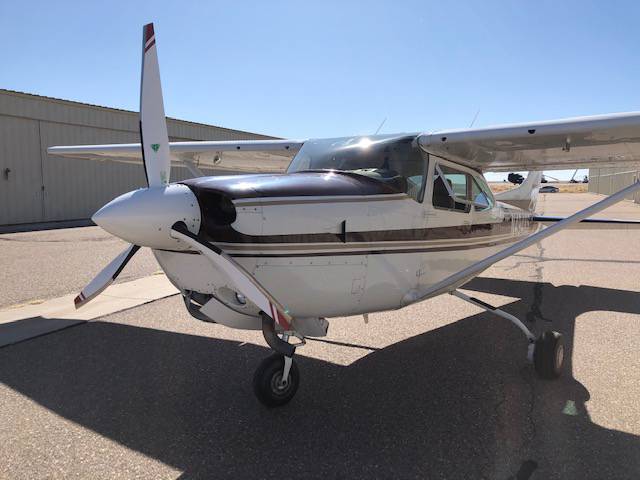
1980 Turbo-RG Skylane with 3-blade MTV-9
the MTV-9-B was consistently 3 to 5 knots FASTER than my old propeller
---
Martin,
I want to thank you and the team at MT Propeller and Warner Propeller Service for the quick resolution to the fit problem of the MTV-9 propeller onto my 1980 Turbo-RG Skylane. I am very pleased with the final spinner to cowling fit, which now ranges from 12mm to 15mm.
I test flew the plane yesterday at 8,000 and 12,000 feet MSL. Climb to altitude seemed similar to the 2-blade McCauley propeller but it is very hard to duplicate conditions. What surprised me was the true airspeed at cruise. Most everyone told me to expect to lose as much as 10kts at cruise. That was not the case. At power settings from 40% to 75% the MTV-9-B was consistently 3 to 5 knots FASTER than my old propeller. The 2-blade McCauley had 2200 hours total time and 400 since overhaul so I expect it would also be better when new, I am still impressed with the performance of this MT propeller. The MT is indeed very smooth at all speed and power settings.
I am looking forward to taking it on several long trips in the near future up higher (17,000). The higher I went the better it seem to be over the 2-blade metal propeller.
Thanks,
---
Martin,
I want to thank you and the team at MT Propeller and Warner Propeller Service for the quick resolution to the fit problem of the MTV-9 propeller onto my 1980 Turbo-RG Skylane. I am very pleased with the final spinner to cowling fit, which now ranges from 12mm to 15mm.
I test flew the plane yesterday at 8,000 and 12,000 feet MSL. Climb to altitude seemed similar to the 2-blade McCauley propeller but it is very hard to duplicate conditions. What surprised me was the true airspeed at cruise. Most everyone told me to expect to lose as much as 10kts at cruise. That was not the case. At power settings from 40% to 75% the MTV-9-B was consistently 3 to 5 knots FASTER than my old propeller. The 2-blade McCauley had 2200 hours total time and 400 since overhaul so I expect it would also be better when new, I am still impressed with the performance of this MT propeller. The MT is indeed very smooth at all speed and power settings.
I am looking forward to taking it on several long trips in the near future up higher (17,000). The higher I went the better it seem to be over the 2-blade metal propeller.
Thanks,
Mike Rehberg
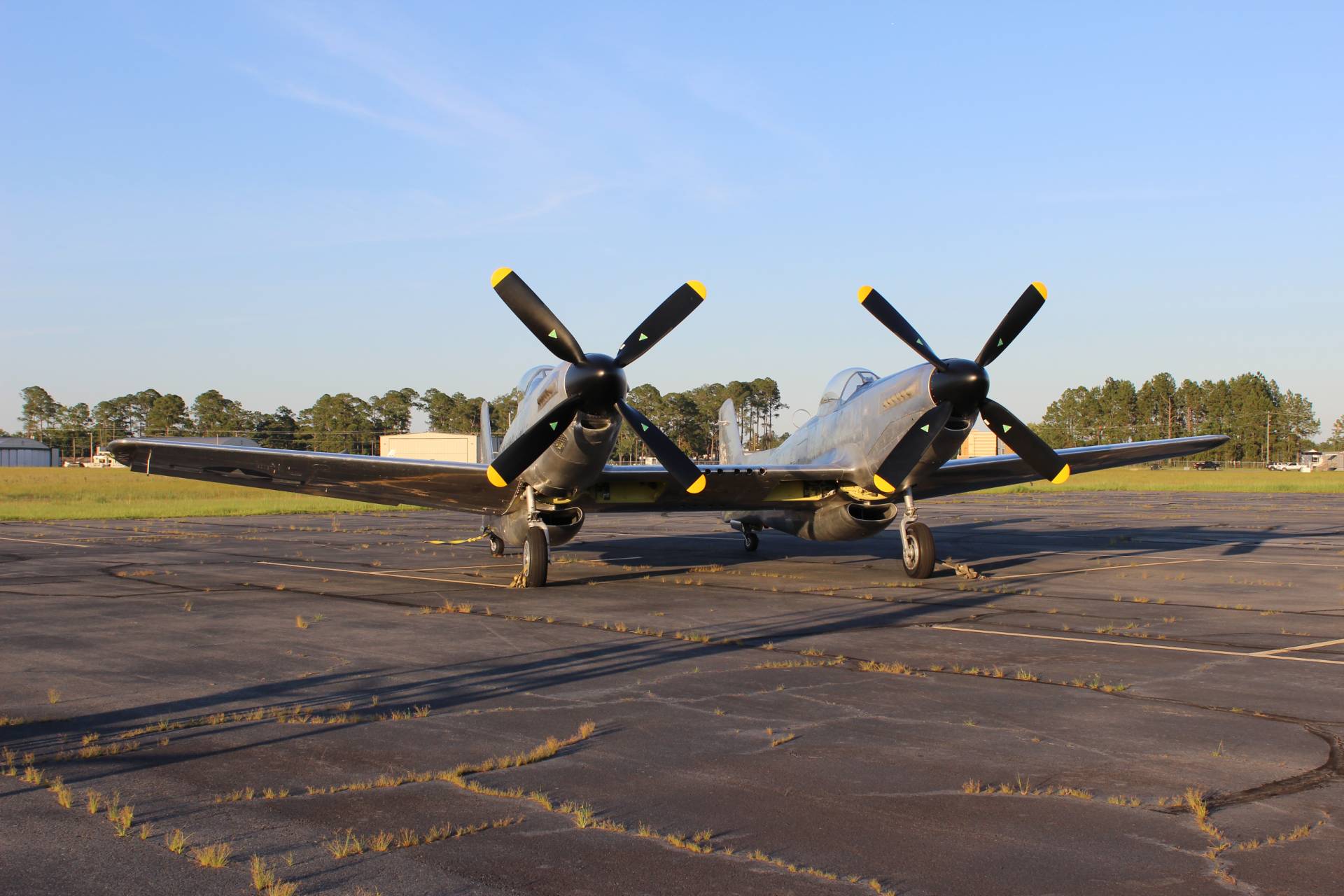
XP-82 Twin Mustang with MT-Propeller
Your propellers are as smooth as glass
---
XP-82 First Flight
On 31 December 2018, our XP-82 Twin Mustang flew for the first time since 14 December 1949. Although it wasn’t supposed to fly yesterday, all that was planned to do was the last FAA required runway high-speed taxi test, lift off for a second or two and then back down, deploy full flaps and brake to a stop. It accelerated so fast after the planned lift off that Ray, our test pilot, realized that getting it back down and stopping it in the remaining runway would be marginal. So he pushed the power back up and flew for about five minutes.
The unexpected and dramatic acceleration of our XP-82 at 55 inches of manifold pressure occurred because it was approaching three times the horsepower of a single engine Mustang and one and a half times the weight. The XP-82 has 1860 hp each side for total of 3720 hp, compared to 1500 hp for the P-51. Our XP-82 weighs approximately only 1 1/2 times more than a P-51 - 14,700 lbs. compared to 9500 lbs. for the P-51.
The very short gear-down flight showed zero airframe squawks, hands-off no trim required, with all engine temps and pressures normal.
This wonderful test flight came after a 10.5 year restoration encompassing 207,000 labor hours. Many thanks to Ray Fowler, our test pilot and all of the men and women that made this restoration possible.
Gerd
Your propellers are as smooth as glass, they come up to 3000 rpm on take-off and control throughout all ranges perfectly.
Thank you for your support.
---
XP-82 First Flight
On 31 December 2018, our XP-82 Twin Mustang flew for the first time since 14 December 1949. Although it wasn’t supposed to fly yesterday, all that was planned to do was the last FAA required runway high-speed taxi test, lift off for a second or two and then back down, deploy full flaps and brake to a stop. It accelerated so fast after the planned lift off that Ray, our test pilot, realized that getting it back down and stopping it in the remaining runway would be marginal. So he pushed the power back up and flew for about five minutes.
The unexpected and dramatic acceleration of our XP-82 at 55 inches of manifold pressure occurred because it was approaching three times the horsepower of a single engine Mustang and one and a half times the weight. The XP-82 has 1860 hp each side for total of 3720 hp, compared to 1500 hp for the P-51. Our XP-82 weighs approximately only 1 1/2 times more than a P-51 - 14,700 lbs. compared to 9500 lbs. for the P-51.
The very short gear-down flight showed zero airframe squawks, hands-off no trim required, with all engine temps and pressures normal.
This wonderful test flight came after a 10.5 year restoration encompassing 207,000 labor hours. Many thanks to Ray Fowler, our test pilot and all of the men and women that made this restoration possible.
Gerd
Your propellers are as smooth as glass, they come up to 3000 rpm on take-off and control throughout all ranges perfectly.
Thank you for your support.
Tom Reilly

Beech King Air 200 with 5-blade MT Video
your props reduce the ambient noise level in the cabin from 7-9 dB on the “A” scale
----
Dear MT!
Here are 2 videos and a photo illustrating the awesomeness of your 5 blade composite props on a KA B200 with Blackhawk engine upgrades.
N826WG tail number.
The photo was taken at level flight, 290 knts, 28500 ft. Only 84dB. We can hear the pilots talking now and they can hear us.
We did a ton of noise level measurements that we can send if you want the data. We did the recordings with both a dosimeter as well my iPhone using Decibel X Pro (app) from multiple positions onboard, including the cockpit (before and after installing your props).
Long story shortened, your props reduce the ambient noise level in the cabin from 7-9 dB on the “A” scale. Huge difference.
Love them!
Youtube Video Links:
https://youtu.be/873KNPxq1RE
https://youtu.be/9g33h1Dg01o
I did these videos because before I purchased your props, I searched all over the internet trying to find testimonials of noise level reduction. I couldn’t find anything.
----
Dear MT!
Here are 2 videos and a photo illustrating the awesomeness of your 5 blade composite props on a KA B200 with Blackhawk engine upgrades.
N826WG tail number.
The photo was taken at level flight, 290 knts, 28500 ft. Only 84dB. We can hear the pilots talking now and they can hear us.
We did a ton of noise level measurements that we can send if you want the data. We did the recordings with both a dosimeter as well my iPhone using Decibel X Pro (app) from multiple positions onboard, including the cockpit (before and after installing your props).
Long story shortened, your props reduce the ambient noise level in the cabin from 7-9 dB on the “A” scale. Huge difference.
Love them!
Youtube Video Links:
https://youtu.be/873KNPxq1RE
https://youtu.be/9g33h1Dg01o
I did these videos because before I purchased your props, I searched all over the internet trying to find testimonials of noise level reduction. I couldn’t find anything.
David Wesson
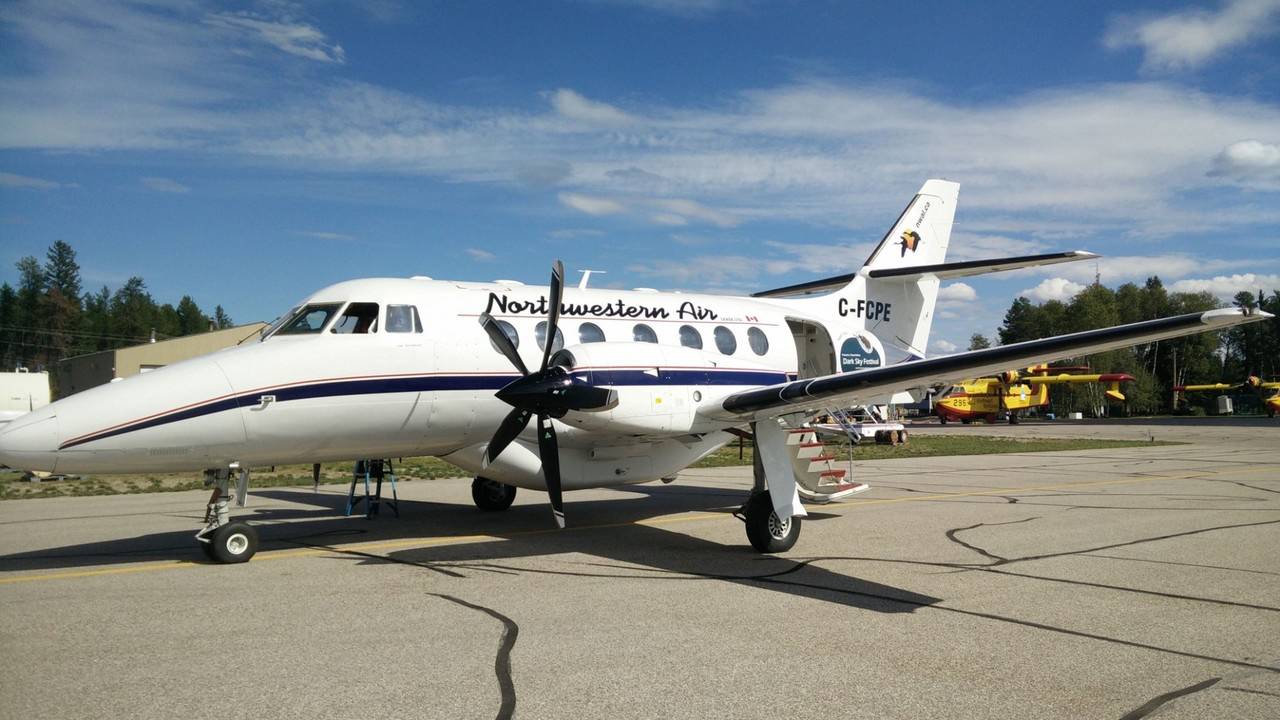
Jetstream 31 with 5-blade MTV-27
We have found that there is a significant reduction in the noise levels
----
Northwestern Air Lease Ltd. has converted our Jetstream 31 to MT propellers and is extremely pleased with the result. We have found that there is a significant reduction in the noise levels in the cabin and outside the aircraft.
Passengers can carry out a normal conversation in the aircraft. The response of the propellers to changes is much quicker with the MT propellers, when pilots select reverse and with the application of power the response is much more positive. We feel that we are seeing a lower fuel consumption and a slight increase in speed with the MT propellers. I would not hesitate to recommend the MT propellers to any operators.
Both the manufacturer, MT Propellers Entwicklung Gmb in Germany and AMK Aviation Inc., the dealer in Ontario have provided outstanding technical support, advice on operating these props and maintenance training. We are very impressed by the support by both the manufacturer and the dealer. We are looking at converting the rest of our fleet as soon as possible.
----
Northwestern Air Lease Ltd. has converted our Jetstream 31 to MT propellers and is extremely pleased with the result. We have found that there is a significant reduction in the noise levels in the cabin and outside the aircraft.
Passengers can carry out a normal conversation in the aircraft. The response of the propellers to changes is much quicker with the MT propellers, when pilots select reverse and with the application of power the response is much more positive. We feel that we are seeing a lower fuel consumption and a slight increase in speed with the MT propellers. I would not hesitate to recommend the MT propellers to any operators.
Both the manufacturer, MT Propellers Entwicklung Gmb in Germany and AMK Aviation Inc., the dealer in Ontario have provided outstanding technical support, advice on operating these props and maintenance training. We are very impressed by the support by both the manufacturer and the dealer. We are looking at converting the rest of our fleet as soon as possible.
Brian Harrold
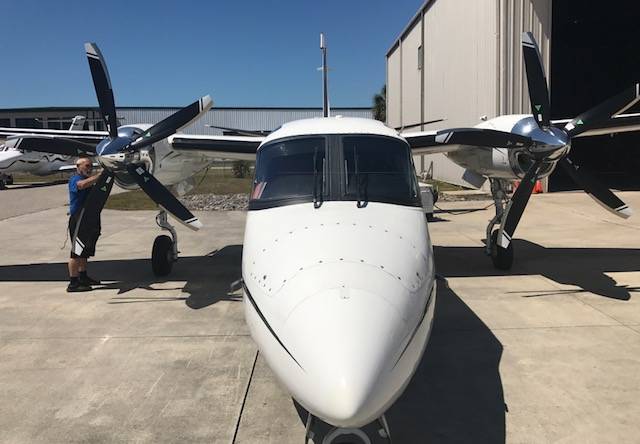
Twin Commander with 5-blade MTV-27
climbs faster, takes off in a shorter distance, cruises faster
---
Martin, I love the props!
They are sexy as hell and create a lot ramp appeal which is helping with our fundraising efforts.
Performance wise the plane climbs faster, takes off in a shorter distance, cruises faster, has more prop clearance, is 50% quieter, the vibration is gone and the engines start up more quickly.
We have done a feasibility study and we are planning a 5,000 mile leg over Antartica!
I am currently talking to Jeppesen about doing EAA Young Eagle events this coming year using the plane and Gleim simulators programmed to emergencies over Antartica.
... Thanks guys for the great props!
Happy Holidays,
---
Martin, I love the props!
They are sexy as hell and create a lot ramp appeal which is helping with our fundraising efforts.
Performance wise the plane climbs faster, takes off in a shorter distance, cruises faster, has more prop clearance, is 50% quieter, the vibration is gone and the engines start up more quickly.
We have done a feasibility study and we are planning a 5,000 mile leg over Antartica!
I am currently talking to Jeppesen about doing EAA Young Eagle events this coming year using the plane and Gleim simulators programmed to emergencies over Antartica.
... Thanks guys for the great props!
Happy Holidays,
Robert
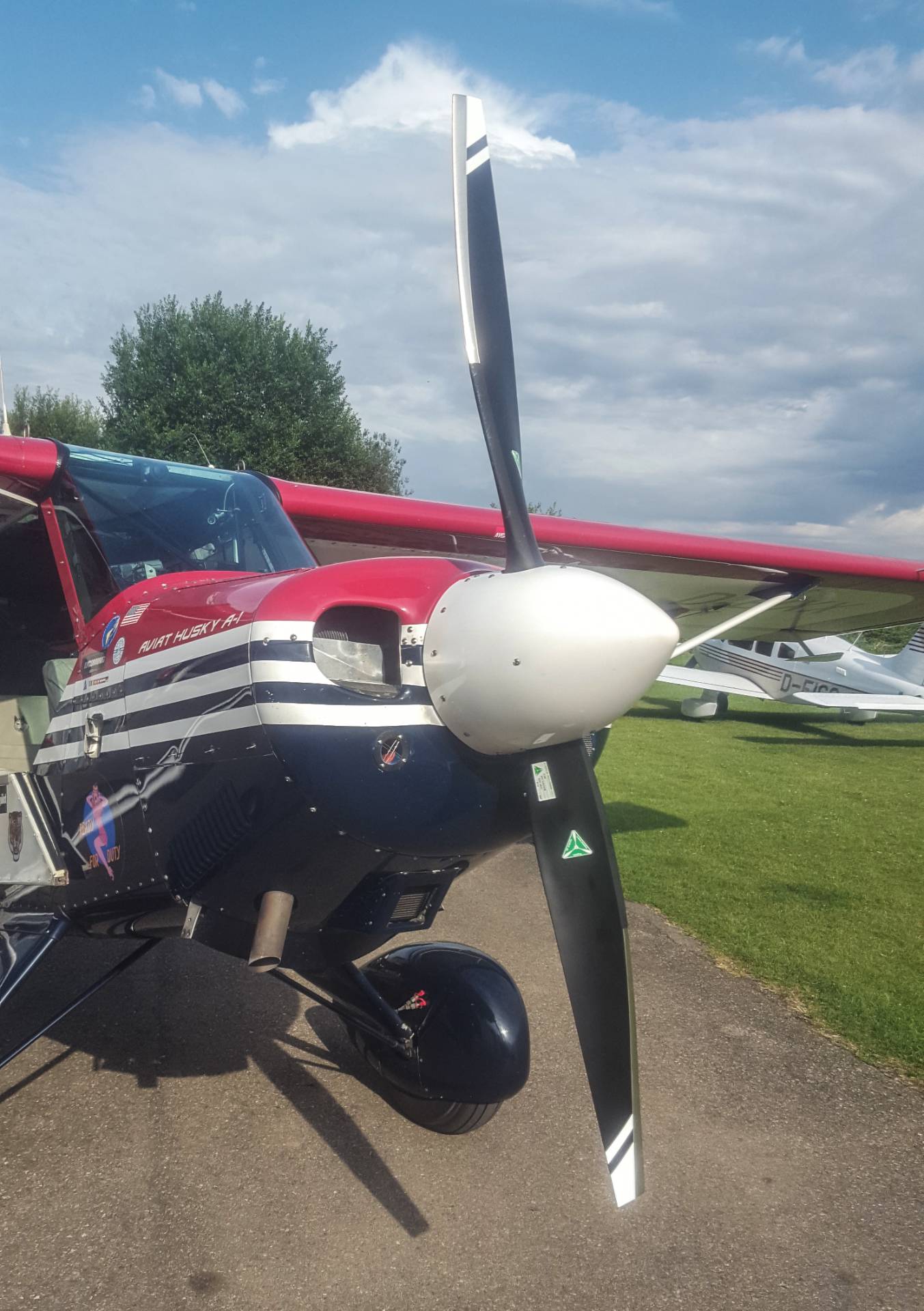
Husky Snowbird with 2-blade MTV-15
with immediate throttle response, it bites like a Pyranhia
---
I do a lot of ski flying in the Alps with my Husky / Snowbird conversion.
Performance is all what counts when you land at 14.500 ft in a Density Altitude of 18. 000 ft at Mt Rosa. Even the downhill takeoff run is challenging, if not enough thrust is delivered. Since the MTV 15 was availabe, had it on my plane. After other props were availabe I tried them, but the performance was not what I expected. So I went back several times to the MTV-15.
Now with the ULTRA being STCd, it’s the prop of my choice. Lighter than any other certified composite prop, quieter and with immediate throttle response, it bites like a Pyranhia. Cruise is 3 KTS faster, climb is better and its running super smooth with its Nickel Kobalt Leading edges.
Thanks you guys at MT for making such a great product available.
---
I do a lot of ski flying in the Alps with my Husky / Snowbird conversion.
Performance is all what counts when you land at 14.500 ft in a Density Altitude of 18. 000 ft at Mt Rosa. Even the downhill takeoff run is challenging, if not enough thrust is delivered. Since the MTV 15 was availabe, had it on my plane. After other props were availabe I tried them, but the performance was not what I expected. So I went back several times to the MTV-15.
Now with the ULTRA being STCd, it’s the prop of my choice. Lighter than any other certified composite prop, quieter and with immediate throttle response, it bites like a Pyranhia. Cruise is 3 KTS faster, climb is better and its running super smooth with its Nickel Kobalt Leading edges.
Thanks you guys at MT for making such a great product available.
Thomas Dietrich
RV8 with MT-Propeller
The propeller is running beautifully, and I am more than happy with its performance
---
Dear Martin,
I am writing to express my sincere thanks for helping me resolve the recent dispute I had with a prop shop regarding the overhaul of my 183-59b propeller for my RV-8.
The courtesy and professionalism you extended me were most appreciated, and the people who helped me at MTPUSA---particularly, Peter, Juergen, Ryan, and Sarah---were superb in helping me get airborne again.
The propeller is running beautifully, and I am more than happy with its performance. As ever, MT Propeller has once again exceeded all expectations and has delivered the best product, the best customer service in the industry, which is why I recommend to any pilot or builder, especially Vans Aircraft enthusiasts, MT Propellers for their aircraft. Hands down, nothing else comes close.
Again, I thank you so much for your help and support!
Sincerely,
---
Dear Martin,
I am writing to express my sincere thanks for helping me resolve the recent dispute I had with a prop shop regarding the overhaul of my 183-59b propeller for my RV-8.
The courtesy and professionalism you extended me were most appreciated, and the people who helped me at MTPUSA---particularly, Peter, Juergen, Ryan, and Sarah---were superb in helping me get airborne again.
The propeller is running beautifully, and I am more than happy with its performance. As ever, MT Propeller has once again exceeded all expectations and has delivered the best product, the best customer service in the industry, which is why I recommend to any pilot or builder, especially Vans Aircraft enthusiasts, MT Propellers for their aircraft. Hands down, nothing else comes close.
Again, I thank you so much for your help and support!
Sincerely,
Scott Chastain
TBM with 5-blade MT-Propeller
I cannot believe how the vibration was reduced to nil
----
This is a picture of your five blade on my Tbm turning off runway 15 at the cape ! And I was wrong you can count all five when running !
I cannot believe how the vibration - which I thought was very reasonable to begin with ( I have owned 7 turbo props ) was reduced to nil ! If we believe that vibration can create more wear on the airframe then this just might reduce a very significant level ! From a personal comfort the lower rpm reduces the cabin noise level to near jet liner levels . Also I believe it has dropped the temp during the starting procedure as well.
Very happy five blade owner
----
This is a picture of your five blade on my Tbm turning off runway 15 at the cape ! And I was wrong you can count all five when running !
I cannot believe how the vibration - which I thought was very reasonable to begin with ( I have owned 7 turbo props ) was reduced to nil ! If we believe that vibration can create more wear on the airframe then this just might reduce a very significant level ! From a personal comfort the lower rpm reduces the cabin noise level to near jet liner levels . Also I believe it has dropped the temp during the starting procedure as well.
Very happy five blade owner
Mark

Turbo Commander with 5-blade MT-Propeller
The propellers eliminated the vibration in the plane
---
MT Propeller, I wanted to thank you for building me and the "The Citizen of the World" the first ever five bladed, nickel tipped, scimitar, composite props ever to go on a Gulfstream Turbo Commander. The propellers eliminated the vibration in the plane, reduced the noise by 50% and look-great! I will be using these head turners to fly from the south pole to the north pole in December 2018.
Thank you for your ongoing support and interest in my flight!
---
MT Propeller, I wanted to thank you for building me and the "The Citizen of the World" the first ever five bladed, nickel tipped, scimitar, composite props ever to go on a Gulfstream Turbo Commander. The propellers eliminated the vibration in the plane, reduced the noise by 50% and look-great! I will be using these head turners to fly from the south pole to the north pole in December 2018.
Thank you for your ongoing support and interest in my flight!
Robert DeLaurentis
Jetprop-35 with 5-blade MTV-27
The 5-Blade propeller adds a great performance plus
---
In July 2016, Jetprop LLC delivered the first conversion of a PA46 done directly with the new 5-Blade MT Propeller STC, thanks to a great cooperation between the two firms over their STC’s.
The 5-Blade propeller adds a great performance plus on an already good aircraft, allowing for climbs to F280 in less than 15 min from SL at MTOW, excellent Torque/IAS ratios in cruise and an ever quieter cabin. Under EASA, the plane is now classified in the best noise class (“D”), waiving most noise fees in Europe.
Thank you to the whole MT Propeller team for all their help and reactivity during the conversion project !
---
In July 2016, Jetprop LLC delivered the first conversion of a PA46 done directly with the new 5-Blade MT Propeller STC, thanks to a great cooperation between the two firms over their STC’s.
The 5-Blade propeller adds a great performance plus on an already good aircraft, allowing for climbs to F280 in less than 15 min from SL at MTOW, excellent Torque/IAS ratios in cruise and an ever quieter cabin. Under EASA, the plane is now classified in the best noise class (“D”), waiving most noise fees in Europe.
Thank you to the whole MT Propeller team for all their help and reactivity during the conversion project !
Oliver
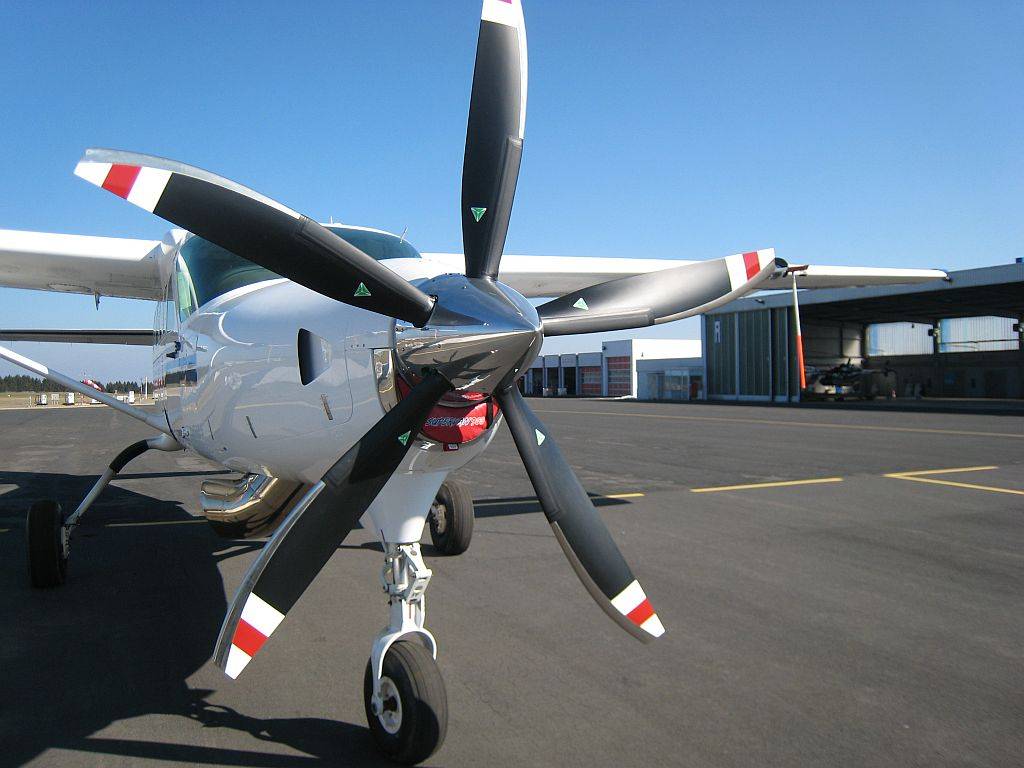
Cessna 208 with 5-blade MT-Propeller
The engine start cycle is much shorter then with the standard propeller
----
First Season with our Cessna 208 B „ Supervan „ D - FSWW.
After one short skydiving season (conversion was made in April) with the new MT 5 blade propeller, we can only state "PERFECT". We flew more than 200 hrs with about 350 engine start cycles. The rotation time is a bit faster than with the standard 4 blade propeller, and:
In total we can say that the decision to install this propeller was and will be absolute positive for our operation.
----
First Season with our Cessna 208 B „ Supervan „ D - FSWW.
After one short skydiving season (conversion was made in April) with the new MT 5 blade propeller, we can only state "PERFECT". We flew more than 200 hrs with about 350 engine start cycles. The rotation time is a bit faster than with the standard 4 blade propeller, and:
- Almost no vibrations du ring the whole flight time
- No cracks on the exhaust attachments and hand hole covers
- Noise level is 72,7 dBA instead of 76 dBA with the standard propeller
In total we can say that the decision to install this propeller was and will be absolute positive for our operation.
J. Biskup
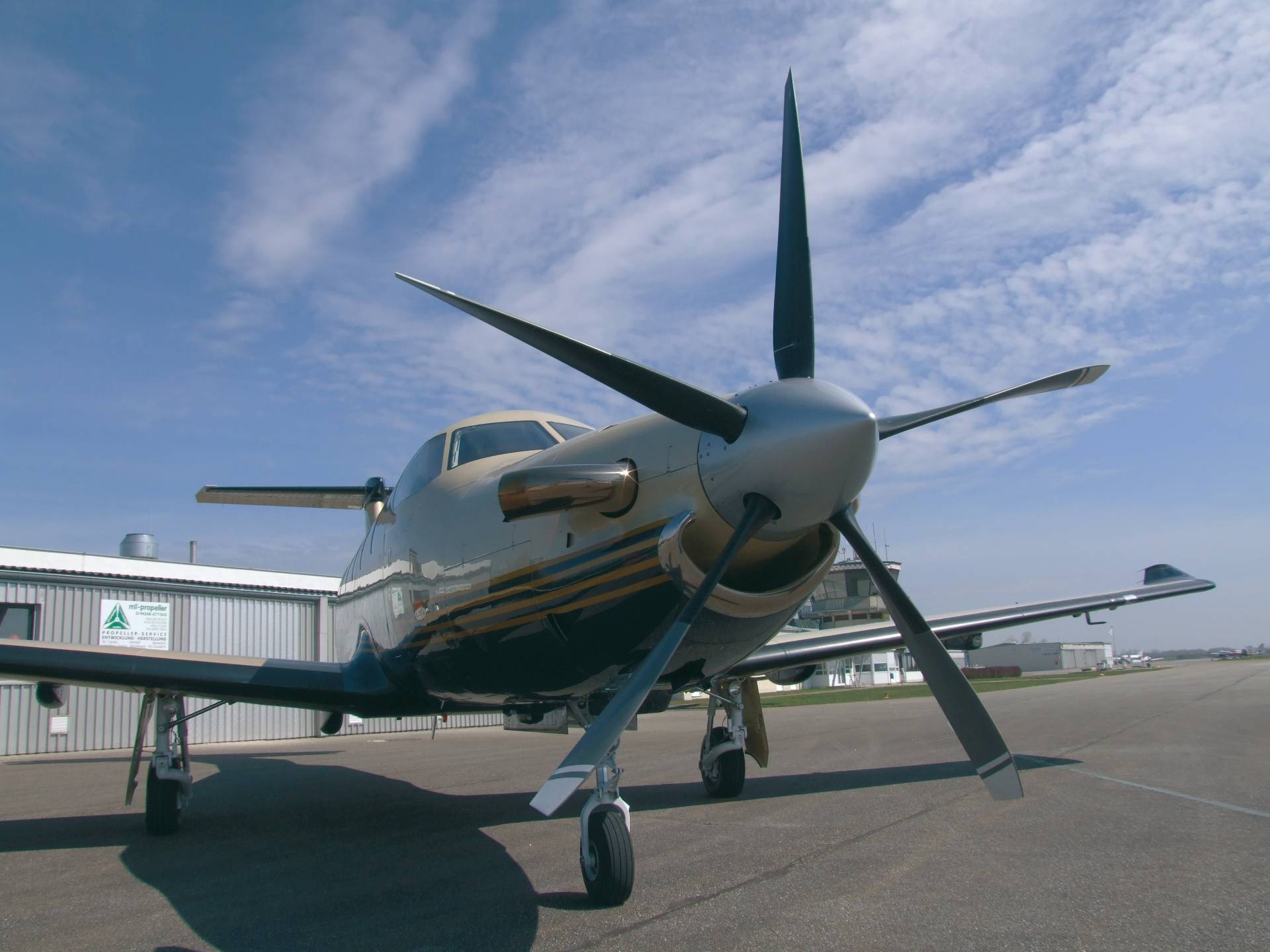
Pilatus PC-12 with 5-blade MTV-27
To take off and land at my airfield, it would not be possible without the MT-Propeller.
----
We have installed last week the MT 5 bladed Propeller on our PC12.
This propeller outperforms all other props on the PC12. Respect to the MT-Team.
To take off and land at my airfield, it would not be possible without the MT-Propeller.
A link to my first take off and landing.
https://youtu.be/ZP-9mWqFh3c
Thank you MT-Propeller
----
We have installed last week the MT 5 bladed Propeller on our PC12.
This propeller outperforms all other props on the PC12. Respect to the MT-Team.
To take off and land at my airfield, it would not be possible without the MT-Propeller.
A link to my first take off and landing.
https://youtu.be/ZP-9mWqFh3c
Thank you MT-Propeller
Gebhard
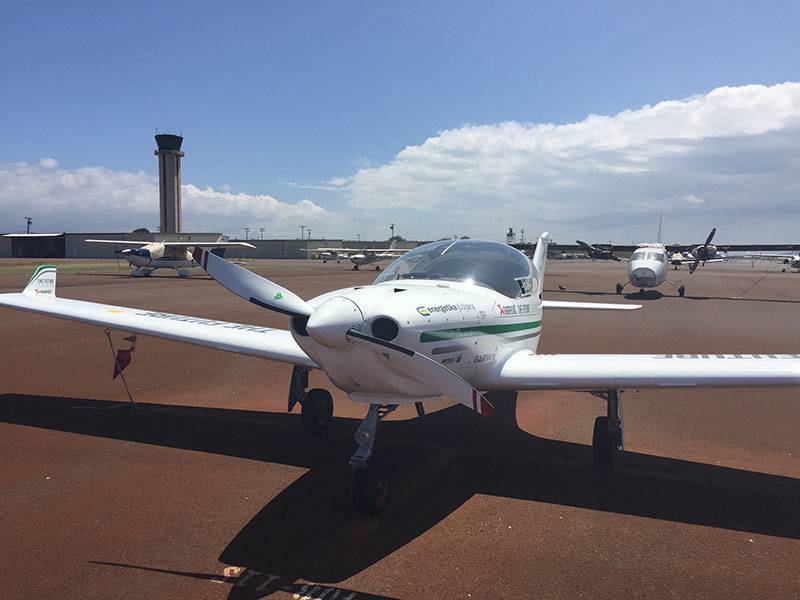
Aerospool Dynamic with 2-blade MT-Propeller
MT propeller is absolutely amazing
----
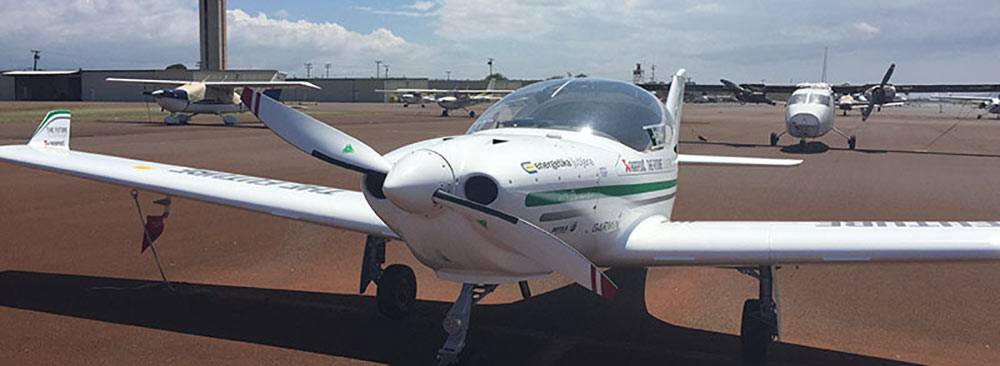
Aerospool Dynamic WT9 with Rotax 912
... MT propeller is absolutely amazing, troublefree, enable great climb, smooth running and fast cruise in any condition, even strong rain.
http://www.worldgreenflight.com/
----
Aerospool Dynamic WT9 with Rotax 912
... MT propeller is absolutely amazing, troublefree, enable great climb, smooth running and fast cruise in any condition, even strong rain.
http://www.worldgreenflight.com/
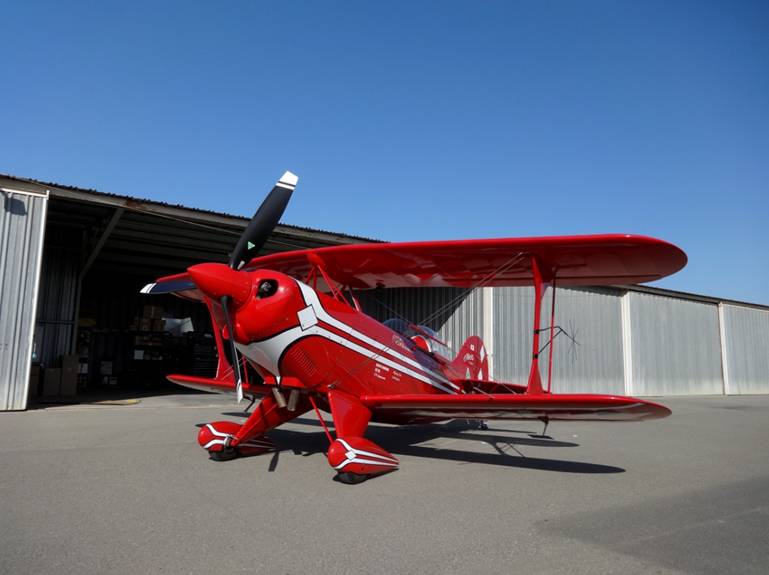
Pitts S2S with MTV-9
I am able to perform my routine more precisely
---
Thank you very much for the MTV-9 propeller which you recently manufactured for me.
I completed 5 hour test flight period on the Pitts S-2S, and I am so happy with the performance of the airplane.
I quickly noticed that the propeller makes higher vertical penetration, and I am able to perform my routine more precisely and aggressively.
I have another air show coming later this month, it will be more attractive for sure.
From a happy MT-propeller flyer.
Best regards,
---
Thank you very much for the MTV-9 propeller which you recently manufactured for me.
I completed 5 hour test flight period on the Pitts S-2S, and I am so happy with the performance of the airplane.
I quickly noticed that the propeller makes higher vertical penetration, and I am able to perform my routine more precisely and aggressively.
I have another air show coming later this month, it will be more attractive for sure.
From a happy MT-propeller flyer.
Best regards,
Yuichi Takagi
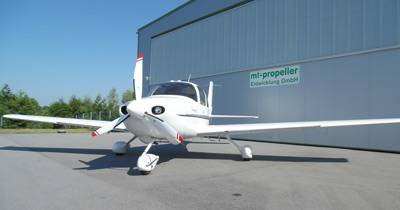
Cirrus SR20 with 3-blade MT-Propeller
Der erste Eindruck ist schlichtweg sensationell.
----
Hallo Herr Albrecht,
die Abholung Freitag hat bestens geklappt.
Vielen Dank schon mal für die schnelle Umsetzung. Der erste Eindruck ist schlichtweg sensationell. Was die Optik verspricht, kommt spätestens nach dem Anlassen zum Vorschein. Der Sound und die Laufruhe ist wirklich "Smooth" und mit dem anderen Prop nicht zu vergleichen.
Trotz voller Tankung, 35°C auf der Runway war die sonst etwas kritische CHT überhaupt kein Problem oder gar im "Gelben Bereich", was sonst durchaus auch bei 15°Grad gelegentlich der Fall war. An jenem Abend hatte ich eine Density Alt von sagenhaften 5900ft und man spürte dennoch deutlich den besseren Schub. Ich bin schon sehr gespannt, wie die Wirkung bei "normalen "Temperaturen sein wird ...
----
Hallo Herr Albrecht,
die Abholung Freitag hat bestens geklappt.
Vielen Dank schon mal für die schnelle Umsetzung. Der erste Eindruck ist schlichtweg sensationell. Was die Optik verspricht, kommt spätestens nach dem Anlassen zum Vorschein. Der Sound und die Laufruhe ist wirklich "Smooth" und mit dem anderen Prop nicht zu vergleichen.
Trotz voller Tankung, 35°C auf der Runway war die sonst etwas kritische CHT überhaupt kein Problem oder gar im "Gelben Bereich", was sonst durchaus auch bei 15°Grad gelegentlich der Fall war. An jenem Abend hatte ich eine Density Alt von sagenhaften 5900ft und man spürte dennoch deutlich den besseren Schub. Ich bin schon sehr gespannt, wie die Wirkung bei "normalen "Temperaturen sein wird ...
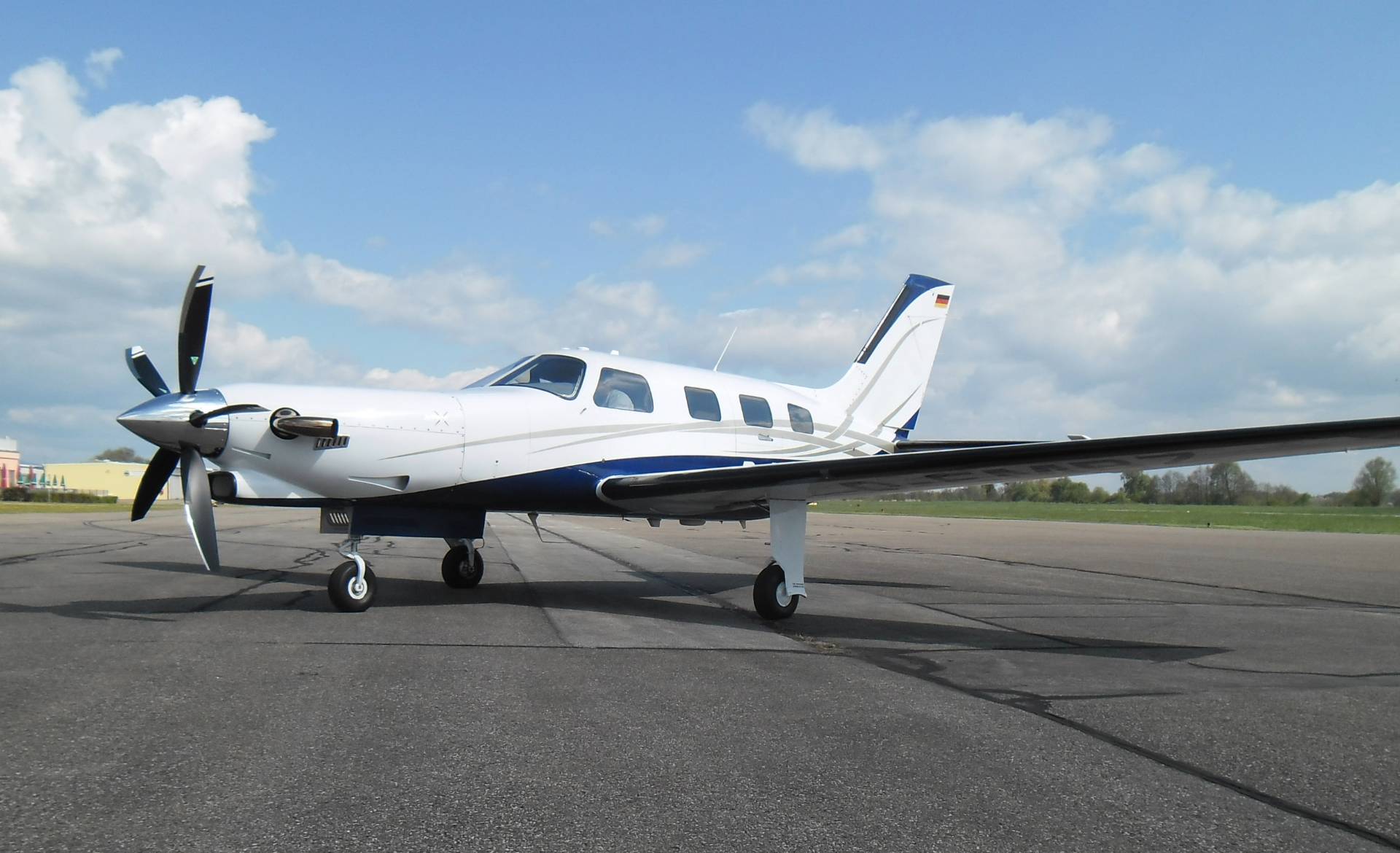
Jetprop PA46T with MTV-27
...climbrate is significantly better
---
MT 5 Blade Prop
On July 10th, N46PW was equipped with the new MT-five-blade-Prop in Straubing as the first N registrated Jetprop world wide.
Only a few days earlier, the FAA had launched the STC for US registrated Jetprops P46T.
Now we understand, why already more than 100 (one hundred) Pilatus PC12 have been converted with that high tech part.
Our impression after roughly 20 hours of light:
1. during start up procedure, 15% N1 is instantaneously reched to add fuel (much quicker than with the four blade prop), 17% N1 with the same battery voltage as before is no big deal, i.e. battery load goes significantly down, air intake flow is higher, start up temperatur goes down.
2. ground roll distance is shorter
3. climbrate is significantly better
4. outside noise voulme is reduced, (now 68dB instead of 70,5 dB before)
5. in accordance with the updated noise certificate: landing fees go down
6. in the rear cabin is comfortable quiet, whereas we in front still use our active noise reduction head sets, but with them in use, it s deadly silent
the only disadvantage: smoking is now forbidden around the propeller - it s made out of wood.
---
MT 5 Blade Prop
On July 10th, N46PW was equipped with the new MT-five-blade-Prop in Straubing as the first N registrated Jetprop world wide.
Only a few days earlier, the FAA had launched the STC for US registrated Jetprops P46T.
Now we understand, why already more than 100 (one hundred) Pilatus PC12 have been converted with that high tech part.
Our impression after roughly 20 hours of light:
1. during start up procedure, 15% N1 is instantaneously reched to add fuel (much quicker than with the four blade prop), 17% N1 with the same battery voltage as before is no big deal, i.e. battery load goes significantly down, air intake flow is higher, start up temperatur goes down.
2. ground roll distance is shorter
3. climbrate is significantly better
4. outside noise voulme is reduced, (now 68dB instead of 70,5 dB before)
5. in accordance with the updated noise certificate: landing fees go down
6. in the rear cabin is comfortable quiet, whereas we in front still use our active noise reduction head sets, but with them in use, it s deadly silent
the only disadvantage: smoking is now forbidden around the propeller - it s made out of wood.
Michael Offermann
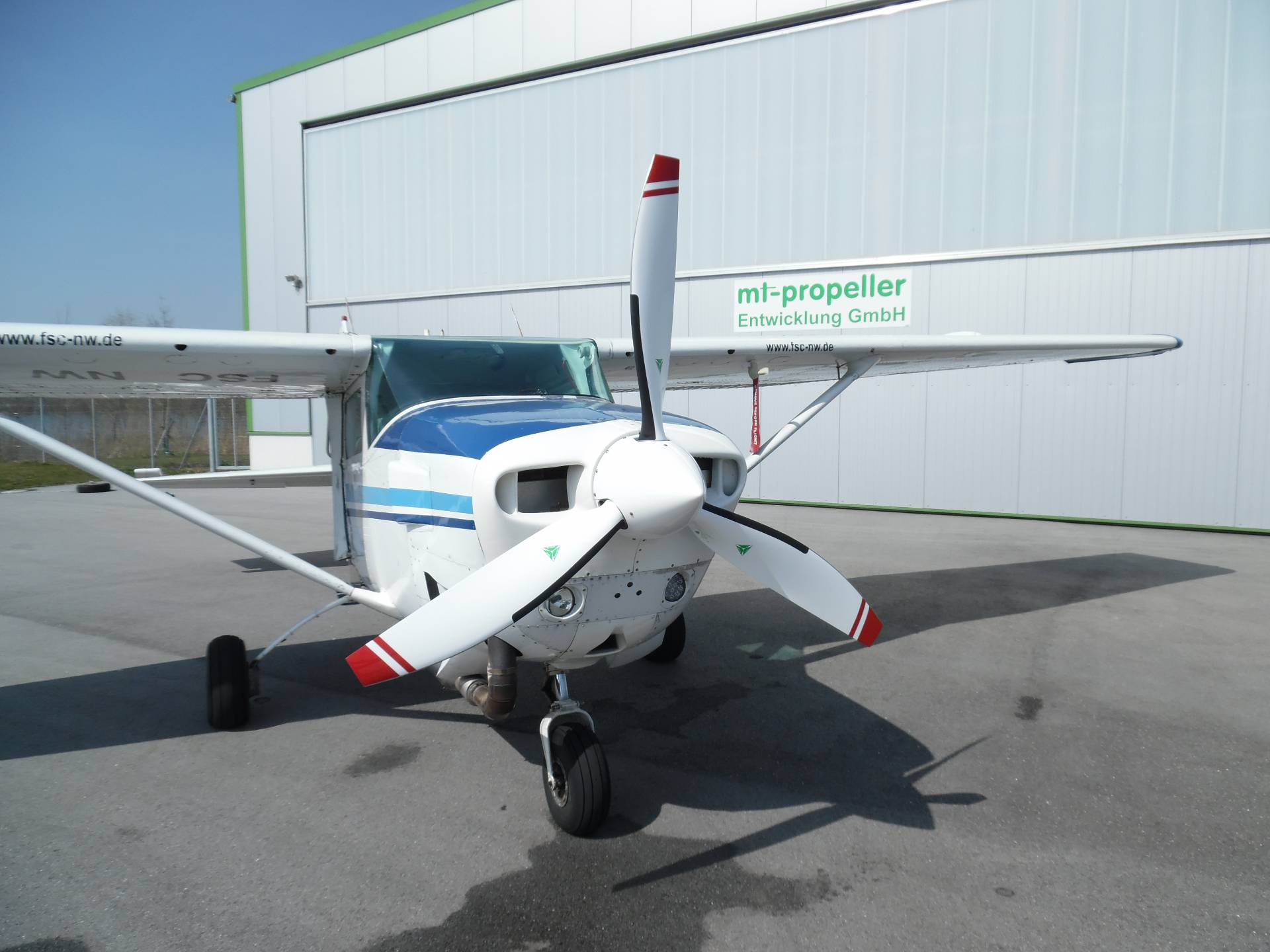
Cessna 206 with 3-blade MT-Propeller
Sie und Ihr Team haben einen tollen Job gemacht, danke
---
Hallo Herr Albrecht,
Propeller läuft gut, Steigleistung mit 2.500 1/min. um 100-200 ff erhöht.
Schub beim Start deutlich höher, wir müssen die Maschine schon zwingen am Boden zu bleiben um Fahrt aufzuholen.
Das Bugrad wird alleine durch das geringere Gewicht entlastet, sodass der Pilot nicht mehr so stark ziehen muss.
Die Cessna ist ebenfalls leichter zu landen auch wegen des geringeren Gewichtes auf der Nase.
Der Propeller ist schön laufruhig in der Zelle merken die Springer auch die geringere Geräuschentwicklung.
Andere Flugplätze fragen schon an, ob wir nicht für sie die Springer mit der leiseren Maschine absetzen können (haben bisher C-182 mit 300 PS die ihnen zu laut ist).
Unser Segelflugverein ist auch glücklich über die leisere Maschine unsere Lärmgegner ebenfalls.
Fazit:
Sie und Ihr Team haben einen tollen Job gemacht, danke.
---
Hallo Herr Albrecht,
Propeller läuft gut, Steigleistung mit 2.500 1/min. um 100-200 ff erhöht.
Schub beim Start deutlich höher, wir müssen die Maschine schon zwingen am Boden zu bleiben um Fahrt aufzuholen.
Das Bugrad wird alleine durch das geringere Gewicht entlastet, sodass der Pilot nicht mehr so stark ziehen muss.
Die Cessna ist ebenfalls leichter zu landen auch wegen des geringeren Gewichtes auf der Nase.
Der Propeller ist schön laufruhig in der Zelle merken die Springer auch die geringere Geräuschentwicklung.
Andere Flugplätze fragen schon an, ob wir nicht für sie die Springer mit der leiseren Maschine absetzen können (haben bisher C-182 mit 300 PS die ihnen zu laut ist).
Unser Segelflugverein ist auch glücklich über die leisere Maschine unsere Lärmgegner ebenfalls.
Fazit:
Sie und Ihr Team haben einen tollen Job gemacht, danke.
Thomas Dietrich
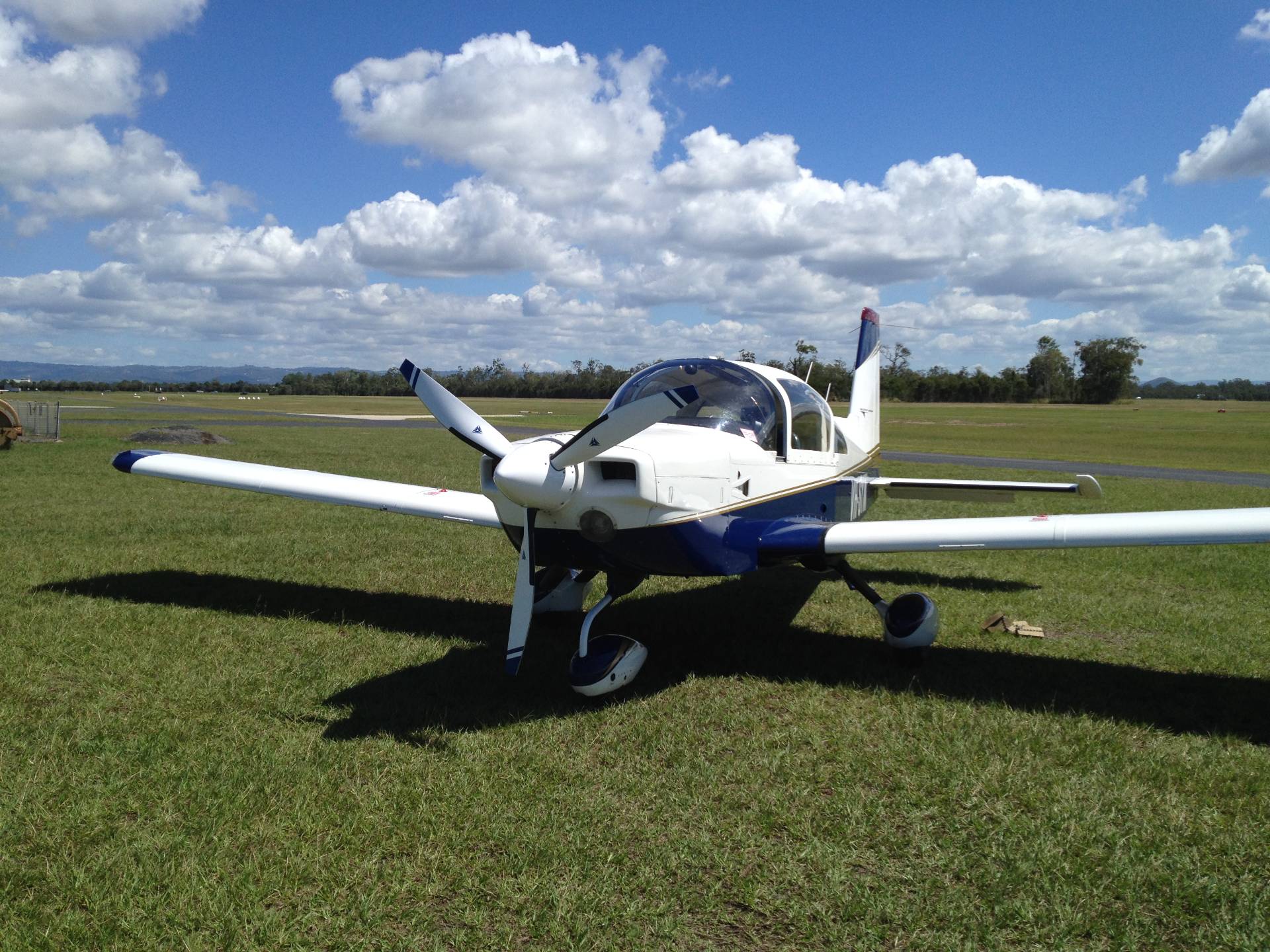
Grumman Tiger with 3-blade MT-Propeller
The propeller is fantastic thank you
---
Australian Grumman Tiger
Hi Martin & Andreas
Thank you very much for the prompt reply, which I understand.
Martin, the propeller is fantastic thank you. I enjoy flying the aircraft so much more in all respects ... from take-off (safer) ... climb (faster) .... cruise (smoother) ... descent (faster) ... and landing (shorter) ... the entire flight is so much more enjoyable.
Best regards
---
Australian Grumman Tiger
Hi Martin & Andreas
Thank you very much for the prompt reply, which I understand.
Martin, the propeller is fantastic thank you. I enjoy flying the aircraft so much more in all respects ... from take-off (safer) ... climb (faster) .... cruise (smoother) ... descent (faster) ... and landing (shorter) ... the entire flight is so much more enjoyable.
Best regards
Tony
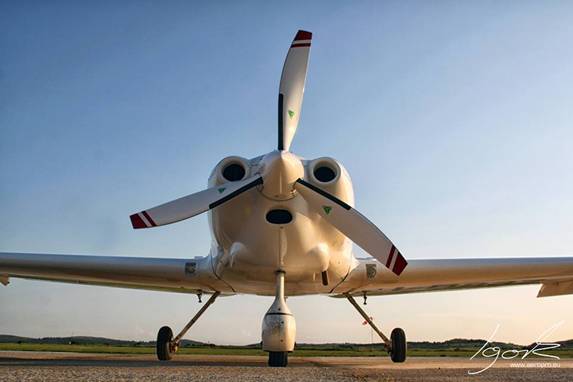
Corvus Racer 312 with 3-blade MTV-34-1-A
we were looking for a high performance, and reliable propeller
---
The new Corvus Racer 312 Ultralight equipped with MTV-34-1-A Propeller with P-850-12UL governor
The Corvus Racer 312 is an ultralight/LSA category aircraft, fitted with Rotax 912ULS/100 Hp powerplant.It has symmetrical wings, and generally all aerodynamic controls and surface shape comes from the Racer 540, the unlimited aerobatic aircraft.
For the UL version, we were looking for a high performance, and reliable propeller, which really can assist to show the aircraft's outstanding flight parameters. The aircraft itself, being limited aerobatic, had to be equipped with CS propeller, which had to be hydraulic for highest safety and performance. Corvus has choosen MT Propellers as the company has already outstanding reputation and reliable service, delivering the ordered items exactly on time.
The first aircraft we have sold, has been delivered to Mr. Peter Besenyei, the Red Bull Air Race pilot, the world's almost best known aerobatic aviator.
Peter was very much satisfied with the plane's all over capabilities, reaching a cruising speed of 136 Kts(IAS) at zero winds, straight and level, with 5310 rpm.
---
The new Corvus Racer 312 Ultralight equipped with MTV-34-1-A Propeller with P-850-12UL governor
The Corvus Racer 312 is an ultralight/LSA category aircraft, fitted with Rotax 912ULS/100 Hp powerplant.It has symmetrical wings, and generally all aerodynamic controls and surface shape comes from the Racer 540, the unlimited aerobatic aircraft.
For the UL version, we were looking for a high performance, and reliable propeller, which really can assist to show the aircraft's outstanding flight parameters. The aircraft itself, being limited aerobatic, had to be equipped with CS propeller, which had to be hydraulic for highest safety and performance. Corvus has choosen MT Propellers as the company has already outstanding reputation and reliable service, delivering the ordered items exactly on time.
The first aircraft we have sold, has been delivered to Mr. Peter Besenyei, the Red Bull Air Race pilot, the world's almost best known aerobatic aviator.
Peter was very much satisfied with the plane's all over capabilities, reaching a cruising speed of 136 Kts(IAS) at zero winds, straight and level, with 5310 rpm.
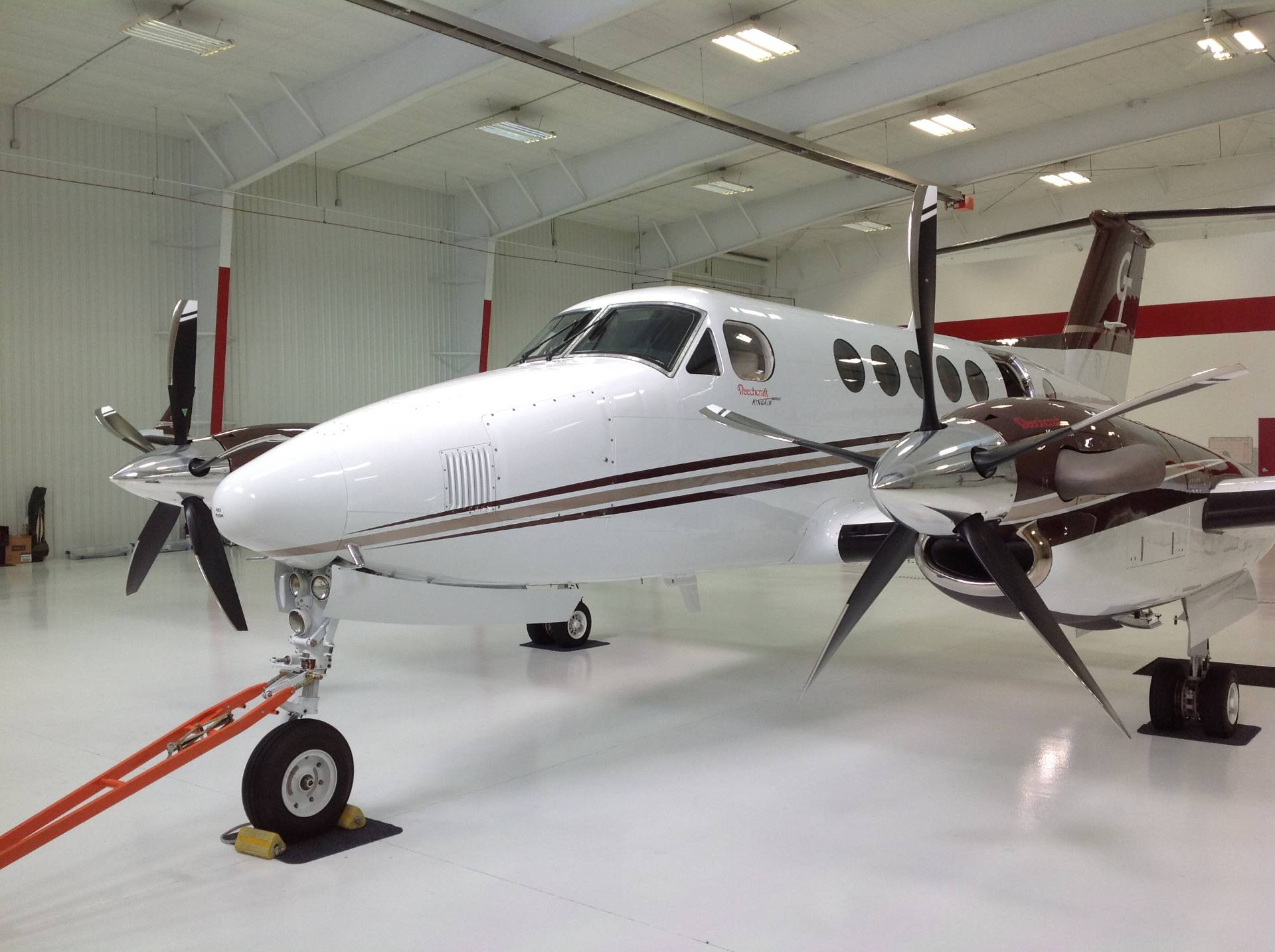
Beech KA 200 with 5-blade MTV-27
I noted that we were definitely quieter in the climb
---
First King Air 200GT in the US with our QFJ-Propeller System MTV-27-1-E-C-F-R(P)/CFR225-55f
Hi Mike,
……Our ground roll today I computed at 700ft less than the performance tables for our conditions (I'm impressed). I noted that we were definitely quieter in the climb and ground ops, had less vibration and also able to achieve as good (possibly slightly better) a climb rate as the 4 blades at 100rpm less (1800). Gerald noticed as we departed just ahead of another KA that we were notably quieter than normal.
As we fly more, I'm collecting data to compare against previous trends.
Thank you,
---
First King Air 200GT in the US with our QFJ-Propeller System MTV-27-1-E-C-F-R(P)/CFR225-55f
Hi Mike,
……Our ground roll today I computed at 700ft less than the performance tables for our conditions (I'm impressed). I noted that we were definitely quieter in the climb and ground ops, had less vibration and also able to achieve as good (possibly slightly better) a climb rate as the 4 blades at 100rpm less (1800). Gerald noticed as we departed just ahead of another KA that we were notably quieter than normal.
As we fly more, I'm collecting data to compare against previous trends.
Thank you,
Fred
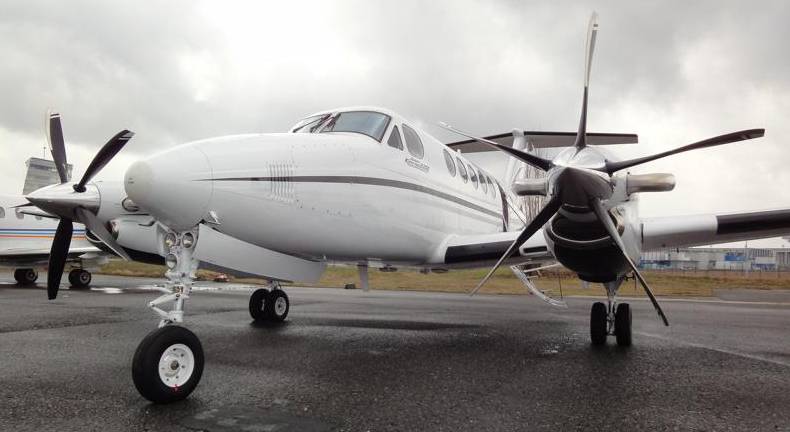
Beech KA B200 with 5-blade MTV-27
the aircraft has much less noise inside and outside.
---
Dear Mr. Albrecht,
we like to thank you for the 5 blade props for our King Air B 200.
We upgraded the aircraft with PT6-52 engines and winglets plus your 5 blade props and can tell you the aircraft has much less noise inside and outside.
There is a remarkable Performance increase of almost 40 kts. No Vibration and comfortable cruising.
Best Regards
---
Dear Mr. Albrecht,
we like to thank you for the 5 blade props for our King Air B 200.
We upgraded the aircraft with PT6-52 engines and winglets plus your 5 blade props and can tell you the aircraft has much less noise inside and outside.
There is a remarkable Performance increase of almost 40 kts. No Vibration and comfortable cruising.
Best Regards
Eckart Moltman
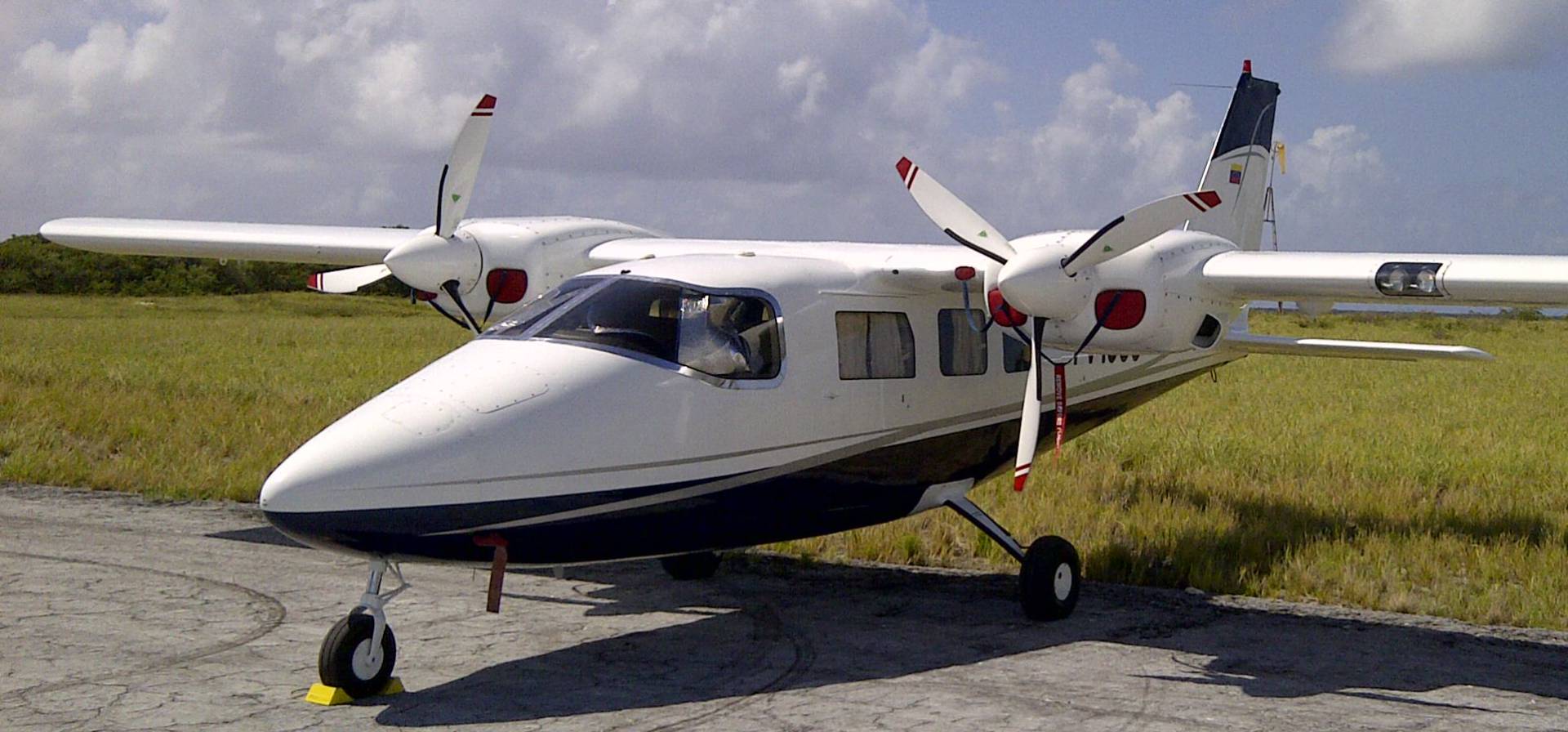
Partenavia with 3-blade MT-Propeller
I can say it feels like a different airplane
---
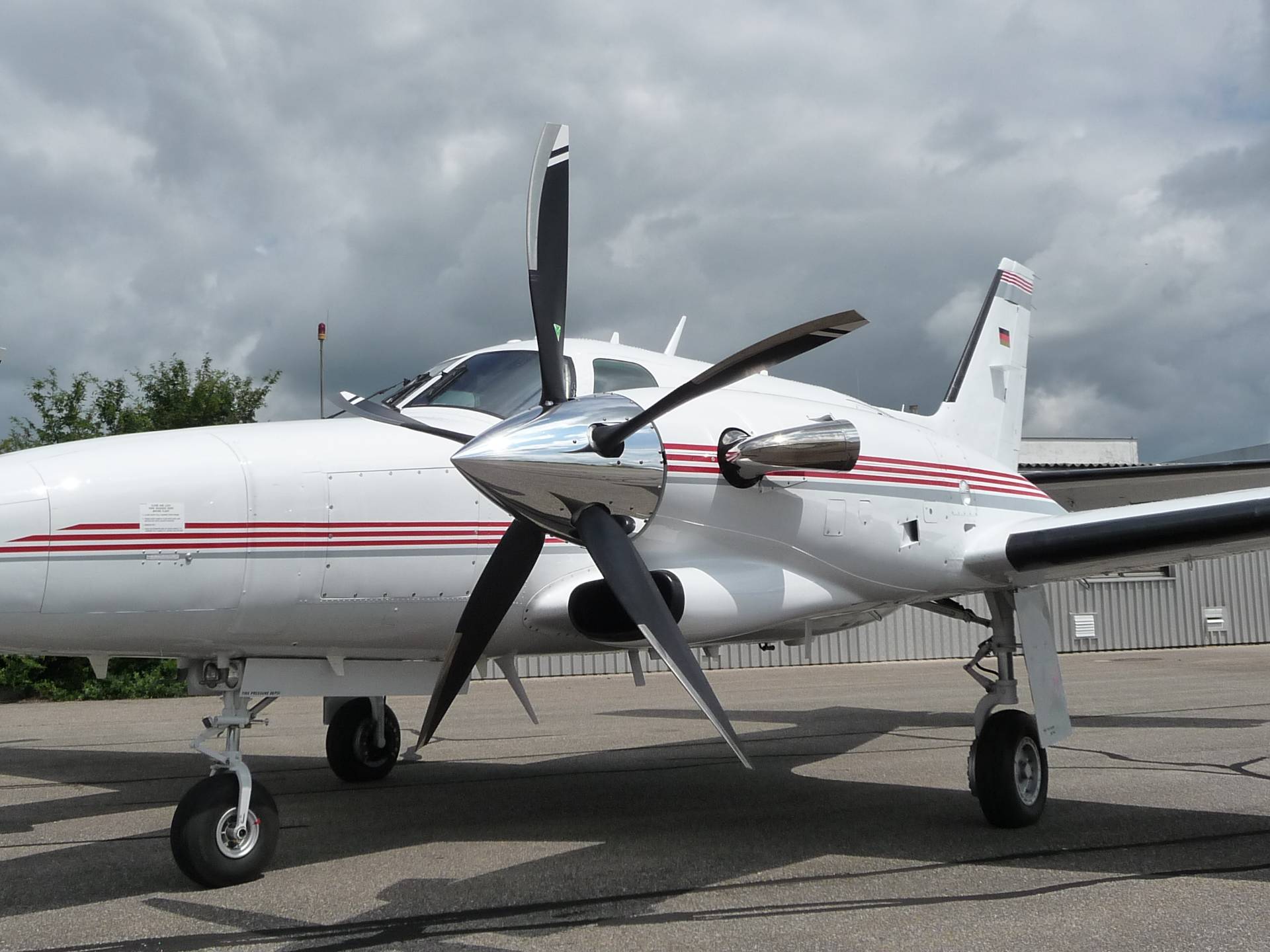
Please find attached a picture taken after the installation of the props you sold me.
"Besides its new aggressive look, I can say it feels like a different airplane. You were right, vibration has almost disappeared, the noise level has been dramatically reduced and the climb rate has also improved"
Thank you very much for everything and I hope you could come someday and fly with us.
Best Regards
---
Please find attached a picture taken after the installation of the props you sold me.
"Besides its new aggressive look, I can say it feels like a different airplane. You were right, vibration has almost disappeared, the noise level has been dramatically reduced and the climb rate has also improved"
Thank you very much for everything and I hope you could come someday and fly with us.
Best Regards
REINALDO CICHELLA
Piper PA-31 with 5-blade MTV-27
The perfomance is spectacular
---
Last Saturday I could pick up HB LNL. It is just wonderful to fly. The perfomance is spectacular and the comfort is so much better with the 5 bladed Props. It s a perfect match. I would like to thank you for your support and for all the many things you did form e and that were necessary to make this happen. It is my best Christmas gift I ever got.
Merrry Christmas and a Happy New Year.
---
Last Saturday I could pick up HB LNL. It is just wonderful to fly. The perfomance is spectacular and the comfort is so much better with the 5 bladed Props. It s a perfect match. I would like to thank you for your support and for all the many things you did form e and that were necessary to make this happen. It is my best Christmas gift I ever got.
Merrry Christmas and a Happy New Year.
Dan
Cirrus with 4-blade MTV-14
Die Cirrus hat viel mehr Biss
---
Hallo Herr Eberl,
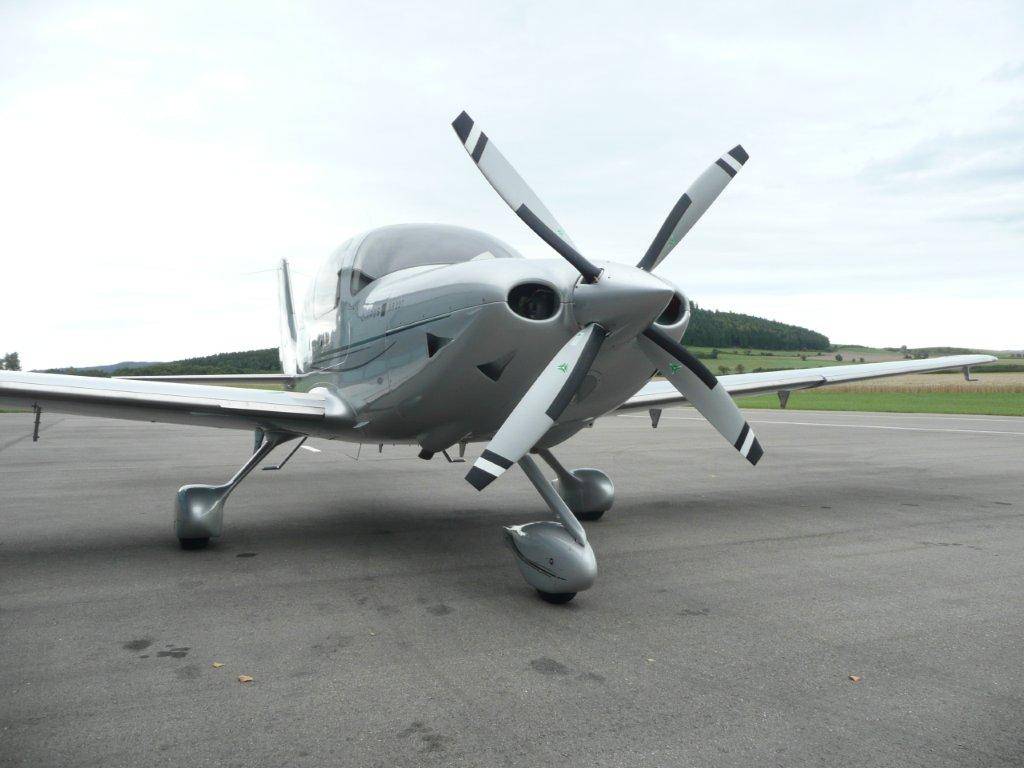
auch auf diesem Weg möchte ich mich noch einmal ganz herzlich für den Umbau unserer Cirrus auf den 4 Blatt Propeller bedanken.
Obwohl ich erst den kurzen Weg von Straubing nach Donaueschingen geflogen bin , muss ich sagen: PHANTASTISCH....!!!!
Mein erster Eindruck:
Die Cirrus hat viel mehr Biss,eine kürzere Startstrecke, bessere Steigleistung, bessere Kühlung und ist dazu noch angenehm leise & vibrationsarm. Und die wunderschöne Optik....
Wir wissen schon, warum wir MT-Fans sind . Deshalb auch unsere Entscheidung: Entweder eine MT-Cirrus oder keine Cirrus mehr!
Gerne berichten wir Ihnen von unseren weiteren Flügen und Erfahrungen mit dem neuen 4-Blatt Propeller.
Herzliche Grüsse
---
Hallo Herr Eberl,
auch auf diesem Weg möchte ich mich noch einmal ganz herzlich für den Umbau unserer Cirrus auf den 4 Blatt Propeller bedanken.
Obwohl ich erst den kurzen Weg von Straubing nach Donaueschingen geflogen bin , muss ich sagen: PHANTASTISCH....!!!!
Mein erster Eindruck:
Die Cirrus hat viel mehr Biss,eine kürzere Startstrecke, bessere Steigleistung, bessere Kühlung und ist dazu noch angenehm leise & vibrationsarm. Und die wunderschöne Optik....
Wir wissen schon, warum wir MT-Fans sind . Deshalb auch unsere Entscheidung: Entweder eine MT-Cirrus oder keine Cirrus mehr!
Gerne berichten wir Ihnen von unseren weiteren Flügen und Erfahrungen mit dem neuen 4-Blatt Propeller.
Herzliche Grüsse
Herbert Schmidt
Tundra 200 with 2-blade MT-Propeller
it is performing better than any Tundras
---
Guten Tar my freund (writing from sounds...not from dictionary!)
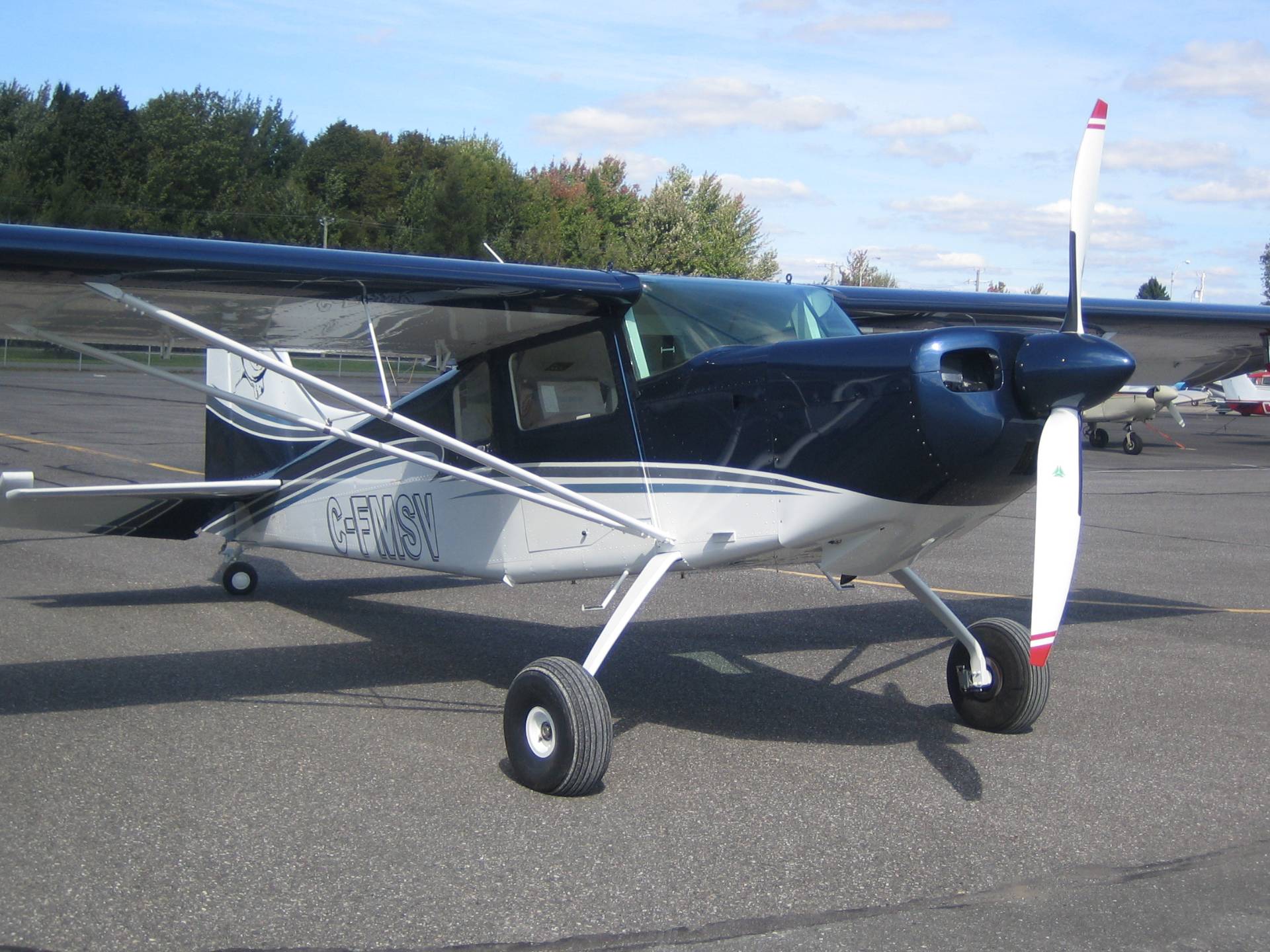
We have 35 hours on our Home built Tundra 200 (Lycoming IO-390) and it is performing better than any Tundras on same settings...
The prop works fantastic and thus far we really appreciate the quality of our MT prop. IF you have any maintenance tips, please let me know as I will baby this prop for as long as I can and cant wait to show it off at Oshkosh!
Cheers
---
Guten Tar my freund (writing from sounds...not from dictionary!)
We have 35 hours on our Home built Tundra 200 (Lycoming IO-390) and it is performing better than any Tundras on same settings...
The prop works fantastic and thus far we really appreciate the quality of our MT prop. IF you have any maintenance tips, please let me know as I will baby this prop for as long as I can and cant wait to show it off at Oshkosh!
Cheers
Jean-Michel Sauve
Cirrus SR22 with 4-blade MTV-14
Ein vom Start weg spürbarer besserer Schub
---
Hallo Martin,
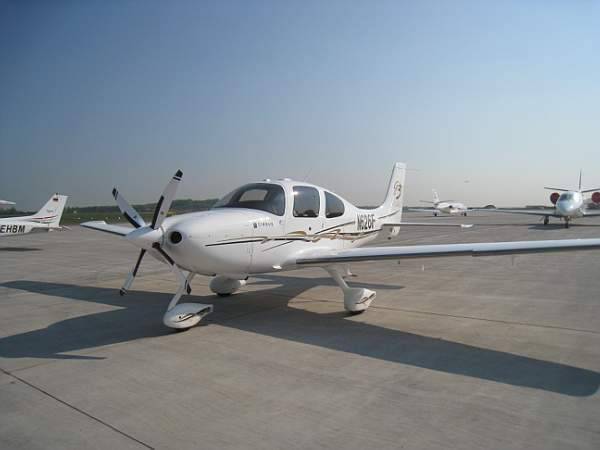
Ich bin über Ostern über 21h mit der SR22 G3 Turbo unter allen möglichen Situationen geflogen.
3 x Heringsdorf-Bremgarten und zurück, Einweisungen, Rundflüge, Starts auf z.B. Grasplatz Ebern-Sendelbach 500 Meter Länge – durch nur positivste Erfahrungen FL120, 1-3-Stündige Flüge und ich habe ja den Vergleich mit weit über 400h auf anderen Cirrus 22 Maschinen.
Kurzum: Er ist sagenhaft! Ein vom Start weg spürbarer besserer Schub, Steigflug – sensationell und der Reiseflug – unglaublich. Die Laufruhe im vergleich zu dem Metallpropeller ist enorm – gerade bei langen Überlandflügen sehr angenehm. Die Kühlung des Motors im Steigflug ist deutlich besser – um es genau zu sagen die Maschine kommt gar nicht erst in die Nähe des gelben Bereichs mehr.
Und von außen? Alle Leute staunen und kommen auf einen zu. Der Klang von außen am Boden, Steigflug und Reise/Vorbeiflug ist eindeutig ruhiger und verleiht der Cirrus eine neue "Geräuschkkulisse". Das typische Cirrus-Sägen ist komplett weg.
Grüße
---
Hallo Martin,
Ich bin über Ostern über 21h mit der SR22 G3 Turbo unter allen möglichen Situationen geflogen.
3 x Heringsdorf-Bremgarten und zurück, Einweisungen, Rundflüge, Starts auf z.B. Grasplatz Ebern-Sendelbach 500 Meter Länge – durch nur positivste Erfahrungen FL120, 1-3-Stündige Flüge und ich habe ja den Vergleich mit weit über 400h auf anderen Cirrus 22 Maschinen.
Kurzum: Er ist sagenhaft! Ein vom Start weg spürbarer besserer Schub, Steigflug – sensationell und der Reiseflug – unglaublich. Die Laufruhe im vergleich zu dem Metallpropeller ist enorm – gerade bei langen Überlandflügen sehr angenehm. Die Kühlung des Motors im Steigflug ist deutlich besser – um es genau zu sagen die Maschine kommt gar nicht erst in die Nähe des gelben Bereichs mehr.
Und von außen? Alle Leute staunen und kommen auf einen zu. Der Klang von außen am Boden, Steigflug und Reise/Vorbeiflug ist eindeutig ruhiger und verleiht der Cirrus eine neue "Geräuschkkulisse". Das typische Cirrus-Sägen ist komplett weg.
Grüße
Thomas
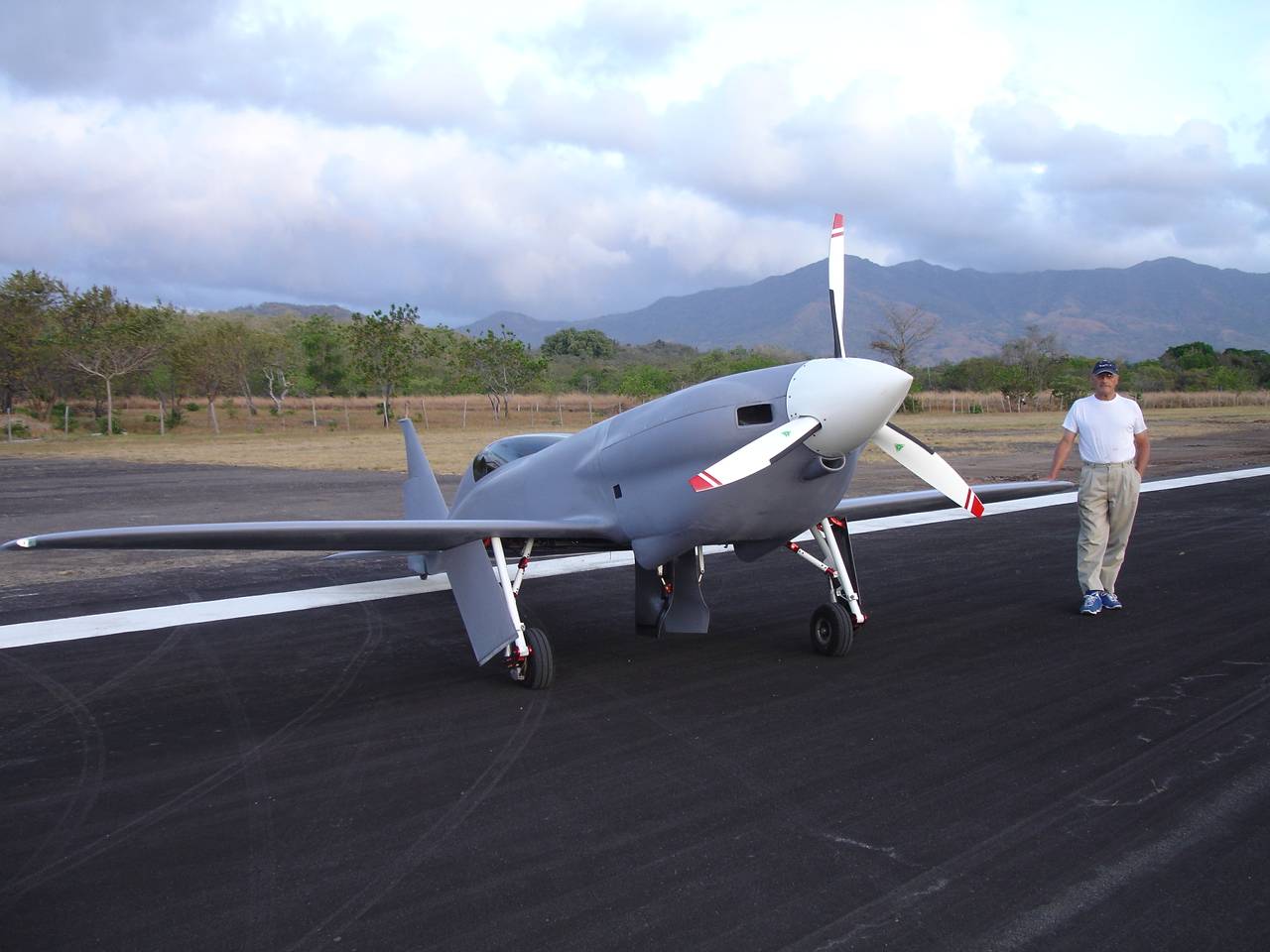
NXT with 3-blade MT-Propeller
I am completely satisfied with the smoothness
---
Martin, I often think back to our discussions at snf in 2007 where I had told you I was concerned that MT props were much slower than the Hartzell used on most NXTs, however, you convinced me to purchase an MT propeller and I am completely satisfied with the smoothness, climb performance and speed of your propeller.
While the I do not have a direct comparison to another propeller, my maximum TAS of 402 mph so far, is adequate for my needs. I wanted a good cruise propeller that would work well at 2400 rpm or less and I am completely satisfied with the performance in this range. At 2250rpm and manifold pressure of 23 "hg the plane cruises at 250KTAS at 14.5 gph at 7500ft density attitude and the smoothness is similar to a turbine.
Best Regards
---
Martin, I often think back to our discussions at snf in 2007 where I had told you I was concerned that MT props were much slower than the Hartzell used on most NXTs, however, you convinced me to purchase an MT propeller and I am completely satisfied with the smoothness, climb performance and speed of your propeller.
While the I do not have a direct comparison to another propeller, my maximum TAS of 402 mph so far, is adequate for my needs. I wanted a good cruise propeller that would work well at 2400 rpm or less and I am completely satisfied with the performance in this range. At 2250rpm and manifold pressure of 23 "hg the plane cruises at 250KTAS at 14.5 gph at 7500ft density attitude and the smoothness is similar to a turbine.
Best Regards
Ron
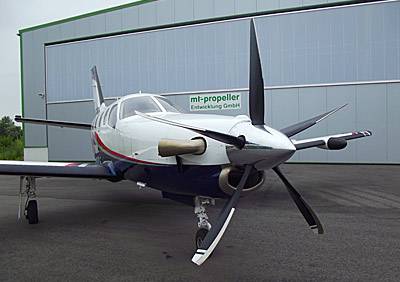
TBM 850 with 5-blade MTV-27
Shorter take-off distance, better climb rate
---
We are very impressed about the new MTV-5 bladed propeller!
Shorter take-off distance, better climb rate, turbine smooth run and a significant noise reduction in comparison to the original 4-Blade Prop characterize the MTV-27. Not least the „Ramp Appeal“ of the TBM.
The combination of the PT 6A-66D with the Muehlbauer 5-blade is ideal. It improves the TBM 850 in all ways.
Our thanks goes also to the professional and competent staff, who performed the conversion very well.
Best regards
---
We are very impressed about the new MTV-5 bladed propeller!
Shorter take-off distance, better climb rate, turbine smooth run and a significant noise reduction in comparison to the original 4-Blade Prop characterize the MTV-27. Not least the „Ramp Appeal“ of the TBM.
The combination of the PT 6A-66D with the Muehlbauer 5-blade is ideal. It improves the TBM 850 in all ways.
Our thanks goes also to the professional and competent staff, who performed the conversion very well.
Best regards
Christian Weiß Dr. Max-Burkhard Zwosta
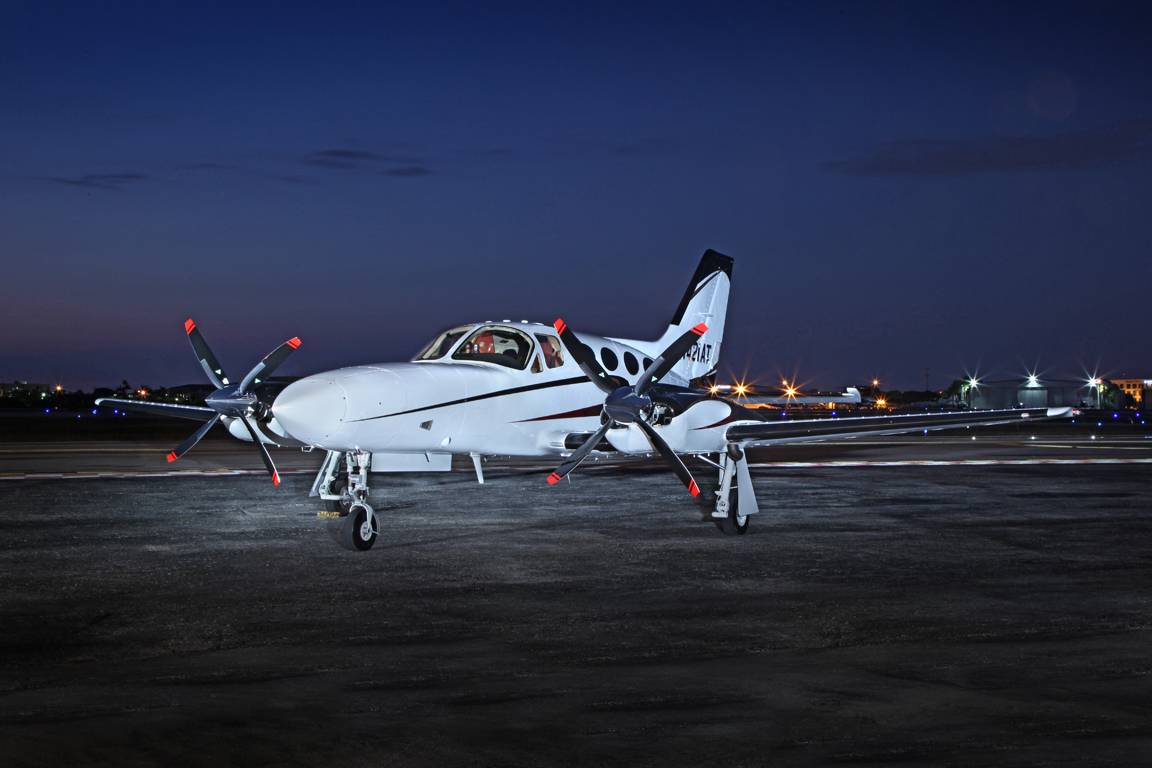
Cessna 421 with 4-blade MT-Propeller
the interior noise level is noticably less
---
The pilot, Rodrego Cruz from Astra Charter in Ft. Lauderdale reports the interior noise level is noticably less. It is much smoother and feels like a turbine.
It gets attention at every stop with folks asking what kind of plane this is with the 4-blade props.
The MT props have a neat chirping sound made during taxi. Time to climb is reduced and cruise speed at same power settings is a few knots faster.
---
The pilot, Rodrego Cruz from Astra Charter in Ft. Lauderdale reports the interior noise level is noticably less. It is much smoother and feels like a turbine.
It gets attention at every stop with folks asking what kind of plane this is with the 4-blade props.
The MT props have a neat chirping sound made during taxi. Time to climb is reduced and cruise speed at same power settings is a few knots faster.
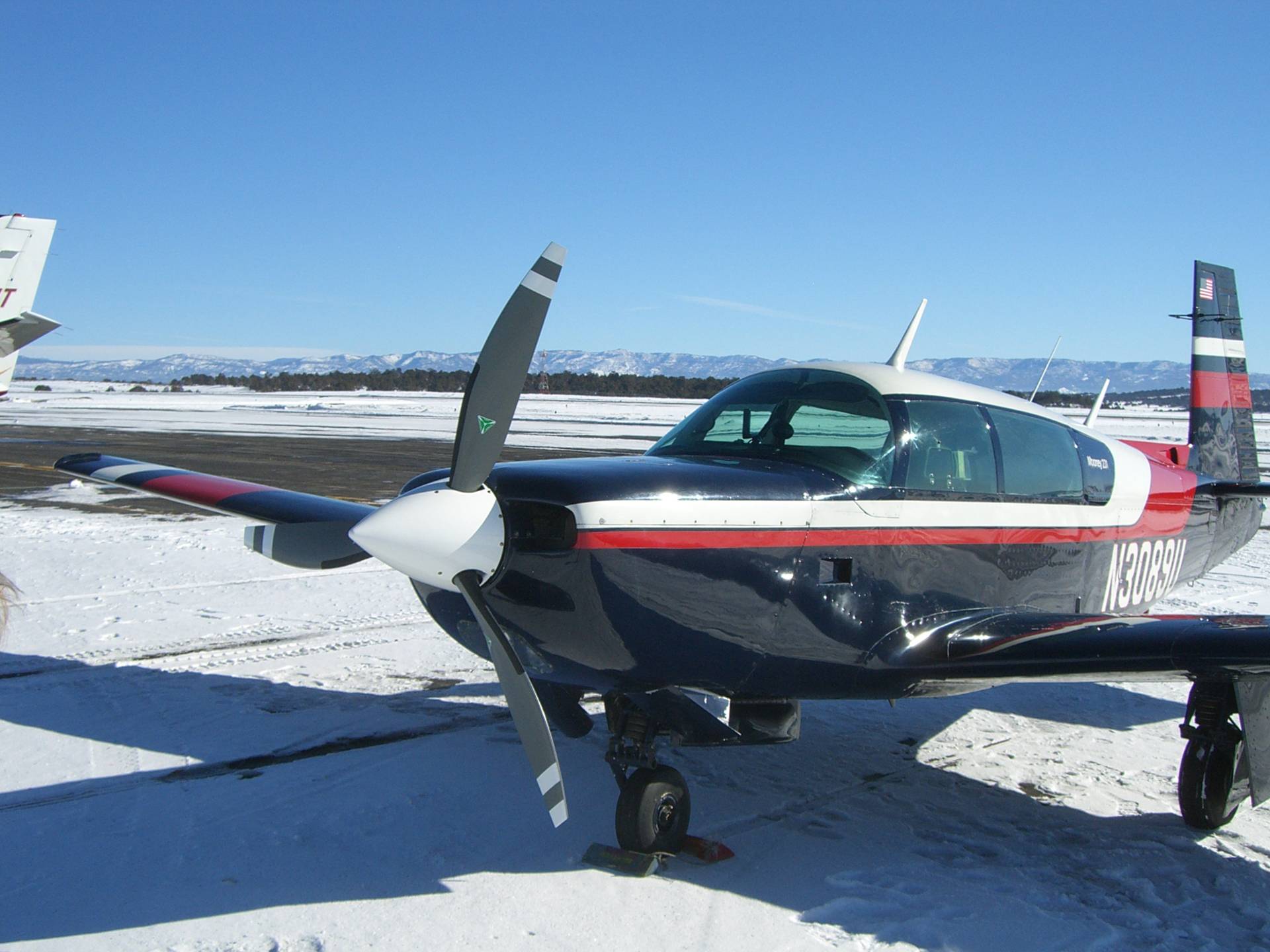
Mooney M20 with 3-blade MT-Propeller
I am very happy with the results.
---
I have just acquired a new MT propeller for my Mooney M20K (231).
I fly in the western United States with high density altitudes. I selected the MT prop to gain improved performance for climb.
I am very happy with the results.
My take off runs are shorter and my rate of climb is about 300 feet per min greater.
This improved performance is both at sea level and airports at 6500'.
Cruise speed has not been negatively affected. The propeller is quiet and no vibrations at all engine speeds. MT has developed a winner!
Sincerely,
---
I have just acquired a new MT propeller for my Mooney M20K (231).
I fly in the western United States with high density altitudes. I selected the MT prop to gain improved performance for climb.
I am very happy with the results.
My take off runs are shorter and my rate of climb is about 300 feet per min greater.
This improved performance is both at sea level and airports at 6500'.
Cruise speed has not been negatively affected. The propeller is quiet and no vibrations at all engine speeds. MT has developed a winner!
Sincerely,
Chuck Crinnian
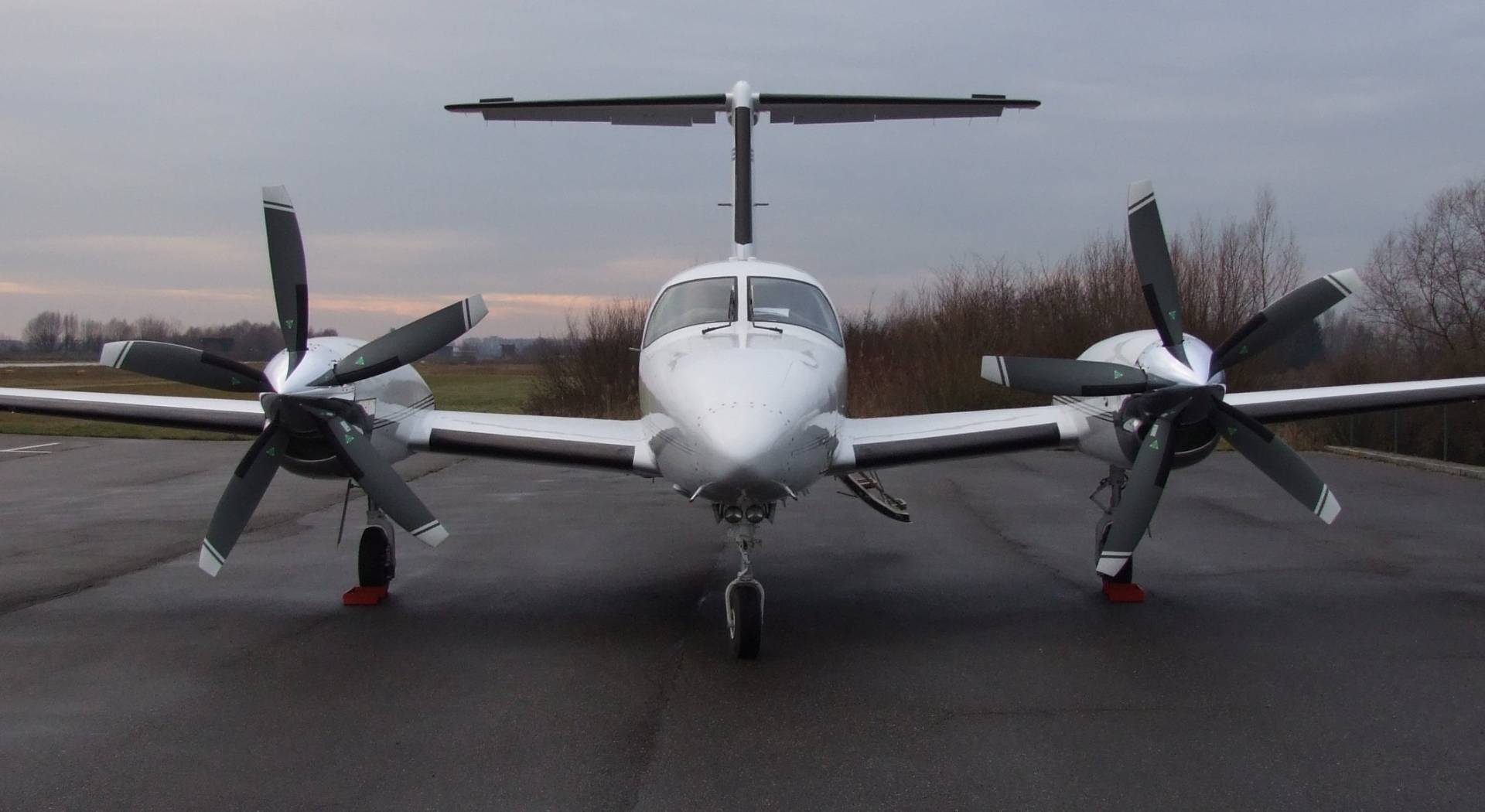
Piper PA-42 with 5-blade MT-Propeller
in vereisenden Situationen nicht im Ansatz Probleme mehr aufgetreten...
---
Als Pilot der HB - LTM ( erste umgerüstete PA42-1000 /LS400), ausgerüstet mit Ihren 5 Blatt Propellern (MTV-27-1-E-C-F-R(G)/CFR()250-103) habe ich jetzt 600 Std. ohne die geringsten Probleme und Beanstandungen geflogen.
Speziell in vereisenden Situationen sind mit Ihren Propellern im Gegensatz zu den 4-Blatt Propellern nicht im Ansatz Probleme mehr aufgetreten...
In guter Erinnerung ist mir der Flug am 20.07.08 von Catania LICC 14:14 LT nach Mollis LSMF 16:30LT . Es hatte starke Vereisung und Turbulenzen über die Alpen und im Sinkflug (echtes Hundewetter)
Ich kann Ihr Produkt nur weiter empfehlen speziell auch im Bezug auf Lärm und Vibrationen, mehr Bodenfreiheit und besseres Startverhalten des Triebwerkes!
mit freundlichen Grüssen
---
Als Pilot der HB - LTM ( erste umgerüstete PA42-1000 /LS400), ausgerüstet mit Ihren 5 Blatt Propellern (MTV-27-1-E-C-F-R(G)/CFR()250-103) habe ich jetzt 600 Std. ohne die geringsten Probleme und Beanstandungen geflogen.
Speziell in vereisenden Situationen sind mit Ihren Propellern im Gegensatz zu den 4-Blatt Propellern nicht im Ansatz Probleme mehr aufgetreten...
In guter Erinnerung ist mir der Flug am 20.07.08 von Catania LICC 14:14 LT nach Mollis LSMF 16:30LT . Es hatte starke Vereisung und Turbulenzen über die Alpen und im Sinkflug (echtes Hundewetter)
Ich kann Ihr Produkt nur weiter empfehlen speziell auch im Bezug auf Lärm und Vibrationen, mehr Bodenfreiheit und besseres Startverhalten des Triebwerkes!
mit freundlichen Grüssen
Noldi Widmer
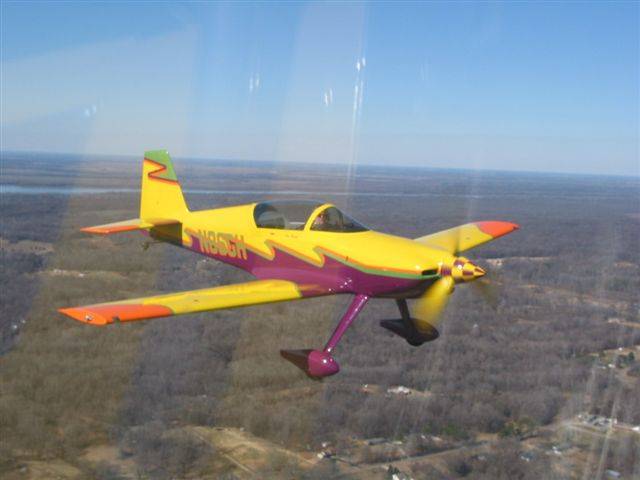
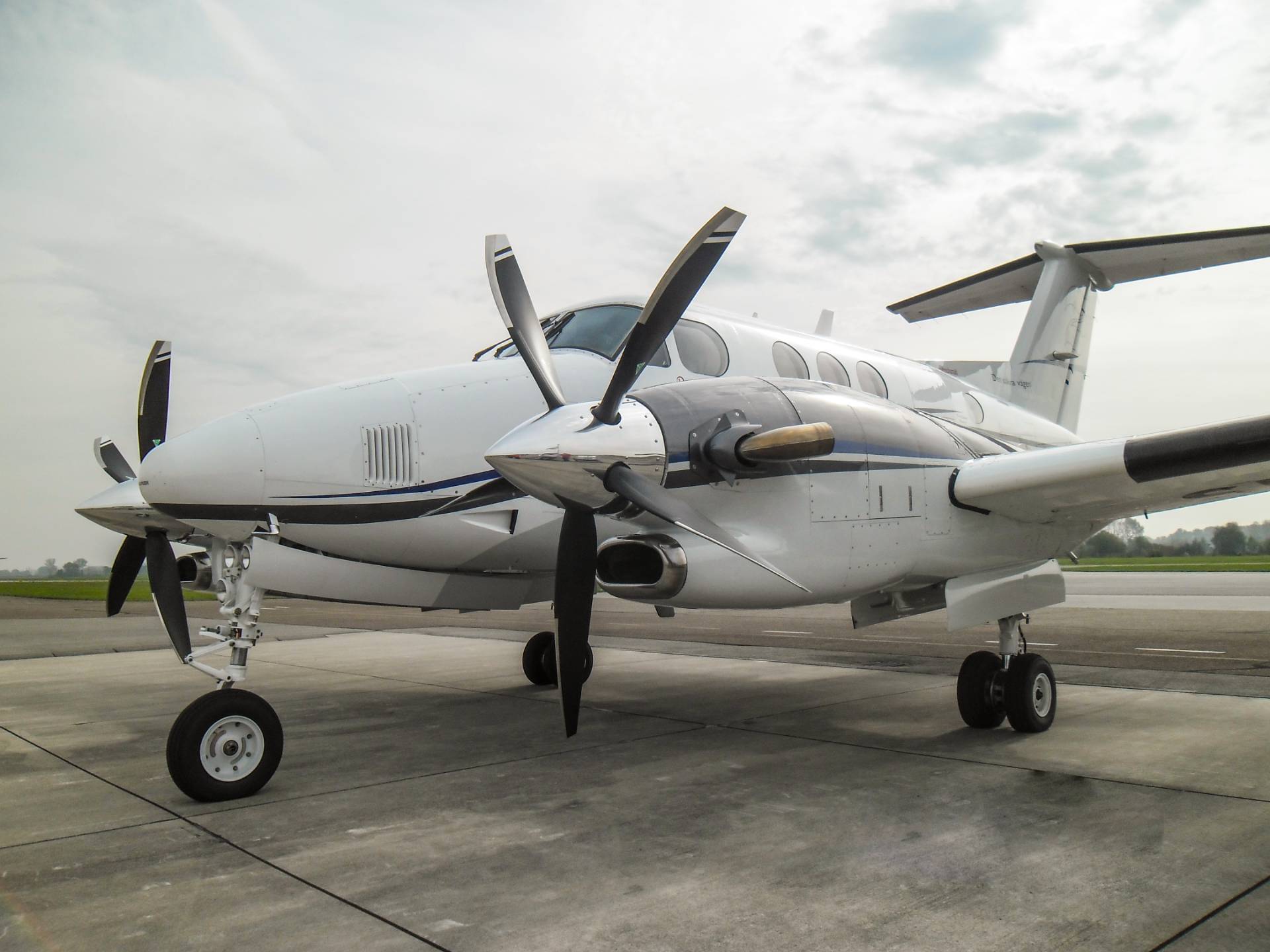
King Air 90 with 5-blade MTV-27
The King Air is really performing at top level
---
First KingAir F90 converted to 5 bladed latest generation composite MT-Props.
Hello Martin,
I hope that You are in the same excellent mode now as You were during our visit at MT-propeller…..
Thanks a lot for two fantastic days in Straubing..
Very nice staff and tasty food at the airport as well.
The King Air is really performing at top level after been equipped with your composite five bladers..
We need to get some other headsets due to this new low noiselevel in cockpit….what a reduction on noise !!!
The performance is performing better in take-off, climb, cruise and more stable in reverse thrust…!!!
An efficient upgrading that will for sure will have short bay-back on this investment for us.
I Have a Topic at the forum BeechTalk www.beechtalk.com Beech Turbines "F90/F90-1 Five blade props" that You can check if You want….The are some interest for the Propellers..I made some ref. to You…
Im flying to Stockholm tomorrow…looking forward to that !!!
All the best to You and rest of staff…
---
First KingAir F90 converted to 5 bladed latest generation composite MT-Props.
Hello Martin,
I hope that You are in the same excellent mode now as You were during our visit at MT-propeller…..
Thanks a lot for two fantastic days in Straubing..
Very nice staff and tasty food at the airport as well.
The King Air is really performing at top level after been equipped with your composite five bladers..
We need to get some other headsets due to this new low noiselevel in cockpit….what a reduction on noise !!!
The performance is performing better in take-off, climb, cruise and more stable in reverse thrust…!!!
An efficient upgrading that will for sure will have short bay-back on this investment for us.
I Have a Topic at the forum BeechTalk www.beechtalk.com Beech Turbines "F90/F90-1 Five blade props" that You can check if You want….The are some interest for the Propellers..I made some ref. to You…
Im flying to Stockholm tomorrow…looking forward to that !!!
All the best to You and rest of staff…
Rolf / Anders
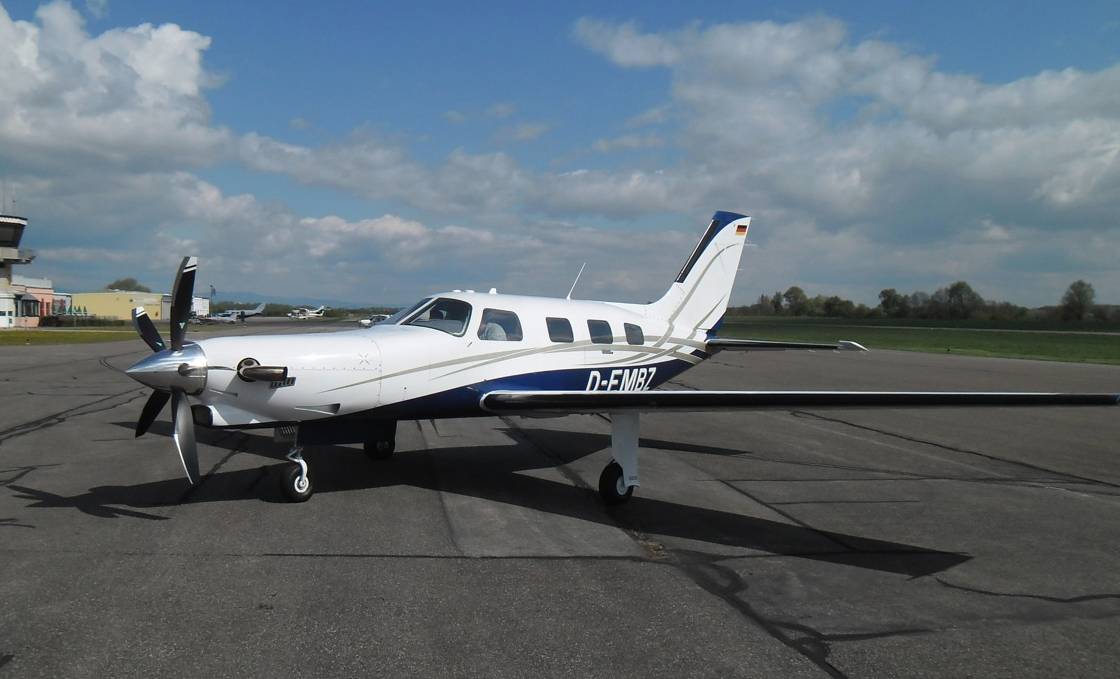
Piper Mirage with 5-blade Propeller
Is a perfect match for the JETPROP
---
Some Impressions from the FIRST JETPROP with a 5 blade MT-Propeller
This JETPROP is a Piper Mirage converted with a PT6-21 P&W Turbine. The plane was running with a 4 blade MT-Propeller before.
Since end of April 2014 this plane is now the first in the world with this new 5 blade MT-Propeller.
Tremendous noise reduction with a 5 blade MT propeller is more like a jet noise.
Significant improvement of take off rolls and climb rate.
Increasing true air speed in higher cruising levels
Vibration is much less than before.
Is a perfect match for the JETPROP
What a treat for the pilots and passengers with the new noise and vibration level. This is one of the best STC installed in this JETPROP.
Last but not least the ramp appeal of the JETPROP with the 5- blade MT-Propeller is much greater as before.
Congratulations to the MT engineering team.
---
Some Impressions from the FIRST JETPROP with a 5 blade MT-Propeller
This JETPROP is a Piper Mirage converted with a PT6-21 P&W Turbine. The plane was running with a 4 blade MT-Propeller before.
Since end of April 2014 this plane is now the first in the world with this new 5 blade MT-Propeller.
Tremendous noise reduction with a 5 blade MT propeller is more like a jet noise.
Significant improvement of take off rolls and climb rate.
Increasing true air speed in higher cruising levels
Vibration is much less than before.
Is a perfect match for the JETPROP
What a treat for the pilots and passengers with the new noise and vibration level. This is one of the best STC installed in this JETPROP.
Last but not least the ramp appeal of the JETPROP with the 5- blade MT-Propeller is much greater as before.
Congratulations to the MT engineering team.
Dr. Max Burkhard Zwosta
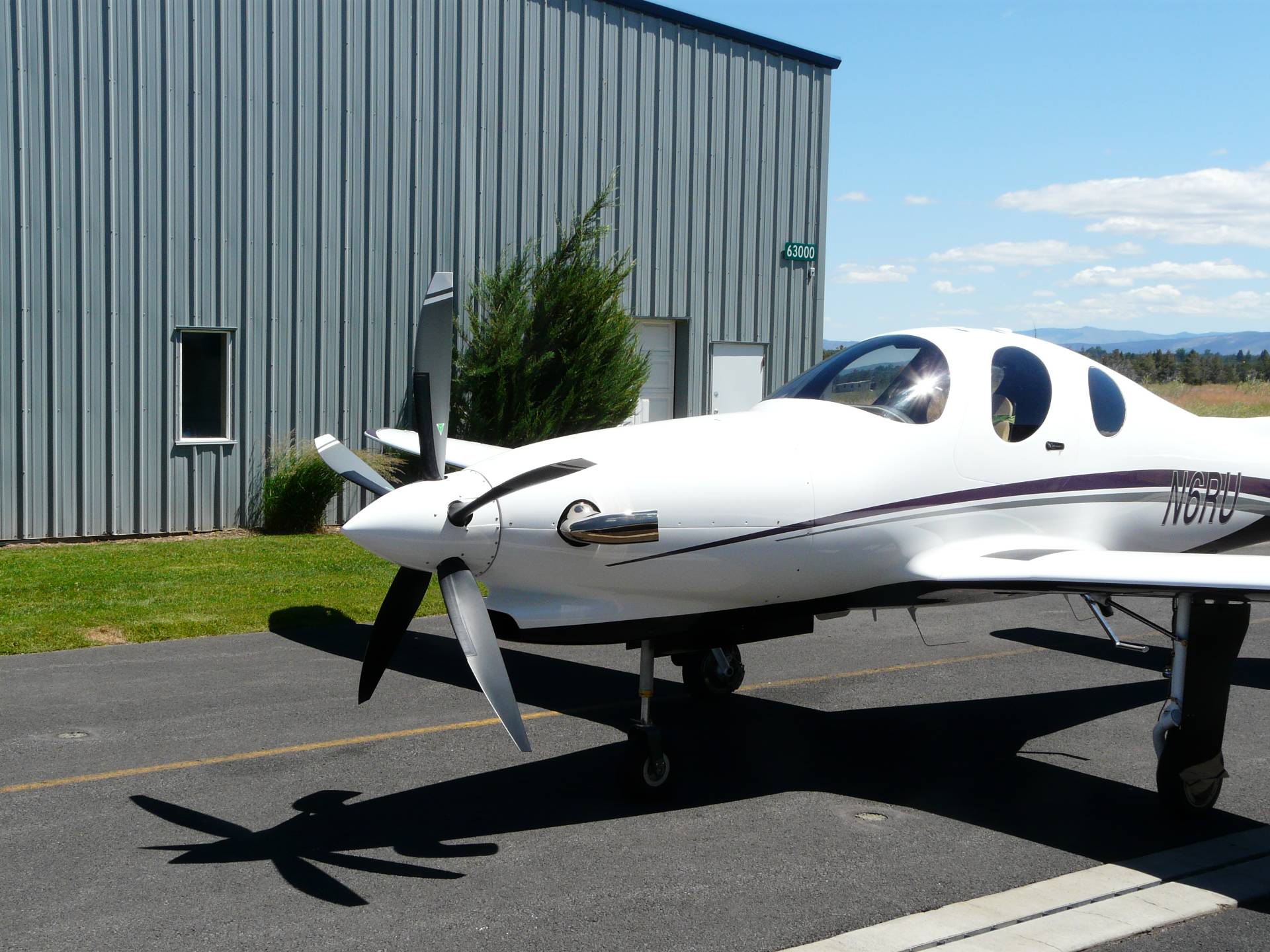
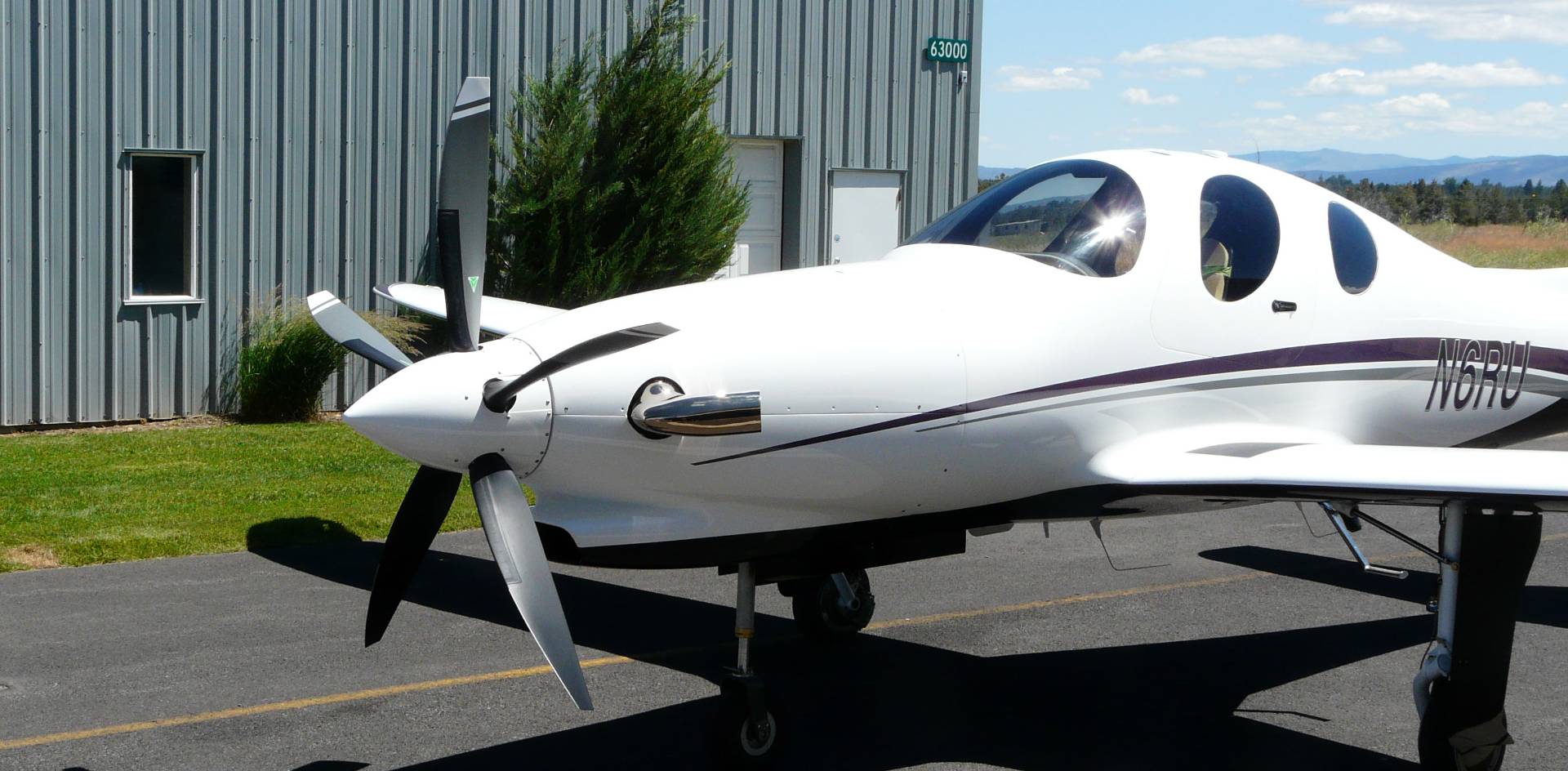
Lancair Evo with 5-blade MT-Propeller
You and group stand head and shoulders above anyone else
---
One comment.
Throughout this little endeavor, you and staff in Germany, and Peter Marshall in Florida and Will in Connecticut were professional, personal, polite, and informative.
You may say I need not write this as vendors should be this.
You and group stand head and shoulders above anyone else. The ability to respond to [my] questions, and to return calls is very important to me.
Other vendors are far too cavalier on these issues, or use the abrupt text message, Facebook, etc. to give non-complete answers.
I do hope you pass this on to the parties involved - and in-service folks - and let your group know 'job well done !'
will be in touch, perhaps through Peter Marshall.
thank you again.
---
One comment.
Throughout this little endeavor, you and staff in Germany, and Peter Marshall in Florida and Will in Connecticut were professional, personal, polite, and informative.
You may say I need not write this as vendors should be this.
You and group stand head and shoulders above anyone else. The ability to respond to [my] questions, and to return calls is very important to me.
Other vendors are far too cavalier on these issues, or use the abrupt text message, Facebook, etc. to give non-complete answers.
I do hope you pass this on to the parties involved - and in-service folks - and let your group know 'job well done !'
will be in touch, perhaps through Peter Marshall.
thank you again.
Ed
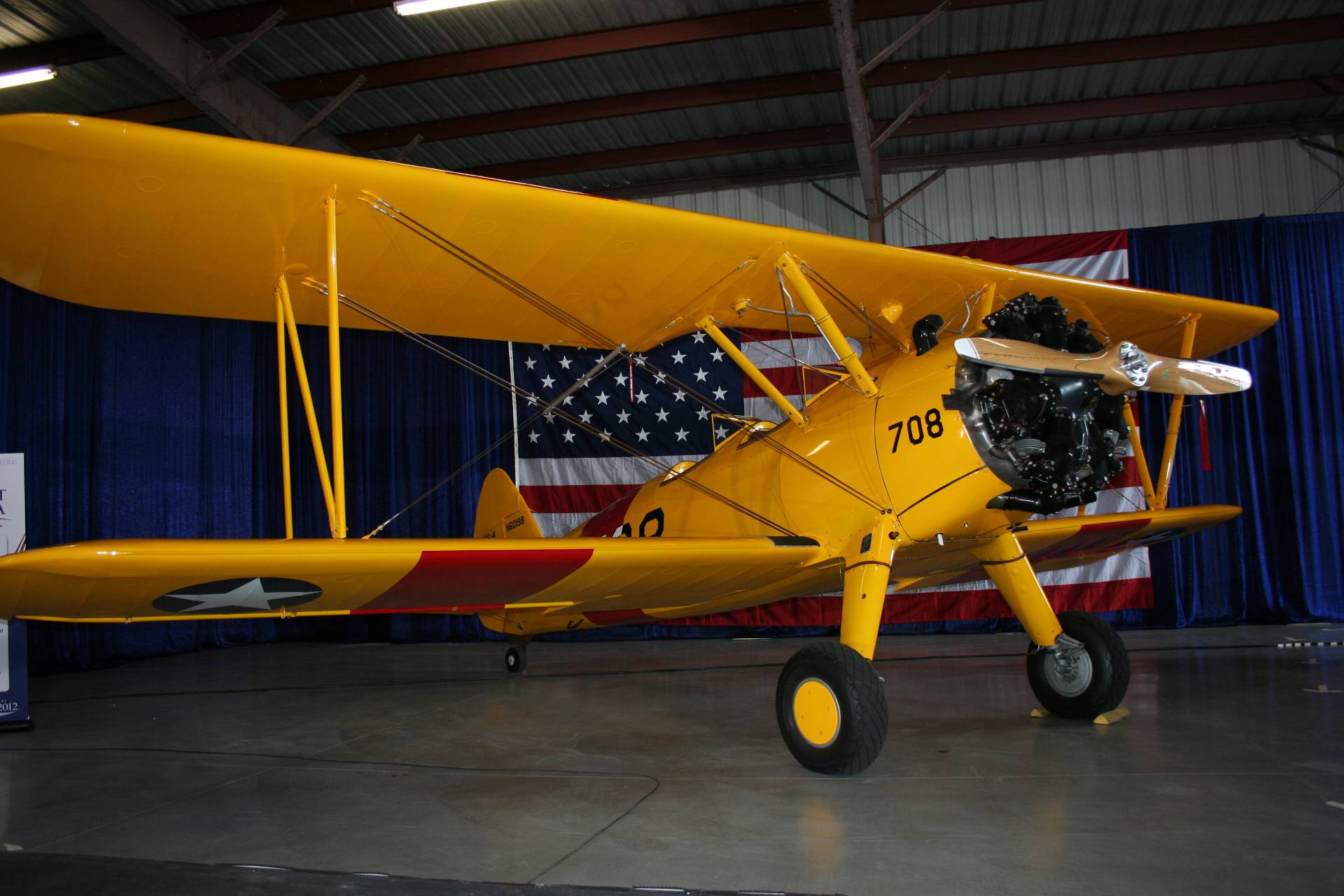
Stearman with 2-blade fix Propeller
I am extremely pleased with the propeller and its performance
---
I installed an MT wood propeller on my Continental 220 HP Stearman approximately 100 hours ago and am extremely pleased with the propeller and its performance.
The MT replaced a McCauley metal propeller subject to AD 54-12-02, which requires disassembly and magnetic inspection of the hub and blades every 100 operating hours, and restricts operation between 1,500 and 1,650 r.p.m. The MT is not subject to any AD's and has no operating restrictions. The MT is also 25 pounds lighter than the McCauley.
The MT's performance is comparable to the McCauley's. There is a general feeling in the Stearman community that metal propellers out perform wood. However, I recently flew during formation training with a 220 HP Stearman equipped with a Hamilton Standard metal propeller. Although both airplanes performed comparably in cruise, the Hamilton Standard equipped airplane lagged so severely in climb performance that I routinely had to reduce power 100 - 150 rpm so he could remain in position during takeoff and climb.
MT-Propeller USA and general manager David Noad made purchasing an MT a pleasant experience. David answered every question before I ordered, and immediately furnished additional technical information I requested after my prop was delivered. I frequently tell people, "Contrary to what we've come to expect in today's world, MT did everything they said they would do, when (or before) they said they would do it, and for exactly what they said it would cost."
Thank you for making a great product.
---
I installed an MT wood propeller on my Continental 220 HP Stearman approximately 100 hours ago and am extremely pleased with the propeller and its performance.
The MT replaced a McCauley metal propeller subject to AD 54-12-02, which requires disassembly and magnetic inspection of the hub and blades every 100 operating hours, and restricts operation between 1,500 and 1,650 r.p.m. The MT is not subject to any AD's and has no operating restrictions. The MT is also 25 pounds lighter than the McCauley.
The MT's performance is comparable to the McCauley's. There is a general feeling in the Stearman community that metal propellers out perform wood. However, I recently flew during formation training with a 220 HP Stearman equipped with a Hamilton Standard metal propeller. Although both airplanes performed comparably in cruise, the Hamilton Standard equipped airplane lagged so severely in climb performance that I routinely had to reduce power 100 - 150 rpm so he could remain in position during takeoff and climb.
MT-Propeller USA and general manager David Noad made purchasing an MT a pleasant experience. David answered every question before I ordered, and immediately furnished additional technical information I requested after my prop was delivered. I frequently tell people, "Contrary to what we've come to expect in today's world, MT did everything they said they would do, when (or before) they said they would do it, and for exactly what they said it would cost."
Thank you for making a great product.
Roy Kinsey
Cessna 340 with 4-blade MT-Propeller
There is no vibration
---
...The props on the 340 are well worth the money due to the performance they deliver. I will be happy to discuss them with anyone.
The only "problem" I see is that they will "speed brake" the plane and it feels like it will shut down in midair.
As an instructor with loads of time in these twin Cessna's, especially the short wing, you have got to keep your speed up in the pattern and on final. In the alternative you can make a high approach push the props forward and point the nose straight at the runway.
I am very pleased. There is no vibration. They sound like Pratt and Whitney turbines...
---
...The props on the 340 are well worth the money due to the performance they deliver. I will be happy to discuss them with anyone.
The only "problem" I see is that they will "speed brake" the plane and it feels like it will shut down in midair.
As an instructor with loads of time in these twin Cessna's, especially the short wing, you have got to keep your speed up in the pattern and on final. In the alternative you can make a high approach push the props forward and point the nose straight at the runway.
I am very pleased. There is no vibration. They sound like Pratt and Whitney turbines...
Beech King Air 200 with 5-blade MT-Propeller
There is a distinct reduction of Noise Level in the cabin
---
First KingAir 200 converted in India.
---
First KingAir 200 converted in India.
- The MT propellers after their fitment on our Super King Air B-200, MSN : BB-972 (VT-EHB) have flown 20 hours as on date.
- There is a distinct reduction of Noise Level in the cabin.
- The pilots report shorter take off and better rate of climb.
- We have been the first to install the MT 5 Bladed propellers in India.
- The crew is quite happy with the performance.
Nitin Khanna
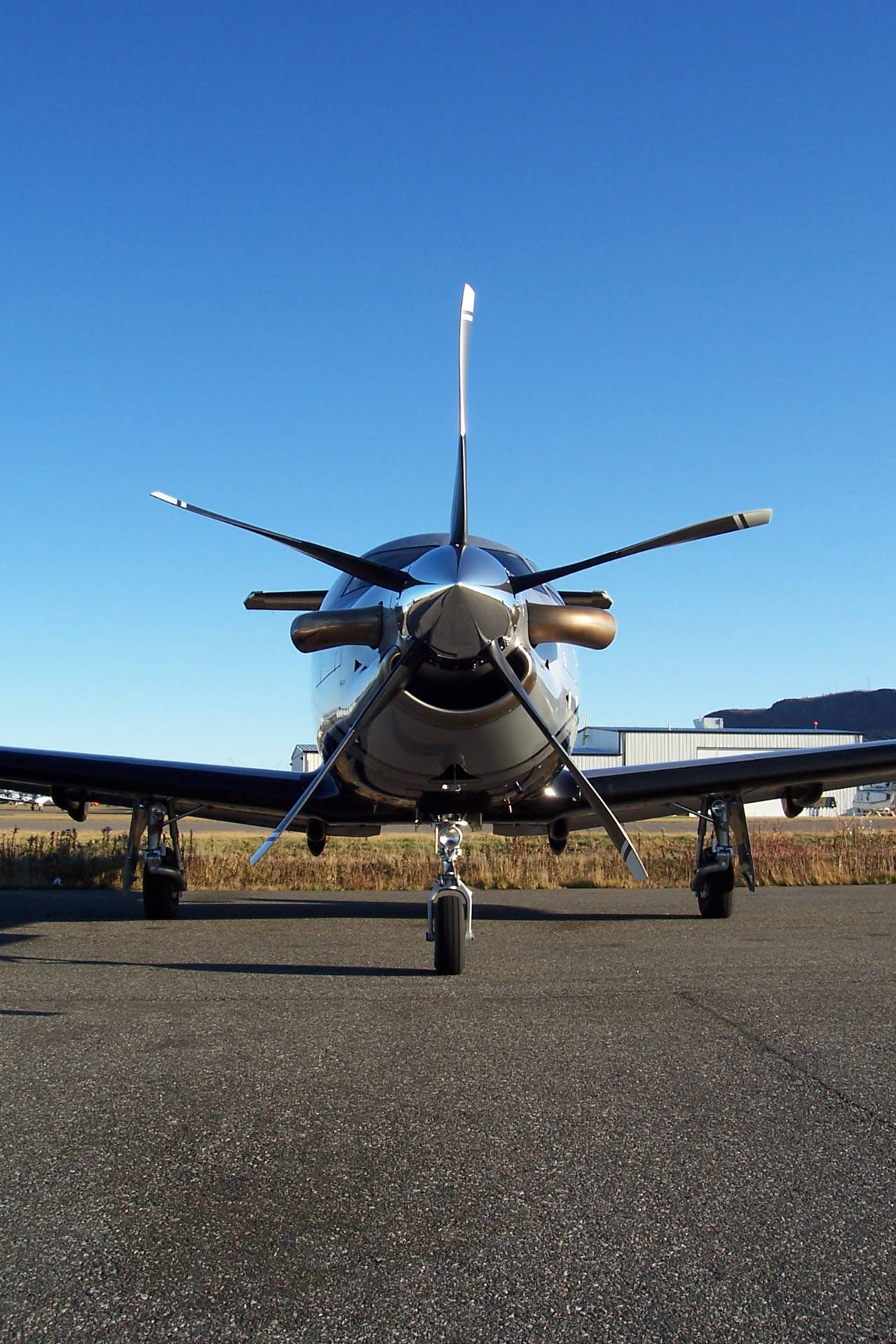
PC-12 with 5-blade MT-Propeller
We would like to thank MT for such a great product.
---
Mr. Finnoff
As you know, our PC12 is an early serial number with the 67B engine, not an NG, and we work it pretty hard, at an average yearly total of 500 + flying hours. Though we avoid unimproved strips, we land at many short paved airports all over the U.S. and Canada. These shorter strips sometimes require the use of a little reverse on landing. We have been operating with the MT now for 1 year . Over that year we saw significant performance improvements in thrust at takeoff and in climb performance over the old Hartzell as well as the reduction in noise and vibration levels.
With the recent installation of the newest MT blade redesign we have found even more improvement in a couple of areas. We have seen the abrasion pattern we saw on and aft of the old stainless leading edge, completely disappear, owing to the increase of the metal leading edge area and the harder nickel material.
The huge Anti Ice boot area and the new more flush design are helpful both in the anti ice performance and the aerodynamic aspect of performance.
We have now accumulated around 70 hours since the new, updated blade design was installed. During my last week with the aircraft I set up the same climb angle at 7 degrees nose up. The aircraft weight was averaging at between 7500 and 8500 lbs for this sample week. The OAT at takeoff was varying between 5 C to 10C at beginning of the climb to -35C at the top of climb. The climb performance was notable. The 7 degrees climb angle yielded 150 kts IAS at the initiation of the climb to 135 to 140 kt IAS at the top of the climb. Climb rate was 1500 fpm at beginning of climb through FL220 and rounding off at 1000 fpm from FL220 up to FL270. On colder days at low altitudes, I have seen the airspeed at 220 kts IAS regularly. Something I never saw with the Hartzell.
We would like to thank MT for such a great product. We would also like to thank you Chris for yours and Dave Noad's great support from the very beginning.
On those few occasions when we needed something, you and Dave were right there assisting us or the shops we contracted with for maintenance. I also received a couple of positive comments from the shops on the design and MT's product support.
We look forward to a continued good relationship with you and MT.
Best regards,
---
Mr. Finnoff
As you know, our PC12 is an early serial number with the 67B engine, not an NG, and we work it pretty hard, at an average yearly total of 500 + flying hours. Though we avoid unimproved strips, we land at many short paved airports all over the U.S. and Canada. These shorter strips sometimes require the use of a little reverse on landing. We have been operating with the MT now for 1 year . Over that year we saw significant performance improvements in thrust at takeoff and in climb performance over the old Hartzell as well as the reduction in noise and vibration levels.
With the recent installation of the newest MT blade redesign we have found even more improvement in a couple of areas. We have seen the abrasion pattern we saw on and aft of the old stainless leading edge, completely disappear, owing to the increase of the metal leading edge area and the harder nickel material.
The huge Anti Ice boot area and the new more flush design are helpful both in the anti ice performance and the aerodynamic aspect of performance.
We have now accumulated around 70 hours since the new, updated blade design was installed. During my last week with the aircraft I set up the same climb angle at 7 degrees nose up. The aircraft weight was averaging at between 7500 and 8500 lbs for this sample week. The OAT at takeoff was varying between 5 C to 10C at beginning of the climb to -35C at the top of climb. The climb performance was notable. The 7 degrees climb angle yielded 150 kts IAS at the initiation of the climb to 135 to 140 kt IAS at the top of the climb. Climb rate was 1500 fpm at beginning of climb through FL220 and rounding off at 1000 fpm from FL220 up to FL270. On colder days at low altitudes, I have seen the airspeed at 220 kts IAS regularly. Something I never saw with the Hartzell.
We would like to thank MT for such a great product. We would also like to thank you Chris for yours and Dave Noad's great support from the very beginning.
On those few occasions when we needed something, you and Dave were right there assisting us or the shops we contracted with for maintenance. I also received a couple of positive comments from the shops on the design and MT's product support.
We look forward to a continued good relationship with you and MT.
Best regards,
Dante Edwards
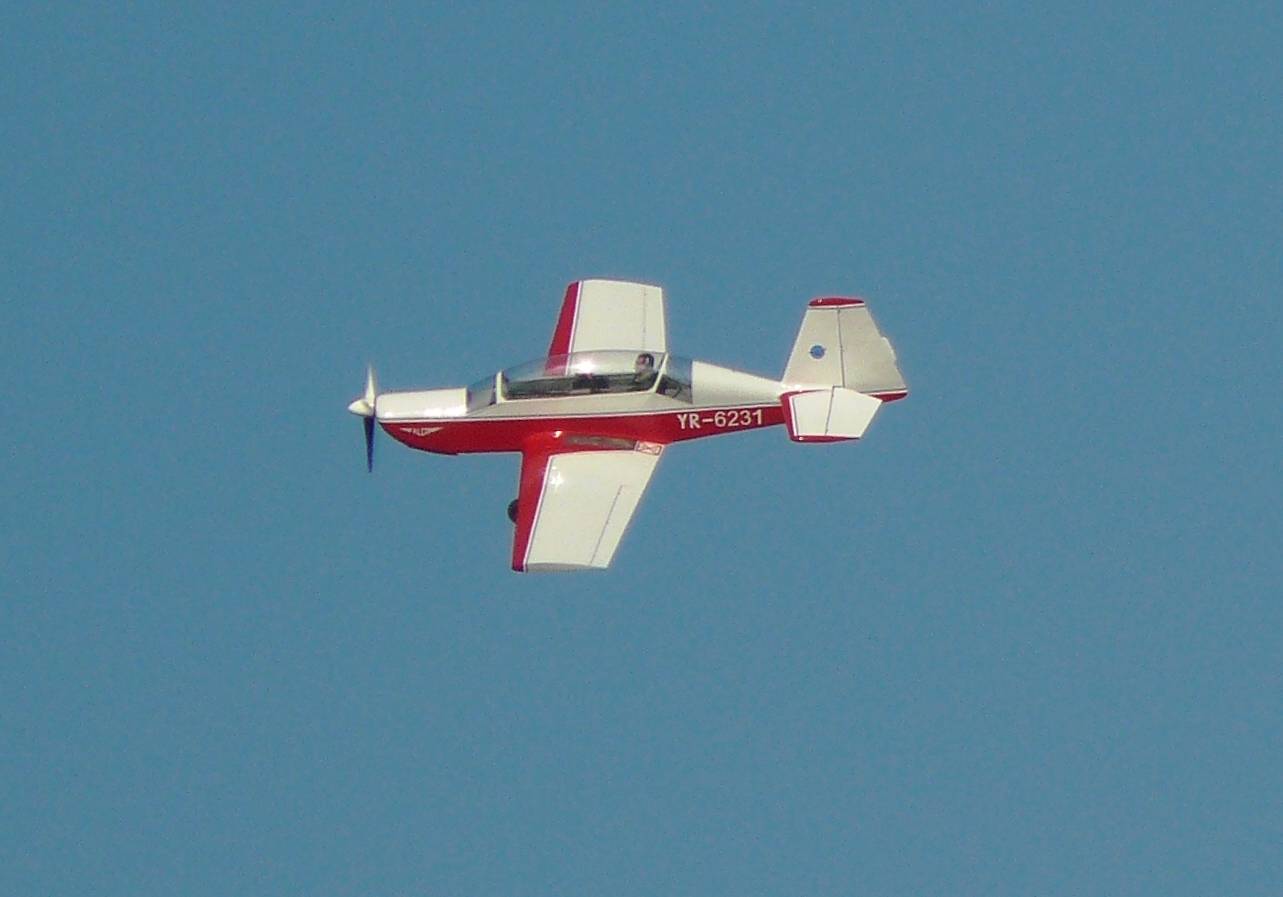
Experimental Aircraft with MT-Propeller
IS FANTASTIC!!!!!
-----
Hi all!
Maybe you remember me.
This is the airplane made by me, powered with Rotax 912 ULS 3, modified by me for inverted fly, equipped with MT PROPELLER.
Your prop is more than OK!
IS FANTASTIC!!!!!
Thank you! Thank you!! Thank you!!!
-----
Hi all!
Maybe you remember me.
This is the airplane made by me, powered with Rotax 912 ULS 3, modified by me for inverted fly, equipped with MT PROPELLER.
Your prop is more than OK!
IS FANTASTIC!!!!!
Thank you! Thank you!! Thank you!!!
Dragos Stoicescu
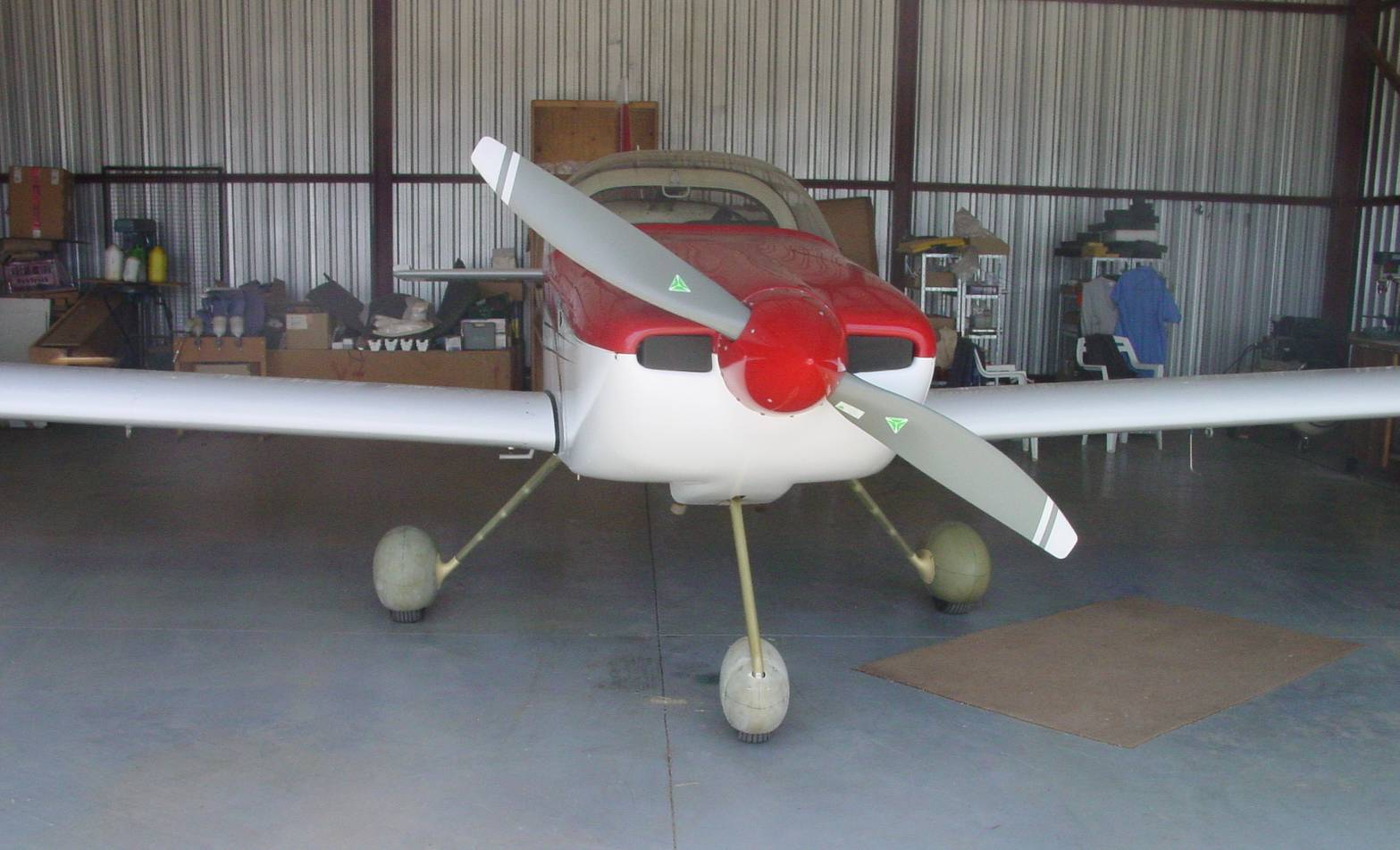
RV with 2-blade MTV-15
I was absolutely astonished! Never expected this.
---
a few years ago I bought your MTV-15-B/183-402 c/s metal prop for my RV. I would like you to know that the first flight happened on 9th April 2010, when after some three years of building and half a year pause, I was able to fly THE PLANE.
Well, it was a great moment for me, the one which I never forget. Now I have completed the testing and have 48 hrs on the Hobbs. Initially I thought I did not make a good choice with the prop as I could not get past 153 knots max speed at 8000 feet. (Van's performance data show 178 knots.) All the initial test flying (25 hrs ) was done without the undercarriage fairings and my RV friends kept on telling me that I would get some 12mph speed gain when fairings are fitted, but that I have to accept the c/s props do have a lower max speed as compared to fixed pitch Hertzel or Sensenitch props. The reason I selected your prop was that it had no restrictions through the whole range of speed. All the other prop did have one or the other restrictions in certain rpm ranges.
What I did like from the very beginning was a tremendous acceleration on the take off and a short take off run. Our airfield is at 3740 feet and temperatures in the summer do go up to 36deg C so we do experience density altitude above 6000 feet. Also, the braking effect of the prop on descent for landing and in the circuit is fantastic. I had a problem with screeching brakes from the very beginning and could not find any solution until recently.
Also I was testing the plane for shimmy on the undercarriage to find out if any wooden dampers would be required on the undercarriage legs (they are shown on the plans).
For those reasons I kept delaying fitting of the undercarriage fairings. Brakes sorted and no shimmy found, I was ready to fit the fairings. Opinions in local flying community as to what speed gain I will achieve vastly varied and nobody really new what fairing contributed by how much to drag reduction. So I decided to test it myself in order to find the real figures. I fitted each component/s and then test flew the plane at 8000 feet in NSEW legs of 15nm and measured the TAS by GPS. The results were:
Speed gain for individual fairings:
Main wheel fairings: 7 knots
Nose wheel fairing: 0 knots
Nose leg fairing: 5 knots
Main wheel legs + int. fairings: 10 knots
Main wheel legs + fuse int. fairings: 1 knots
==============================================
Total speed gain due to fairings: 23 knots
I was absolutely astonished! Never expected this. Well, the top speed of my RV is now 176 knots but I still have to adjust the prop governor to achieve engine speed of 2700rpm. At present the max revs are 2650 rpm.
Question to you is: Does efficiency of your prop go up with increased plane speed? Or what would be the reason for such a large speed gain as even comment from Ken Scott of Vans Aircraft was that he would have expected the gain to be about half of that I experienced. (The engine I am using is Superior XP-IO-360 with horizontal induction.) One more observation. During initial testing I was trying all three positions of flaps during a take off and on fully extended flaps, the plane would not accelerate past 85 knots. At our airfield the runway is 810m long and I normally do not use any flaps for take off even when fully loaded.
Passing the runway threshold (no wind) I normally get about 95 knots IAS. Well, I am very happy now that my choice of propeller based on your recommendation was correct and the performance of the prop / engine / plane combination has proven to be excellent!
Thanks for your advice and your product.
Best regards,
---
a few years ago I bought your MTV-15-B/183-402 c/s metal prop for my RV. I would like you to know that the first flight happened on 9th April 2010, when after some three years of building and half a year pause, I was able to fly THE PLANE.
Well, it was a great moment for me, the one which I never forget. Now I have completed the testing and have 48 hrs on the Hobbs. Initially I thought I did not make a good choice with the prop as I could not get past 153 knots max speed at 8000 feet. (Van's performance data show 178 knots.) All the initial test flying (25 hrs ) was done without the undercarriage fairings and my RV friends kept on telling me that I would get some 12mph speed gain when fairings are fitted, but that I have to accept the c/s props do have a lower max speed as compared to fixed pitch Hertzel or Sensenitch props. The reason I selected your prop was that it had no restrictions through the whole range of speed. All the other prop did have one or the other restrictions in certain rpm ranges.
What I did like from the very beginning was a tremendous acceleration on the take off and a short take off run. Our airfield is at 3740 feet and temperatures in the summer do go up to 36deg C so we do experience density altitude above 6000 feet. Also, the braking effect of the prop on descent for landing and in the circuit is fantastic. I had a problem with screeching brakes from the very beginning and could not find any solution until recently.
Also I was testing the plane for shimmy on the undercarriage to find out if any wooden dampers would be required on the undercarriage legs (they are shown on the plans).
For those reasons I kept delaying fitting of the undercarriage fairings. Brakes sorted and no shimmy found, I was ready to fit the fairings. Opinions in local flying community as to what speed gain I will achieve vastly varied and nobody really new what fairing contributed by how much to drag reduction. So I decided to test it myself in order to find the real figures. I fitted each component/s and then test flew the plane at 8000 feet in NSEW legs of 15nm and measured the TAS by GPS. The results were:
Speed gain for individual fairings:
Main wheel fairings: 7 knots
Nose wheel fairing: 0 knots
Nose leg fairing: 5 knots
Main wheel legs + int. fairings: 10 knots
Main wheel legs + fuse int. fairings: 1 knots
==============================================
Total speed gain due to fairings: 23 knots
I was absolutely astonished! Never expected this. Well, the top speed of my RV is now 176 knots but I still have to adjust the prop governor to achieve engine speed of 2700rpm. At present the max revs are 2650 rpm.
Question to you is: Does efficiency of your prop go up with increased plane speed? Or what would be the reason for such a large speed gain as even comment from Ken Scott of Vans Aircraft was that he would have expected the gain to be about half of that I experienced. (The engine I am using is Superior XP-IO-360 with horizontal induction.) One more observation. During initial testing I was trying all three positions of flaps during a take off and on fully extended flaps, the plane would not accelerate past 85 knots. At our airfield the runway is 810m long and I normally do not use any flaps for take off even when fully loaded.
Passing the runway threshold (no wind) I normally get about 95 knots IAS. Well, I am very happy now that my choice of propeller based on your recommendation was correct and the performance of the prop / engine / plane combination has proven to be excellent!
Thanks for your advice and your product.
Best regards,
Jaroslav
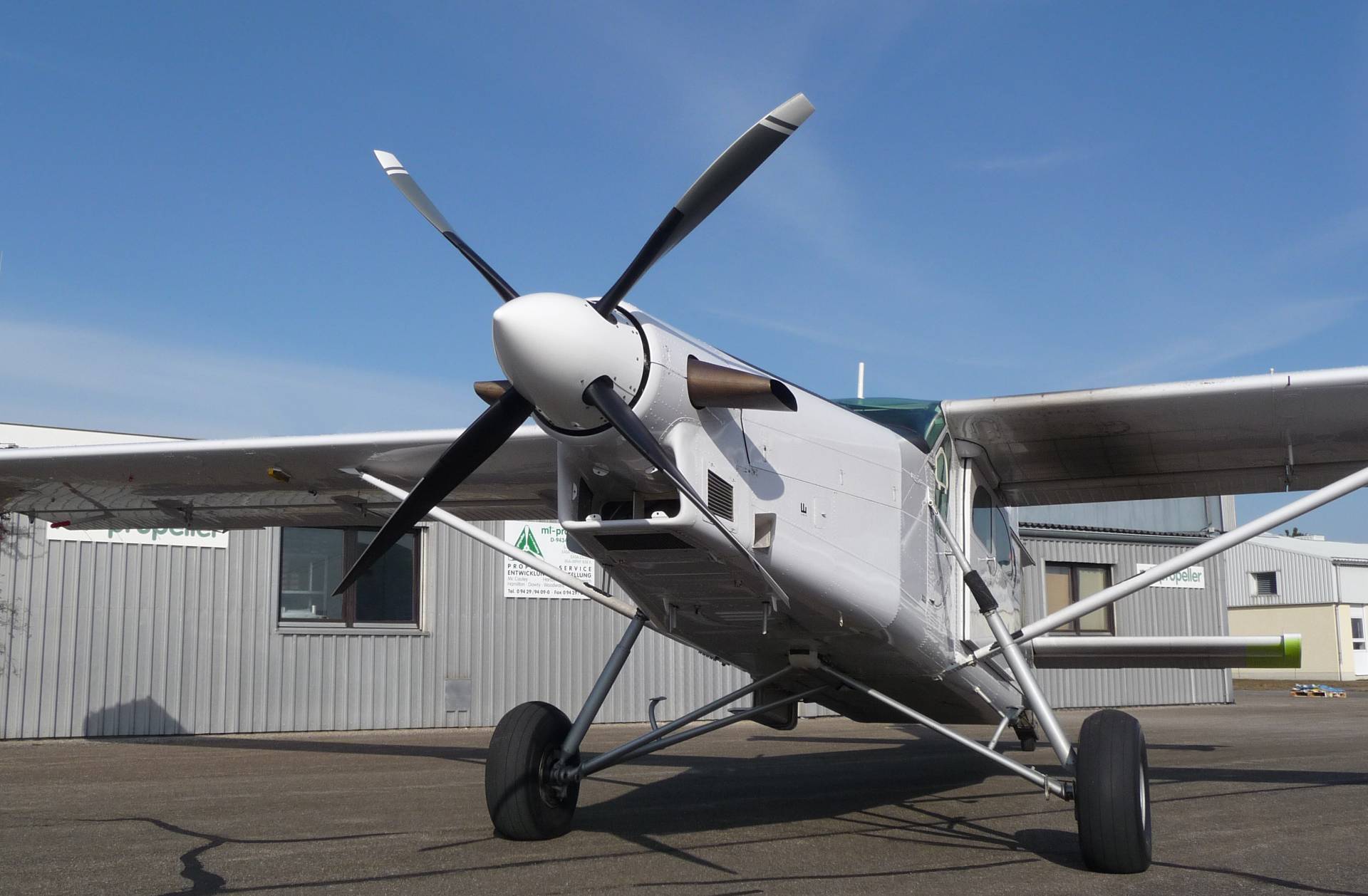
Pilatus PC-6 with 4-blade MT-Propeller
Der neue Prop ist ein Traum!!!
---
Der neue Prop ist ein Traum!!! Der Porter steigt schneller. Das teilten mir 2 Piloten unabhängig voneinander mit.
Zwar mit geringerem Anstellwinkel, aber dafür mit besserem Speed. Umlaufzeiten früher auf 4000m lagen bei 16-17 Minuten, nun bei 15. Es ist nicht unser Ziel derart schnelle Zeiten zu fliegen, Aber es fiel auf...
Gruß
---
Der neue Prop ist ein Traum!!! Der Porter steigt schneller. Das teilten mir 2 Piloten unabhängig voneinander mit.
Zwar mit geringerem Anstellwinkel, aber dafür mit besserem Speed. Umlaufzeiten früher auf 4000m lagen bei 16-17 Minuten, nun bei 15. Es ist nicht unser Ziel derart schnelle Zeiten zu fliegen, Aber es fiel auf...
Gruß
Tobias Durr
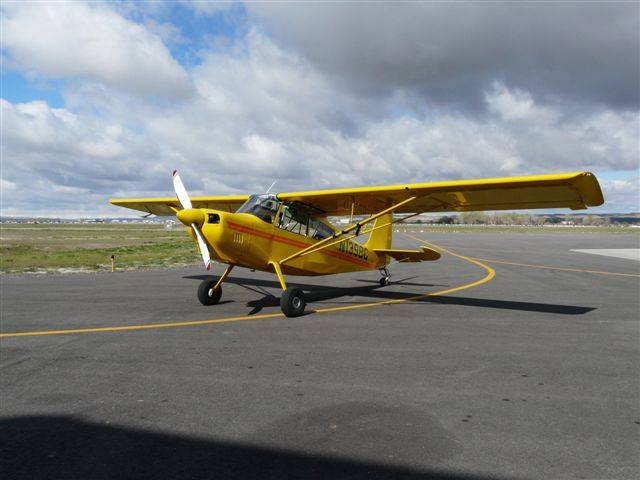
American Champion with 2-blade MTV-15
want to thank MT-Propeller for the excellent product and support.'
---
With a special permit the owner of this American Champion Scout aircraft equipped with an MTV-15-B/203-58 propeller:
'I operated this aircraft - propeller - combination for 2200 hours without any problem and want to thank MT-Propeller for the excellent product and support.'
---
With a special permit the owner of this American Champion Scout aircraft equipped with an MTV-15-B/203-58 propeller:
'I operated this aircraft - propeller - combination for 2200 hours without any problem and want to thank MT-Propeller for the excellent product and support.'
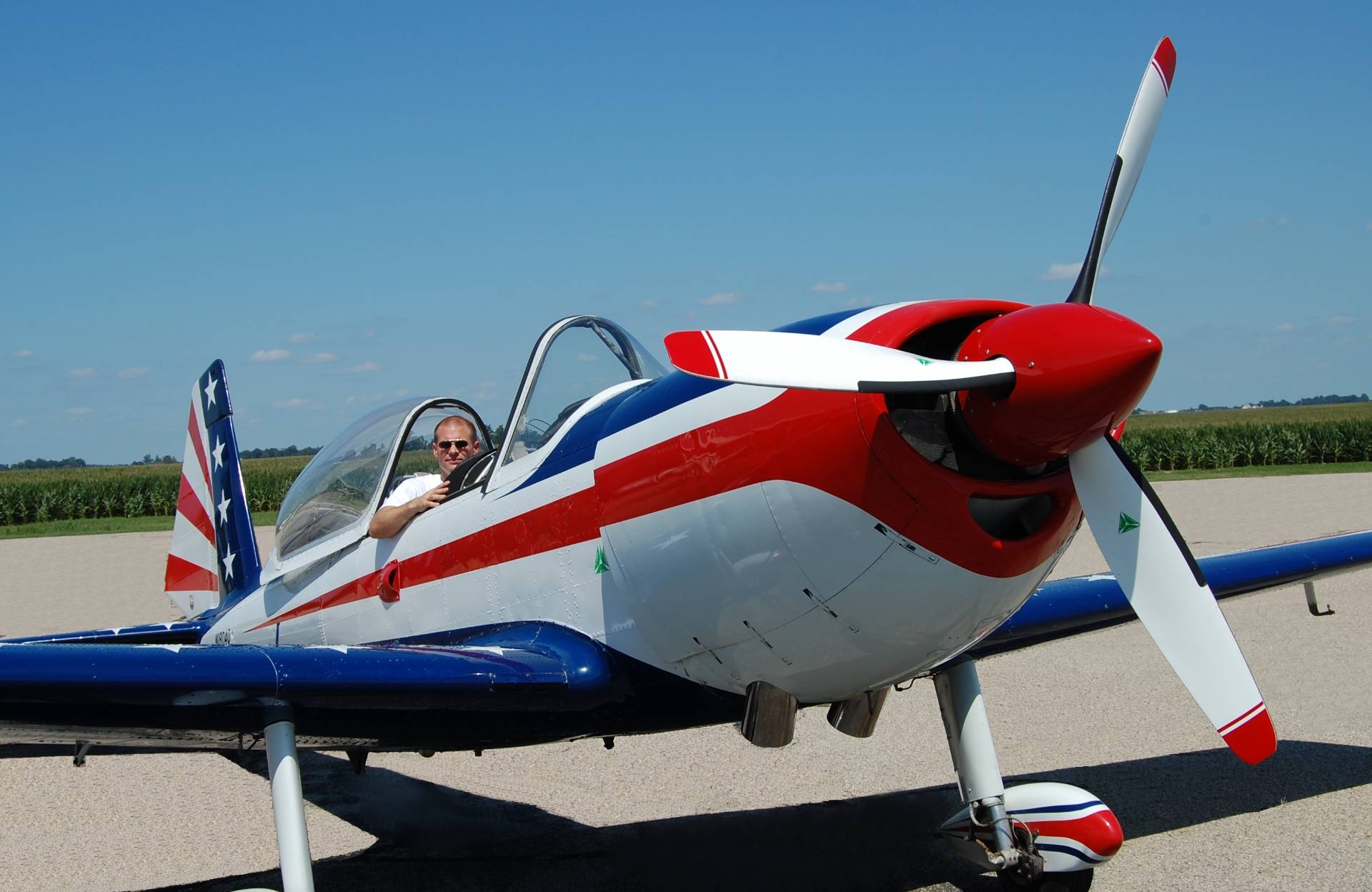
Chipmunk with 3-blade MTV-9
the MTV-9 is a HUGE improvement
---
I wanted to thank each of you for all of your time and effort in helping us with the Super Chipmunk.
With the change in the low pitch stop to achieve 2600 RPM as well as the new MT governor and accumulator the plane is performing flawlessly throughout the entire range of it's capabilities.
The accumulator works great - it is impossible to get the propeller to underspeed now even on the longest upline or tumbling pass.
Overall, the MTV-9 is a HUGE improvement of the originally installed prop that we had before.
It literally pulls the plane through the figures and slows the downlines making it MUCH easier to fly a sequence down low and up front.
We have the Indianapolis Air Show middle of August and we will ensure that MT gets credit where it is due.
Best Regards,
Greg Aldridge
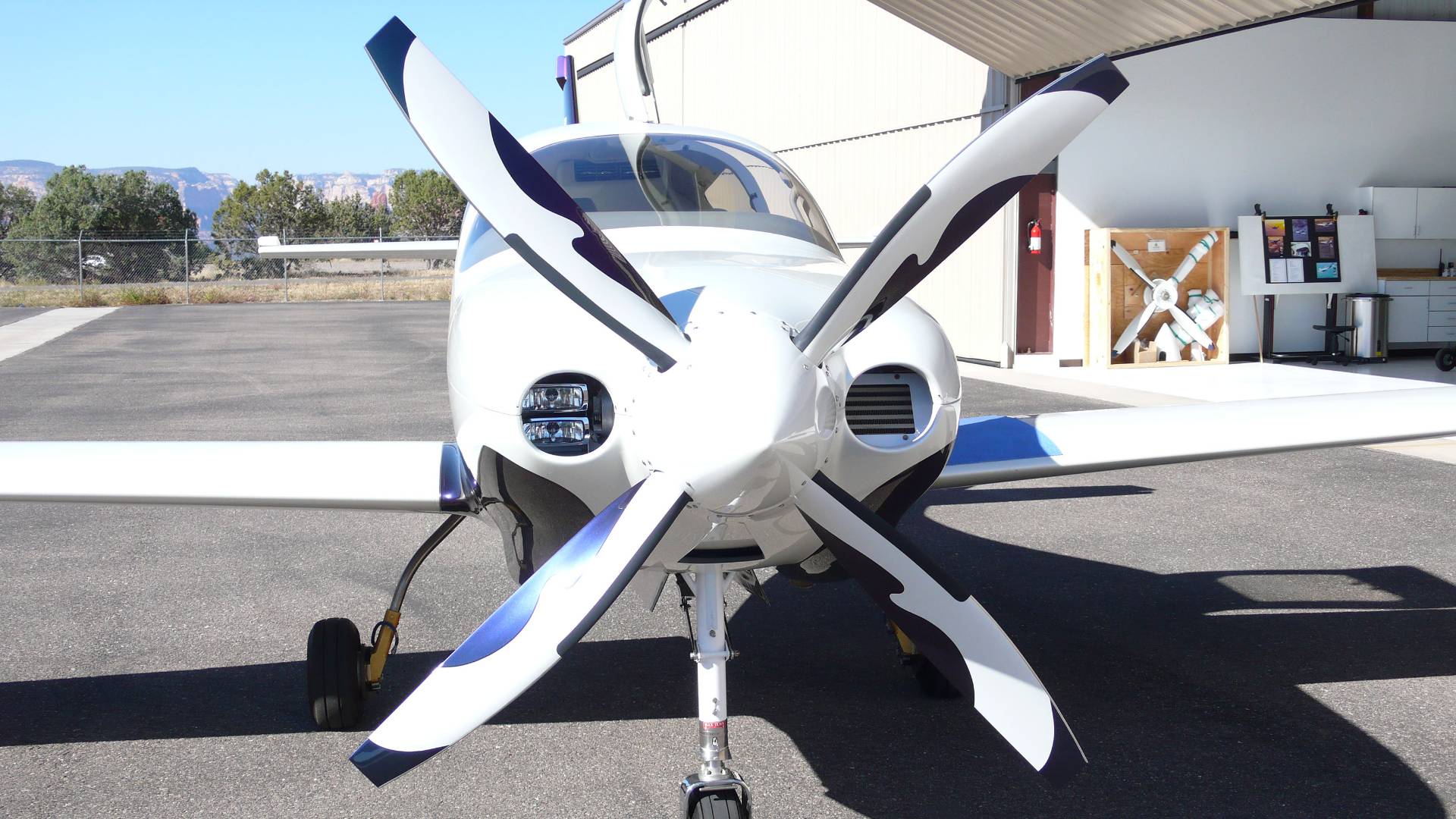
LancairIV with 4-blade MT-Propeller
...The smoothness is perfect
---
...The smoothness is perfect at 2400 and 2700 and only a slight shake at 2500 and 2600, not even enough to worry about...
I also saw 3000 fpm climb at full power from 5K to 8K. The most I have seen, with half fuel and one person.
I also leveled at 12K and did all the rpm's and then set up my normal cruise power 65% or 30/2400 and my IAS was exactly 6 kts faster, just like Martin said it would be.
I showed 192 KIAS for a TAS of 233 on 24 gph, for what it's worth.
And after the flight I took these pictures to show that the super paint job survived without a mark...
Many Thanks,
---
...The smoothness is perfect at 2400 and 2700 and only a slight shake at 2500 and 2600, not even enough to worry about...
I also saw 3000 fpm climb at full power from 5K to 8K. The most I have seen, with half fuel and one person.
I also leveled at 12K and did all the rpm's and then set up my normal cruise power 65% or 30/2400 and my IAS was exactly 6 kts faster, just like Martin said it would be.
I showed 192 KIAS for a TAS of 233 on 24 gph, for what it's worth.
And after the flight I took these pictures to show that the super paint job survived without a mark...
Many Thanks,
Jim Hergert
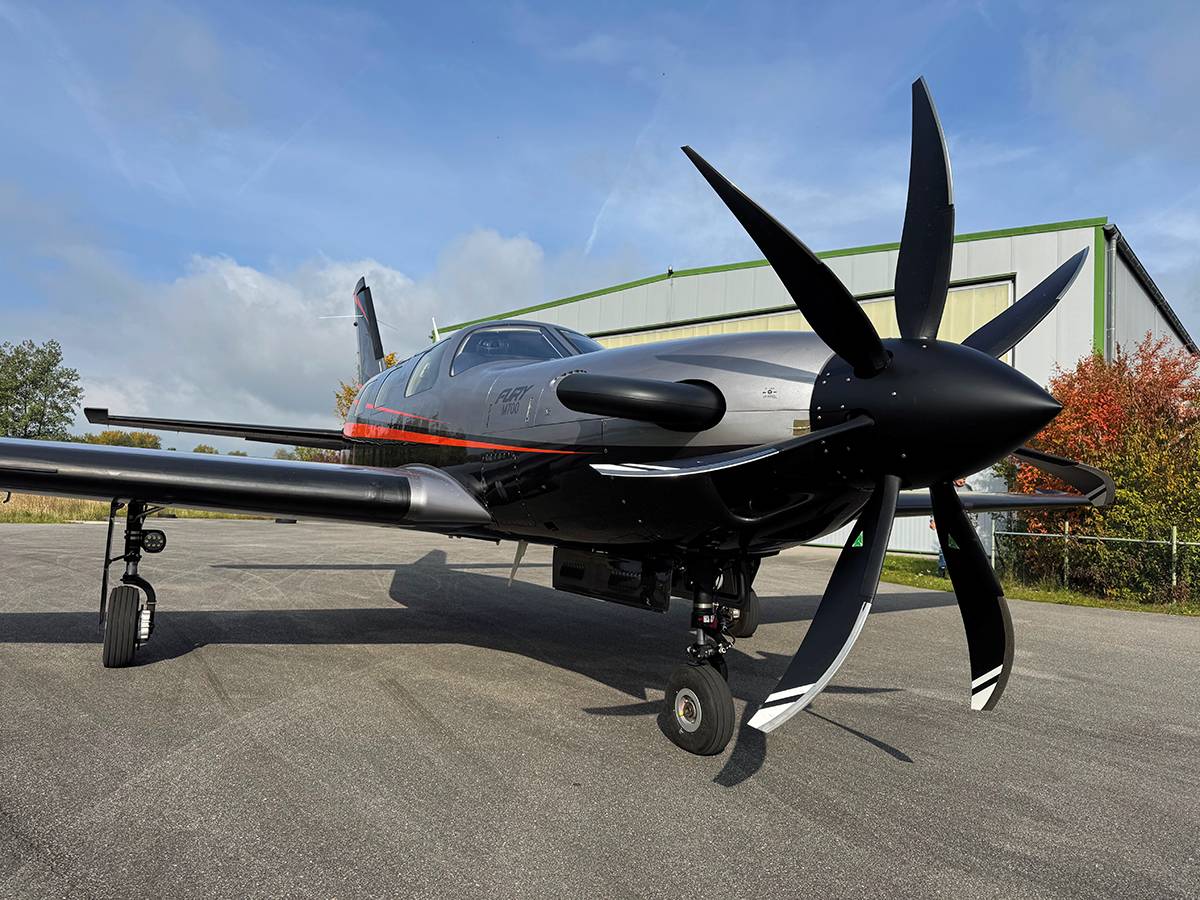
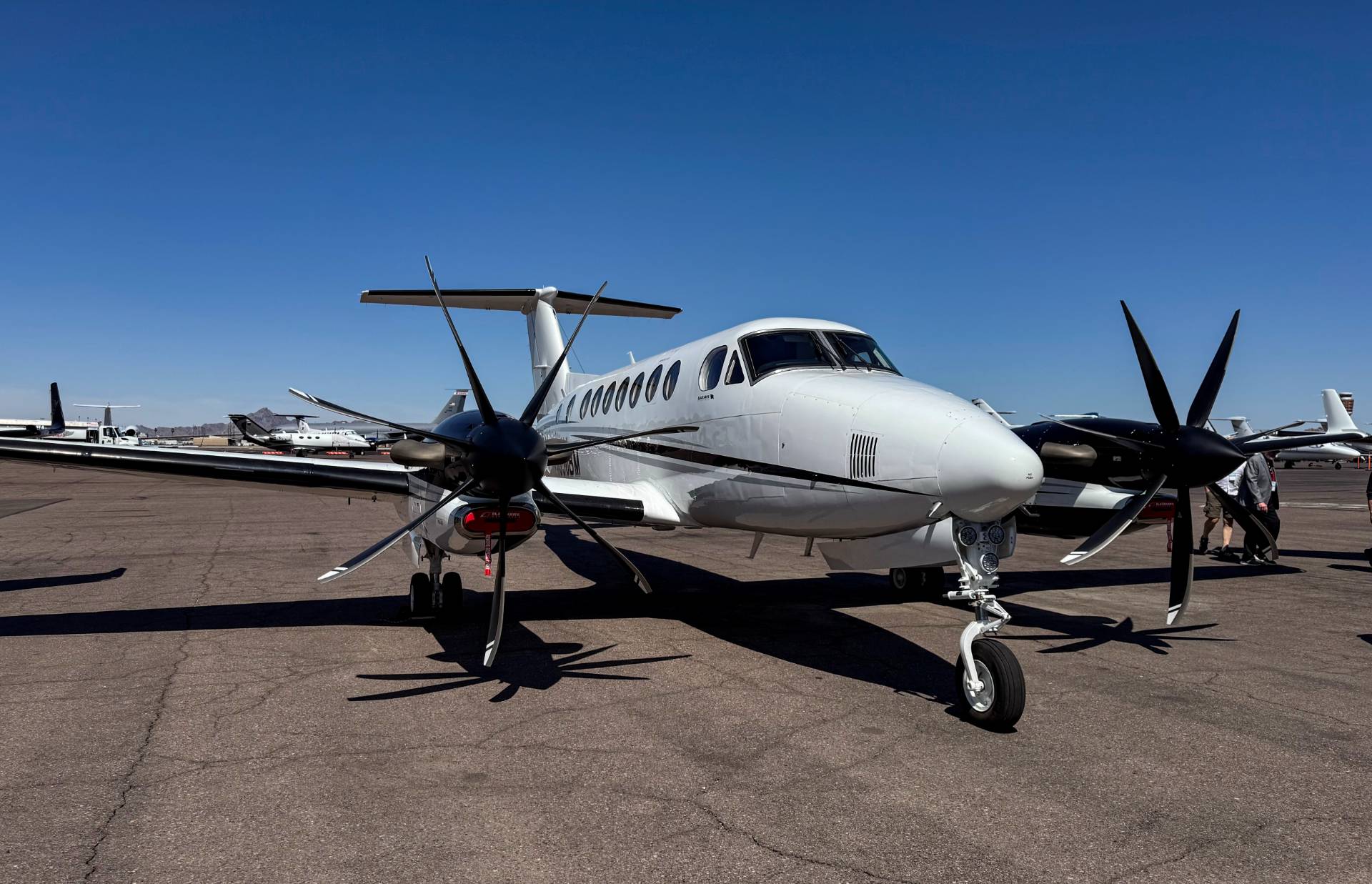
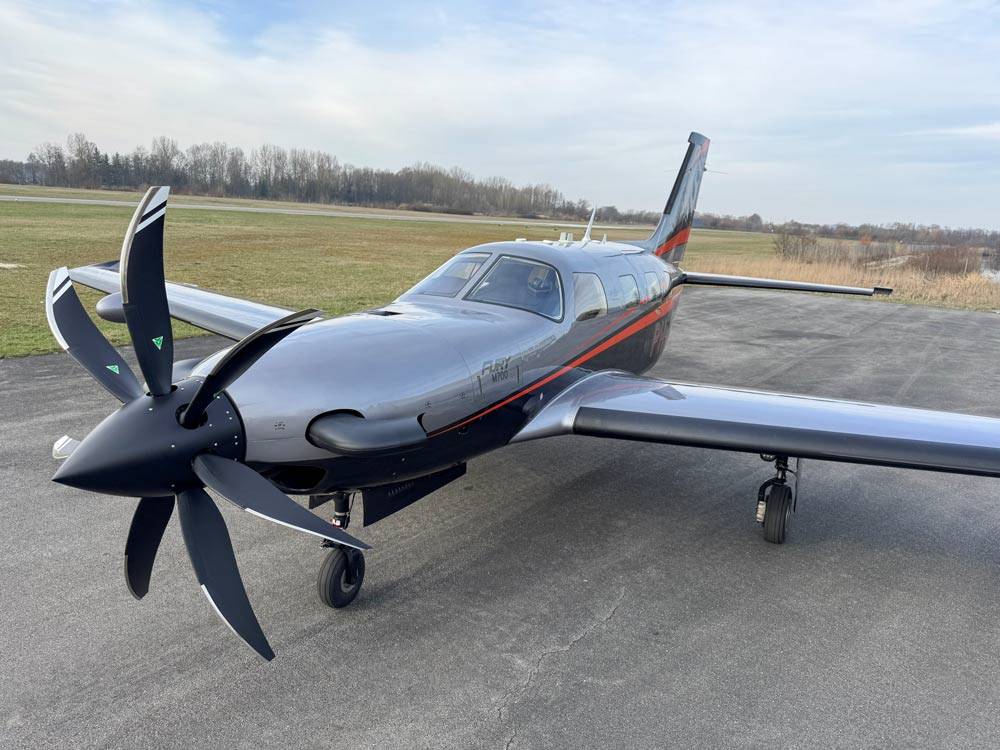
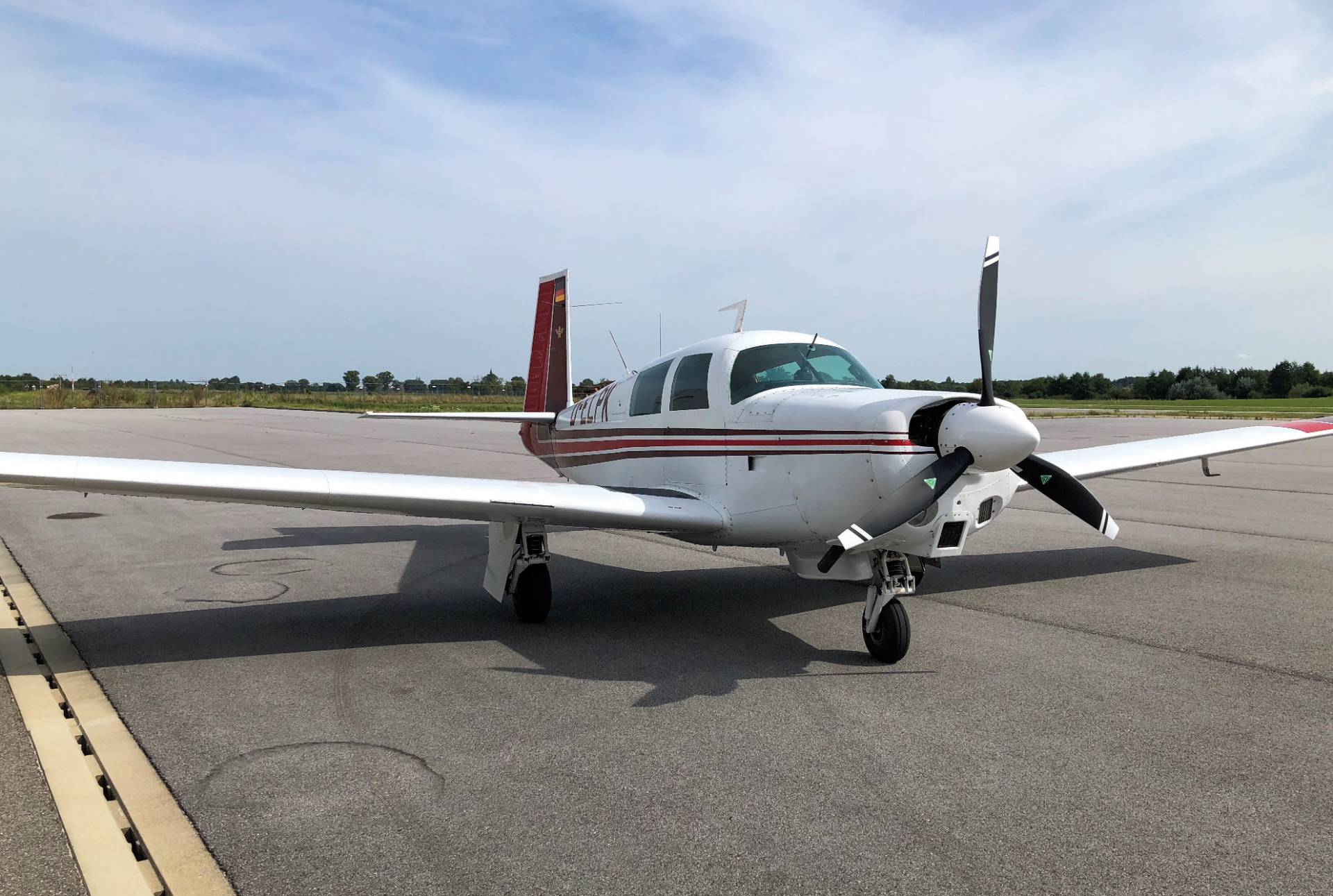
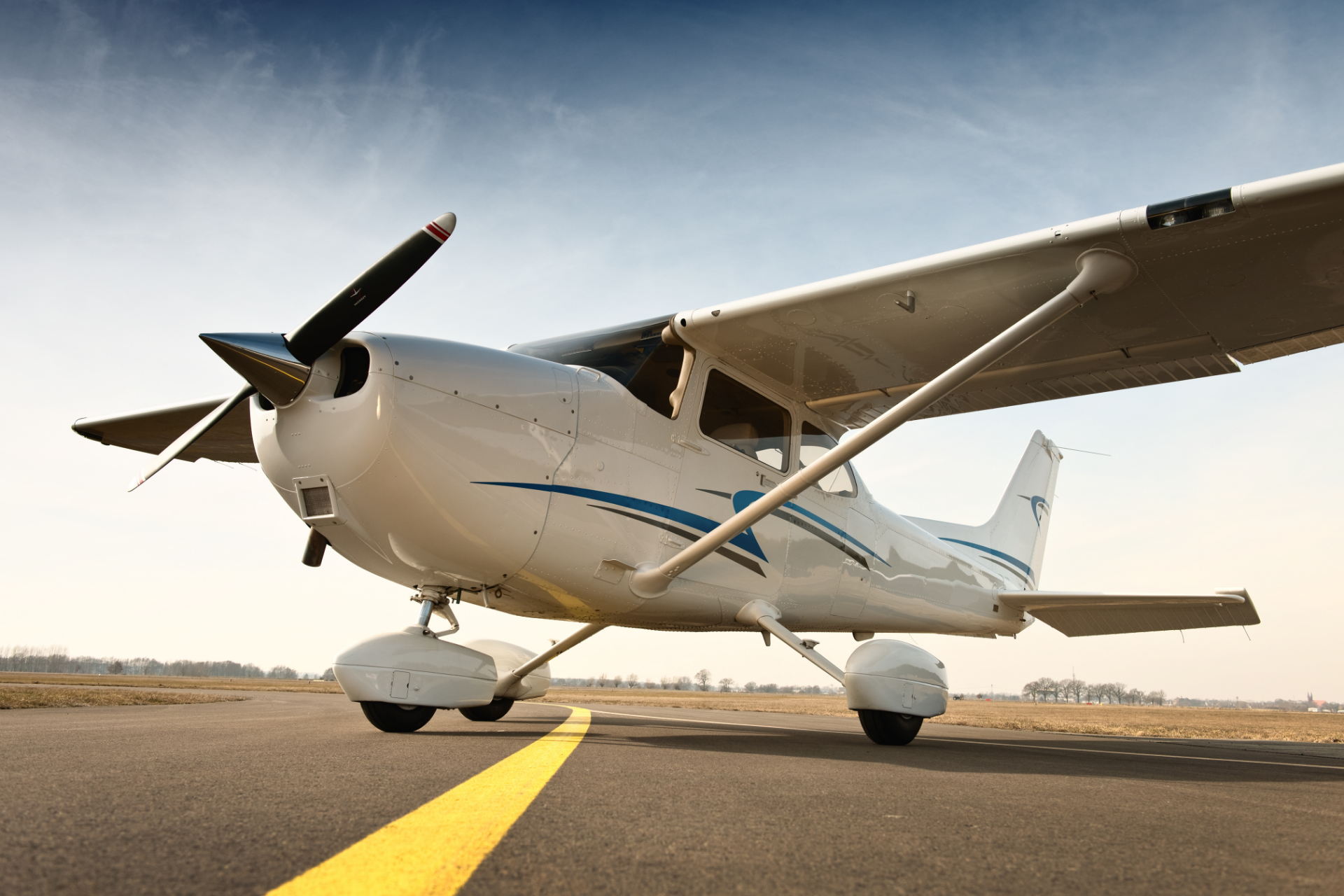
.png)
.png)
.png)